Europe Faces Market Challenge for Its AI Innovations
Europe Faces the Market Challenge for Its AI Innovations
Europe now has the human and technological capabilities to compete in the field of artificial intelligence. However, it is struggling to transform these assets into global commercial success. The real challenge lies in creating a market that can accelerate the adoption of AI solutions developed on the continent.
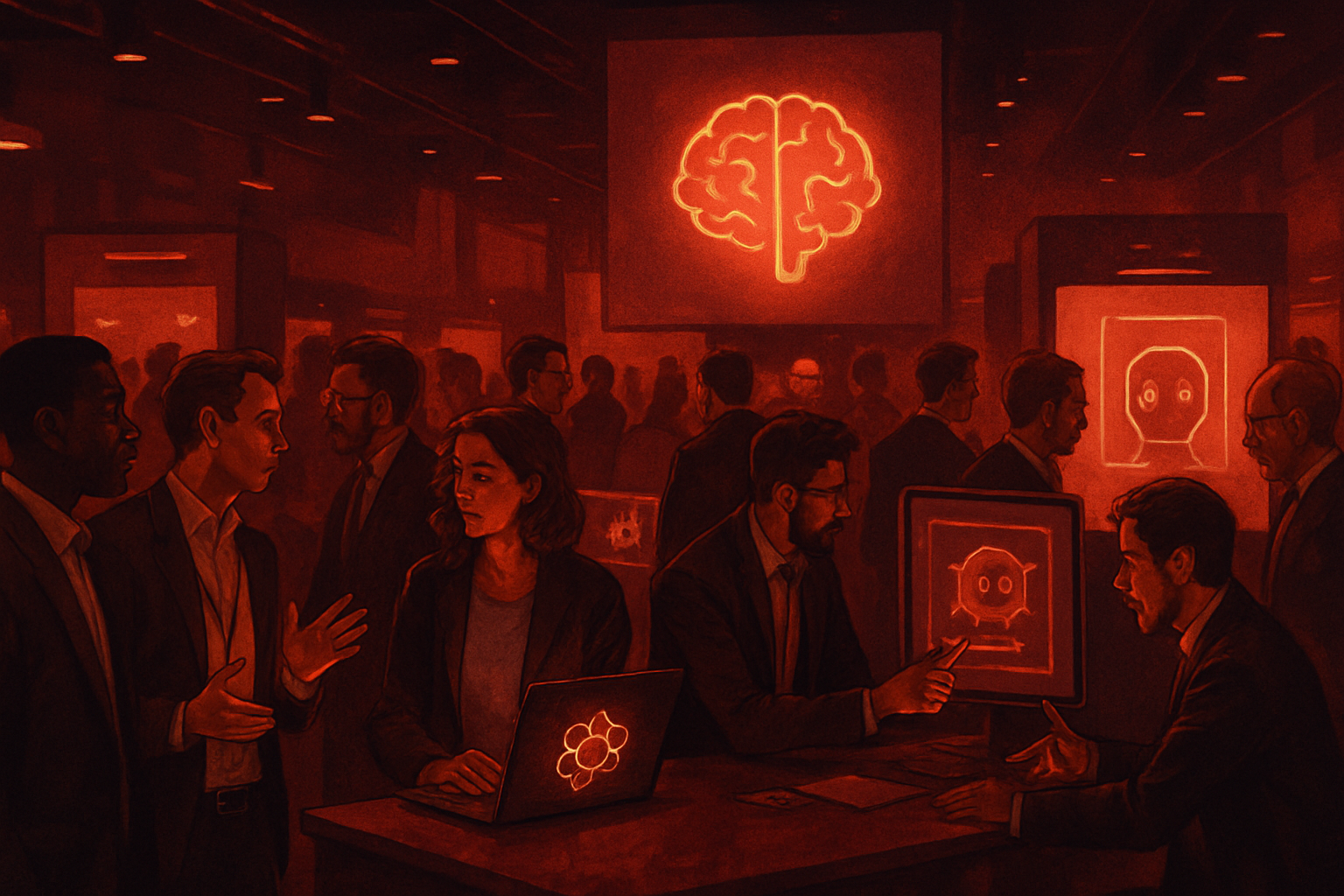
A few days after the VivaTech conference, one observation stands out: Europe no longer suffers from a lack of talent or technological lag in artificial intelligence. The main challenge lies elsewhere. Europe must succeed in turning its innovations into thriving markets, its startups into global leaders, and its technological capabilities into a significant economic force.
An event that occurred shortly before the conference highlighted the strategic importance of this issue. The suspension of access to advanced models from Anthropic, Mythos, and Fable for certain non-American users demonstrated that access to critical technology can suddenly be restricted.
For a long time, digital dependencies were primarily viewed from an economic perspective. Companies chose the most effective solutions in a global market where access to technologies seemed guaranteed. This certainty is no longer assured today.
Dependency is No Longer a Theoretical Risk
Artificial intelligence has become an essential infrastructure, comparable to energy, telecommunications, or semiconductors. It is now at the heart of industrial and geopolitical strategies.
The numbers illustrate the scale of the phenomenon. American tech giants are expected to invest more than $300 billion in AI infrastructure by 2026. Companies like OpenAI, Anthropic, Google, Meta, and xAI are concentrating an increasing share of global computing power. At the same time, American restrictions on the export of advanced chips are multiplying, and governments are becoming more directly involved in structuring the sector.
The debate is therefore no longer solely technological. It has become economic. And this is precisely where Europe needs to reassess its strategy. For years, the prevailing idea was that European AI was lagging due to the absence of local tech players. This analysis is now incomplete.
Le brief IA que les pros lisent chaque soir
Les 7 actus IA du jour, décryptées en 5 min. Gratuit.
Inclus dès l'inscription : notre sélection des meilleurs guides & comparatifs IA.
Choisis ton rythme
Gratuit · Pas de spam · Désabonnement en 1 clic
Europe Already Has the Technologies
The emergence of Mistral AI represents a significant advancement. In less than two years, this French company has become one of the few laboratories capable of competing with the best global players. However, reducing the European AI ecosystem to a single champion would be a mistake.
The halls of VivaTech revealed a reality often underestimated: Europe today has a particularly rich network of companies covering the entire AI value chain. Players like Dust are developing environments that allow businesses to deploy assistants and agents at scale. H Company is building its own vision of agent-based systems. Prisme.ai specializes in orchestrating agents and knowledge. Illuin offers business solutions already deployed in large corporations.
Across Europe, specialized companies are emerging in infrastructure, platforms, models, data, and sector-specific applications. The problem is no longer the absence of solutions but the lack of outlets that match ambitions.
European startups regularly reach a competitive technological level. However, they still struggle to quickly find their first major clients, access integrated continental markets, and benefit from the same depth of funding as their American competitors. This is probably the true lesson from this 2026 edition of VivaTech.
Europe Lacks Demand, Not Supply
No champion can sustainably emerge without a strong domestic market. No investor will massively fund companies that cannot quickly access a large customer base.
In this perspective, sovereignty does not mean closing digital borders or renouncing American technologies. It means creating the conditions that allow European companies to become indispensable players.
This involves making greater use of public procurement as an industrial lever. It also requires accelerating investments in critical infrastructures, from computing to energy. But above all, it assumes that European companies are willing to take a more active role in building their own technological ecosystem.
Because economic sovereignty is not built solely within European institutions. It is also built in procurement departments, IT departments, and investment committees. Every time a company chooses a credible European solution, it contributes to creating the market that will allow the next generation of champions to grow.
The past few weeks have clarified the debate. The question is no longer whether Europe has the necessary skills to exist in artificial intelligence. It does. The real question now is whether it is ready to empower them to scale up.
Brief IA — L'actualité IA en français
L'essentiel de l'actualité de l'intelligence artificielle, décrypté et expliqué chaque jour.