Agentic AI in 2026: Towards a Revolution in Multi-Agent Swarms
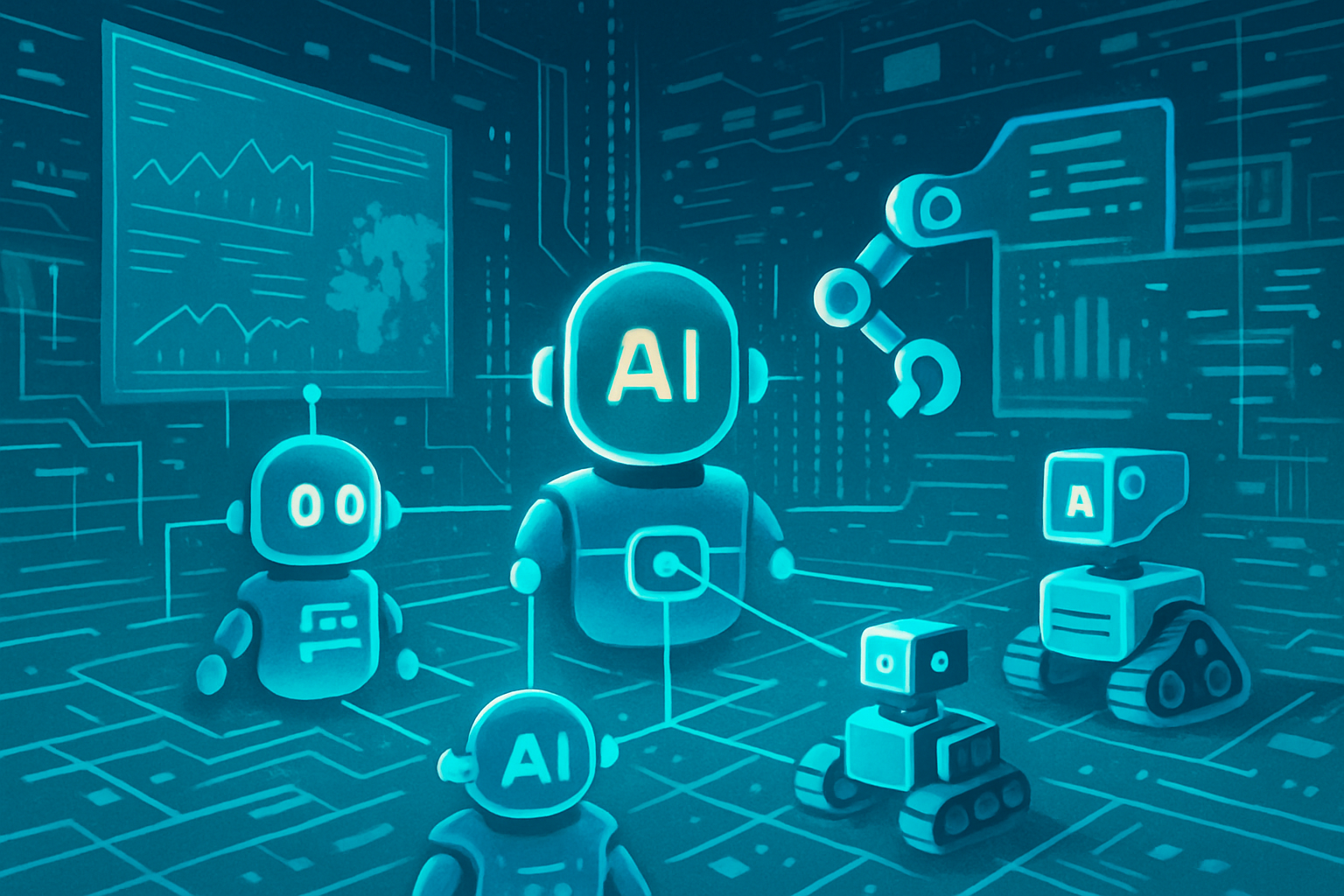
Evolution of Agentic AI Architecture
The architecture of agentic artificial intelligence has undergone a significant transformation by mid-2026. This evolution is characterized by a shift away from orchestrated reasoning loops, the emergence of multi-agent swarms, and the standardization of tool protocols through the Model Context Protocol (MCP). These changes have redefined the AI landscape, rendering certain orchestration frameworks obsolete. Native reasoning models now take precedence, allowing for more efficient design of multi-agent swarms. These swarms utilize stateless specialized agents, connected by transfer tools, and are supported by standardized protocols that facilitate their integration into complex systems. Furthermore, new security models play a crucial role in shaping the current production landscape.
Transition from Orchestrated Loops
A year ago, the construction of AI agents relied on a paradigm of brute orchestration. Engineers spent considerable time developing complex ReAct (Reasoning and Action) loops, juggling fragile prompt chains. These massive language models had to manage planning, tool execution, and context management, which often proved inefficient. By mid-2026, this approach has been replaced by native reasoning models and multi-agent architectures. The era of the monolithic agent is coming to an end, giving way to systems where engineers design infrastructures that allow specialized agents to communicate effectively. Foundational models have integrated 'System 2' thinking directly into their architectures, transforming the role of the AI engineer.
Le brief IA que les pros lisent chaque soir
Les 7 actus IA du jour, décryptées en 5 min. Gratuit.
Inclus dès l'inscription : notre sélection des meilleurs guides & comparatifs IA.
Choisissez votre rythme
Gratuit · Pas de spam · Désabonnement en 1 clic
Building Agent Swarms
With the evolution of models capable of managing their own reasoning, the question of accountability for a single agent arises. Production teams have concluded that each agent should be responsible for as little as possible. Attaching numerous tools to a single large model creates bottlenecks. Thus, more and more teams are adopting agent swarms, composed of small, highly specialized entities that communicate via a standardized protocol. For example, rather than a single agent with multiple tools, a swarm may include a triage agent to understand user intentions, an SQL agent to handle database queries, and a Python agent for data transformations, each operating within its area of expertise.
Standardizing Agency: Model Context Protocol
Building a swarm is one thing, but connecting it to real systems is a different challenge. Integration was once one of the most tedious tasks. Today, the Model Context Protocol (MCP) redefines the state of tool invocation. This open standard serves as a universal adapter between AI models and data sources, whether local or remote. Before 2025, integration required manual management of API keys. By 2026, agents connect to an isolated MCP server, allowing for easy integration of pre-built servers like GitHub, Slack, or PostgreSQL without writing complex API wrappers.
Continuous Learning via Memory Graphs
One of the major promises of agentic AI is the ability of agents to learn from their own execution history. This is made possible through memory graphs, which deserve special attention. Individual agents, while remaining stateless with each invocation, benefit from persistent memory through graph databases like Neo4j. These databases are integrated directly into the agent's context pipeline. When a swarm executes a task, a specialized memory agent operates in the background, evaluating the main trajectory of the swarm, extracting persistent facts, and updating the graph, thereby optimizing the system's efficiency.
Brief IA — L'actualité IA en français
L'essentiel de l'actualité de l'intelligence artificielle, décrypté et expliqué chaque jour.