ChatGPT Disrupts Design: AI as a New Key Player
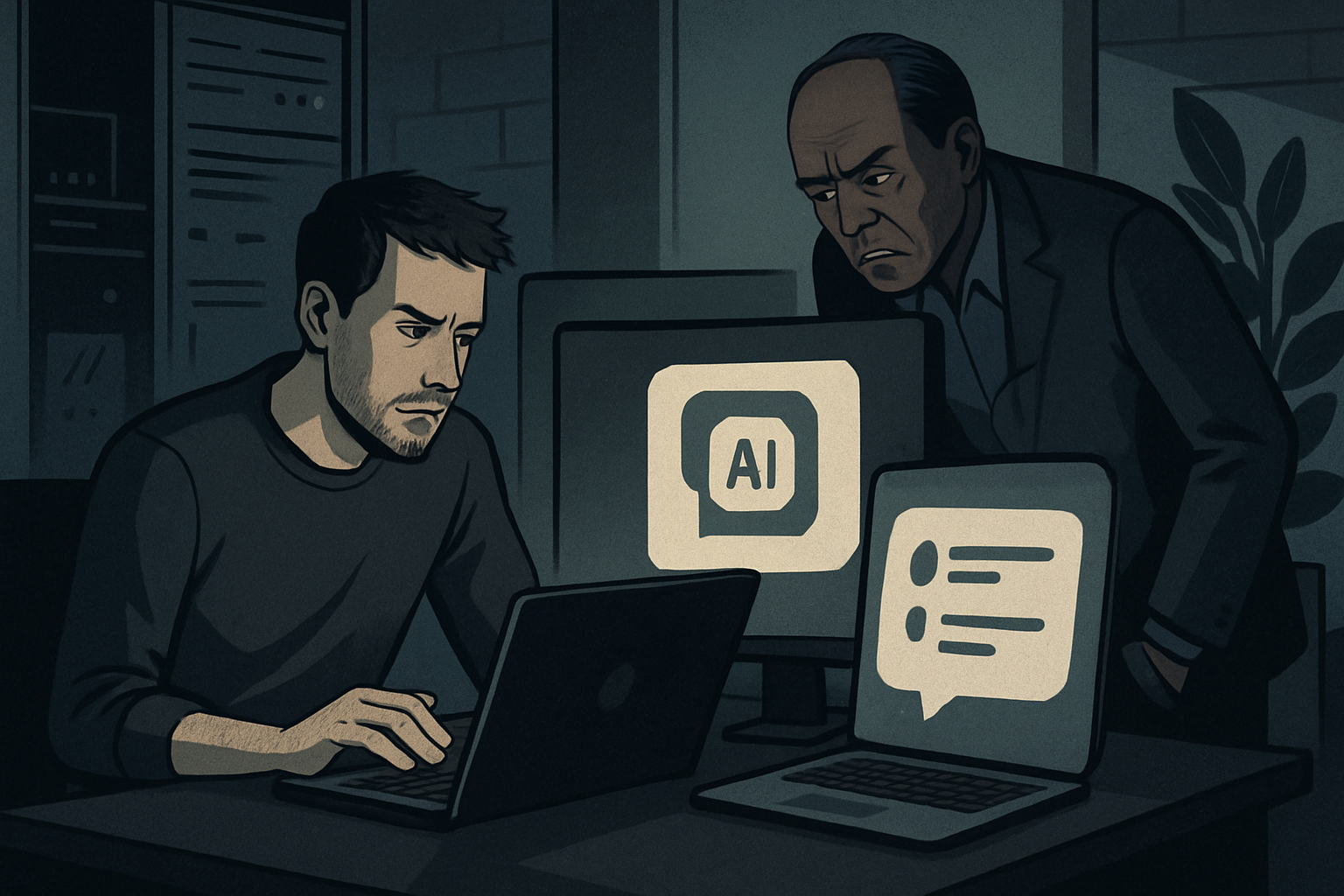
In the world of design, artificial intelligence is establishing itself as an essential player, profoundly altering the interactions between designers and clients. An experienced designer recently shared a revealing experience: a long-time client used ChatGPT to evaluate the design of a website he had just delivered. Although the relationship with the client was strong and the intent was not malicious, this situation created a sense of strangeness for the designer, who had dedicated decades to perfecting his expertise.
The feedback generated by the AI was not entirely devoid of meaning. Some points raised were relevant, while others could have created new problems. After an in-depth discussion, the client ultimately chose to follow the designer's recommendations. However, this was not an isolated case. Other clients have also begun using AI to evaluate design work, which surprised the designer with its rapid adoption.
This new reality forces designers to juggle their expertise with the suggestions of an AI, often perceived as expert opinions. AI is already integrated into the workflows of many designers to critique layouts or assess accessibility. However, when clients use these tools, it adds a layer of complexity. Designers now have to explain their choices not only to clients but also in response to the suggestions of a machine.
AI is now directly inserted into the design process, often presenting its recommendations with the same confidence, whether they are insightful, superficial, or completely erroneous. The real challenge is not that clients receive poor feedback. The challenge is that they may receive plausible feedback. Designers must navigate among clients and stakeholders using these same tools, often with very different levels of understanding about how the systems actually work.
Strangely, AI-generated design feedback is not particularly controversial. Many designers are already incorporating AI into their workflows to critique layouts, assess accessibility, identify usability concerns, or brainstorm alternatives. I even use this in class. Some of my assignments ask students to use guided solicitation exercises to receive feedback on certain projects. When the solicitations are carefully structured and the objectives are clear, AI can be remarkably helpful in highlighting issues that a designer might overlook.
The difference is that these situations are controlled. The designer understands the limitations of the tool, and the solicitations are intentional. The feedback is filtered through experience and context. The use of AI by clients is a whole different animal. Anyone who has worked in design knows that managing the client relationship is often as challenging as the design work itself. Good designers spend a tremendous amount of time translating their expertise into a language that non-designers can understand. We explain trade-offs, justify decisions, balance business goals, user needs, technical constraints, and aesthetics.
Le brief IA que les pros lisent chaque soir
Les 7 actus IA du jour, décryptées en 5 min. Gratuit.
Inclus dès l'inscription : notre sélection des meilleurs guides & comparatifs IA.
Choisissez votre rythme
Gratuit · Pas de spam · Désabonnement en 1 clic
The real challenge lies in the fact that AI can provide plausible feedback, necessitating in-depth analysis to determine its relevance. Each suggestion becomes another conversation, and each recommendation becomes another decision to unpack. The designer is no longer just defending design choices—he is increasingly required to defend them against a synthetic consultant that is always available, works for free, and never sleeps.
The irony is that this development could ultimately make expertise more important rather than less. When everyone has access to infinite suggestions, we find ourselves living in a modern version of the attention economy—where data is infinite, but the scarce resource becomes human judgment. AI can generate observations, identify patterns, and even produce surprisingly competent critiques. What it cannot do particularly well is determine which observations matter most in a specific business context, audience, budget, timeline, or organization. And at the end of the day, someone still has to decide.
So, how should designers react? First, don’t take it personally. Clients are not necessarily questioning your expertise—most are simply using the tools at their disposal. Seeking a second opinion from AI is quickly becoming as normal as searching on Google or reading online reviews.
Second, ask to see the solicitations and the feedback. Understanding what the AI was instructed to do often reveals why it produced certain recommendations. The quality of the output is generally a reflection of the quality of the input.
Third, treat AI feedback the same way you would treat feedback from any stakeholder. Evaluate the idea itself rather than its source. Some suggestions will be helpful. Others will be irrelevant. Most will fall somewhere in between.
Finally, recognize that part of the designer's role is evolving. Increasingly, we are not just creating solutions. As the industry evolves, professional creative roles are shifting away from pure production and moving towards high-level curation. We interpret, contextualize, and filter an overwhelming amount of information generated by both humans and machines. The designer is becoming less of a producer and more of a translator between competing perspectives.
Many designers fear that AI will completely replace them. Instead, we might find that our new challenge is something much stranger—managing clients and stakeholders who have acquired a rigid digital design intern, with unlimited confidence and no accountability. The machine now has a permanent seat at the table. The question is not whether it belongs there. The question is whether we can learn to run the meeting while continuing to whisper in everyone’s ear.
Brief IA — L'actualité IA en français
L'essentiel de l'actualité de l'intelligence artificielle, décrypté et expliqué chaque jour.