Generative AI Threatens Worker Concentration
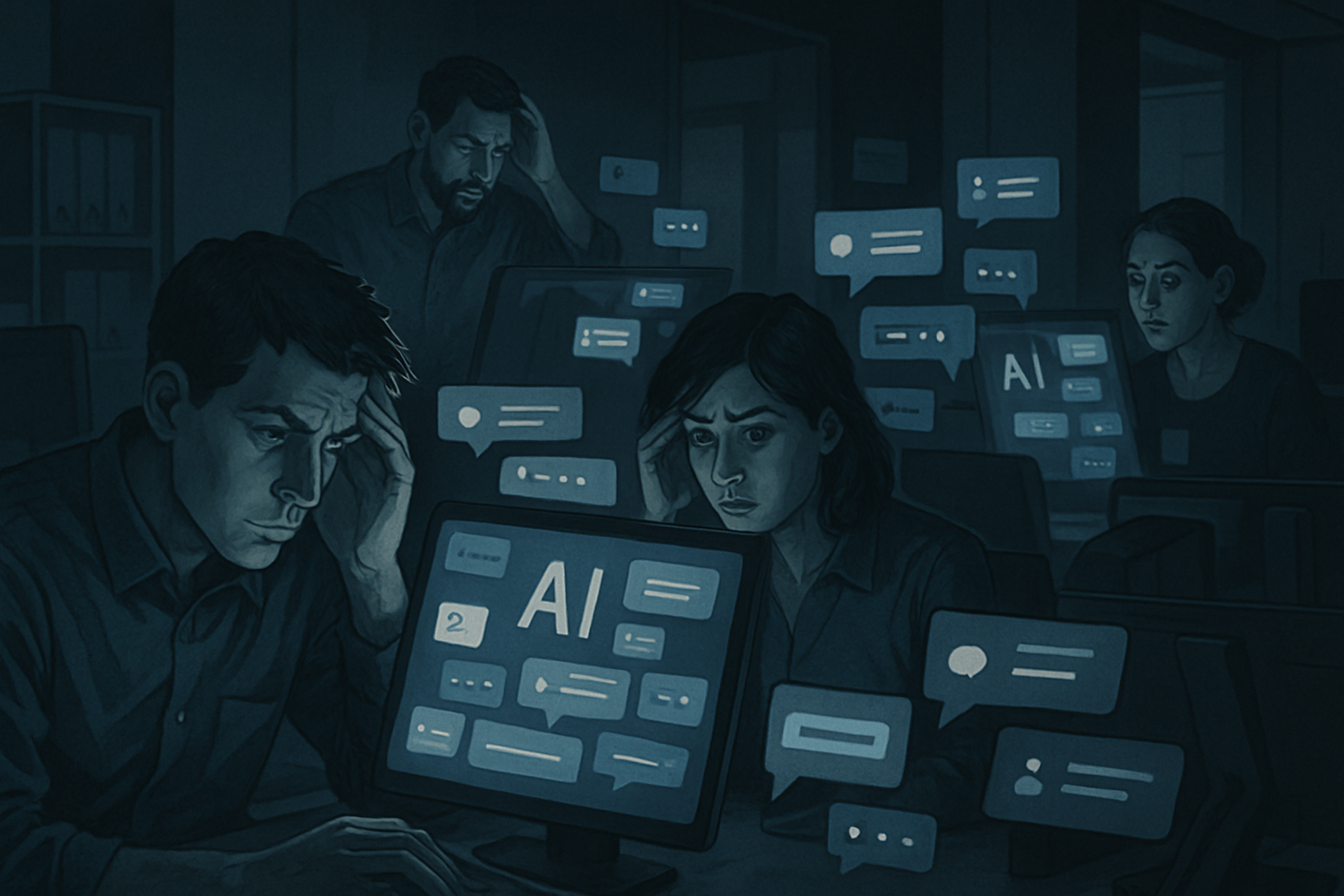
The Insidious Impact of Generative AI Tools on Focus
Imagine opening a generative artificial intelligence tool in hopes of getting a quick boost for a task. Ten minutes later, you find yourself still tweaking the same prompt for the fourth time, while your initial task fades into the background. This scenario is becoming increasingly common among knowledge workers in 2026. These tools, although initially designed to enhance efficiency, also seem engineered to captivate your attention, which is not always compatible with the swift completion of tasks.
Complex cognitive tasks require periods of uninterrupted reflection. However, continuous interaction with a chatbot, which constantly offers new suggestions, becomes a source of distraction. This distraction is not merely a side effect but an intentionally integrated element in the interface of AI tools. These systems are designed to reward you for staying engaged rather than for quickly finishing your task and closing the application.
AI Platforms: An Engagement-Based Business Model
Most modern AI platforms place significant importance on the duration of your engagement. This is not a conspiracy theory but rather an economic reality. Recommendation algorithms and conversational flows are designed to provide responses that seem useful or emotionally satisfying, thereby encouraging you to continue the interaction.
A 2026 study on AI implementation in digital media describes these platforms as "mathematically optimized to maximize 'time spent on site,'" highlighting that emotionally engaging content tends to outperform simple and straightforward material. Generative tools amplify this trend, as they can instantly produce personalized variations at almost no cost.
This phenomenon creates a variable reward loop, similar to those observed in slot machines and social media feeds. Each adjusted response offers just enough satisfaction to maintain interest, without providing a significant gain. The cognitive cost accumulates quietly, giving the illusion of productivity, while the time allocated for deep work gradually evaporates.
Apparent Productivity Masking Increased Cognitive Friction
On paper, productivity figures appear promising, at least in certain sectors. Recent analyses published in the MIT Technology Review indicate productivity increases of about 14% in customer service and 26% in software development. However, these gains quickly diminish in areas requiring nuanced judgment rather than repeatable steps.
At an organizational level, the picture becomes more complex. The Stanford AI Index for 2026 reveals an AI adoption rate of 88%, with the industry responsible for the majority of cutting-edge models published the previous year. While this seems impressive, a New York Times survey highlights studies showing that these tools have not reduced work but intensified it, increasing the workload instead of freeing up time. This gap between optimistic announcements and daily reality continues to influence how teams assess the true value of AI.
Le brief IA que les pros lisent chaque soir
Les 7 actus IA du jour, décryptées en 5 min. Gratuit.
Inclus dès l'inscription : notre sélection des meilleurs guides & comparatifs IA.
Choisissez votre rythme
Gratuit · Pas de spam · Désabonnement en 1 clic
Telltale Signs of Fragmented Focus
You don't need to be an expert to notice the signs of fragmented focus caused by generative loops. A few clues appear regularly:
- Opening an AI chat for a quick clarification often turns into a series of six in-depth exchanges.
- Deadlines stretch as each output requires multiple adjustments before being usable.
- Notifications and new suggestions pop up, interrupting the train of thought.
Fatigue is also a common sign. Ending a session feeling drained, even if little concrete work has been accomplished, is an experience shared by many colleagues during meetings. These signs, while subtle individually, collectively reveal a tendency of tools to favor continuous interaction over task completion.
Collaborative Use of AI: An Iterative Reality
Initial expectations of AI promised seamless automation, where a simple request would yield the desired result. However, reality is more complex. Usage patterns in business show that users spend a significant portion of their day adjusting, correcting, and rephrasing the outputs of AI tools until they are finally usable.
Recent data indicates that workers dedicate considerable time to manually refining the results provided by these systems. An analysis of corporate usage metrics from Anthropic underscores this reality. Collaborative AI, in practice, involves constant and disruptive micro-iterations that quietly drain cognitive energy long before anyone realizes it.
This perpetual back-and-forth keeps users tethered to the tool, fragmenting the periods of reflection necessary to solve complex problems. It reflects the mechanisms of the attention economy already observed on other digital platforms, albeit in a different form.
Preserving Focus in an AI-Dominated Work Environment
Teams that succeed in managing these challenges do not leave attention to chance. They view it as a valuable resource to be managed and protected. This often involves batching AI-assisted tasks into defined time slots, imposing strict limits on session durations, and safeguarding deep work hours from digital distractions. Using a reliable site blocker is an effective strategy to establish safeguards around distracting tabs, ensuring that the uninterrupted periods necessary for high-quality work are not gradually diminished.
An analysis from the Harvard Business Review on AI adoption trends supports this approach, noting that organizational efficiency gains can often lead to coordination issues. This reinforces the argument for establishing deliberate boundaries.
Technology itself is not the enemy. The generative capabilities that can fragment attention are also effective for accelerating specific subtasks, provided you control the pace. As AI adoption continues to grow in 2026, those who take the time to design their own cognitive environment, rather than following the default pace set by the tools, will reap the greatest benefits.
It is wise to track where your attention truly goes during a normal day. A week of observation could reveal valuable insights. A few well-placed safeguards, combined with tools that respect your time, can keep AI in its role as a helpful and targeted assistant while remaining unobtrusive when necessary.
Brief IA — L'actualité IA en français
L'essentiel de l'actualité de l'intelligence artificielle, décrypté et expliqué chaque jour.