Generative AI: Rapid Growth but Underestimated Risks
Le brief IA que les pros lisent chaque soir
Les 7 actus IA du jour, décryptées en 5 min. Gratuit.
Inclus dès l'inscription : notre sélection des meilleurs guides & comparatifs IA.
Choisis ton rythme
Gratuit · Pas de spam · Désabonnement en 1 clic
The Rapid Rise of Generative AI in Businesses
At the VivaTech event, the Hiscox x OpinionWay barometer highlighted the swift transformation of the tech sector, where generative artificial intelligence has become a central pillar. Once regarded as a mere curiosity, AI is now integrated into the core operations of companies. However, this rapid adoption has outpaced the establishment of usage rules, posing significant challenges.
Currently, 77% of tech companies have integrated generative AI into their processes, up from less than 50% in 2024, illustrating a spectacular increase of 31 points in just two years. Additionally, 14% of companies plan to adopt it soon, which could bring the adoption rate to over 90%. Victorine Bailleul, head of cyber offerings at Hiscox, observed this trend at VivaTech, noting that AI was omnipresent, both in the solutions presented and in the conferences.
The Growing Importance of AI for Growth
Today, 70% of executives believe that AI is essential for their company's growth, an increase of 19 points compared to 2024. Furthermore, 84% anticipate a significant transformation of their organization in the next three years. However, this outlook is tinged with ambivalence: 79% of executives feel motivated about the future, but 58% express increasing uncertainties, a rise of 19 points.
Rapid Adoption of AI: A Governance Challenge
Although AI is widely adopted, the establishment of its governance is lagging behind at a concerning pace. Victorine Bailleul emphasizes that the adoption of AI has been faster than the development of usage rules. While AI offers opportunities for growth and automation, it also represents a potential vector for data manipulation and the industrialization of cyberattacks.
Data from the barometer reveals that out of 14 identified risks, AI ranks only 12th in executives' perceptions. Only 24% consider it a major risk, while 73% acknowledge that issues like data loss due to human error or non-compliance with GDPR are real obstacles. Moreover, 68% of executives use ChatGPT in their companies, thereby exposing sensitive data to consumer-grade tools without a secure framework. Even cybersecurity companies admit to lagging behind hackers, who are already exploiting AI to industrialize their attacks.
The Question of Digital Sovereignty
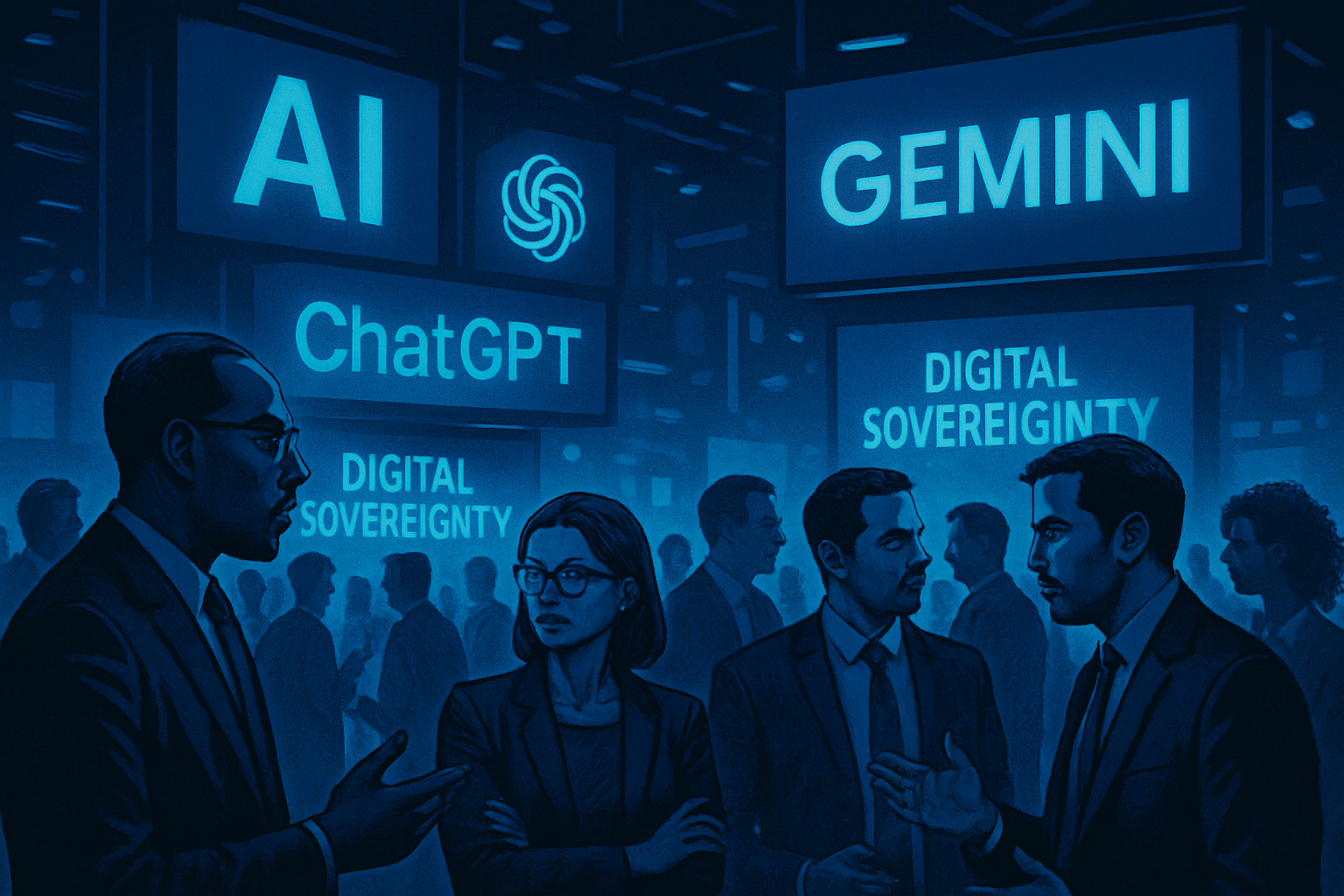
As the United States has recently limited access to certain American AI tools abroad, the issue of digital sovereignty was at the forefront of discussions at VivaTech. The barometer shows that 66% of executives consider national or European sovereignty in AI crucial for their business.
However, the reality of practices reveals a strong dependence on American tools: 89% of executives use at least one generative AI tool of American origin, such as ChatGPT, Claude, or Google Gemini. Mistral AI, the only notable European player, remains far behind. Victorine Bailleul explains that this situation arises because American tools were developed first, creating habits that are difficult to change, although European regulations are pushing for a reassessment of these dependencies.
Towards Strengthened Digital Sovereignty?
The question of digital sovereignty remains open, especially in the face of well-established American tools within organizations. Executives are increasingly imposing contractual and regulatory constraints on themselves and are turning to business networks for guidance. Currently, 63% of executives are members of such networks, with 23% having joined since 2024. The next edition of the barometer, scheduled for 2028, will reveal whether these efforts have borne fruit.
Brief IA — L'actualité IA en français
L'essentiel de l'actualité de l'intelligence artificielle, décrypté et expliqué chaque jour.