Generative AI: A Creative Revolution or a Threat to Art?
Le brief IA que les pros lisent chaque soir
Les 7 actus IA du jour, décryptées en 5 min. Gratuit.
Inclus dès l'inscription : notre sélection des meilleurs guides & comparatifs IA.
Choisis ton rythme
Gratuit · Pas de spam · Désabonnement en 1 clic
Generative AI: A Creative Revolution or a Threat to Art?
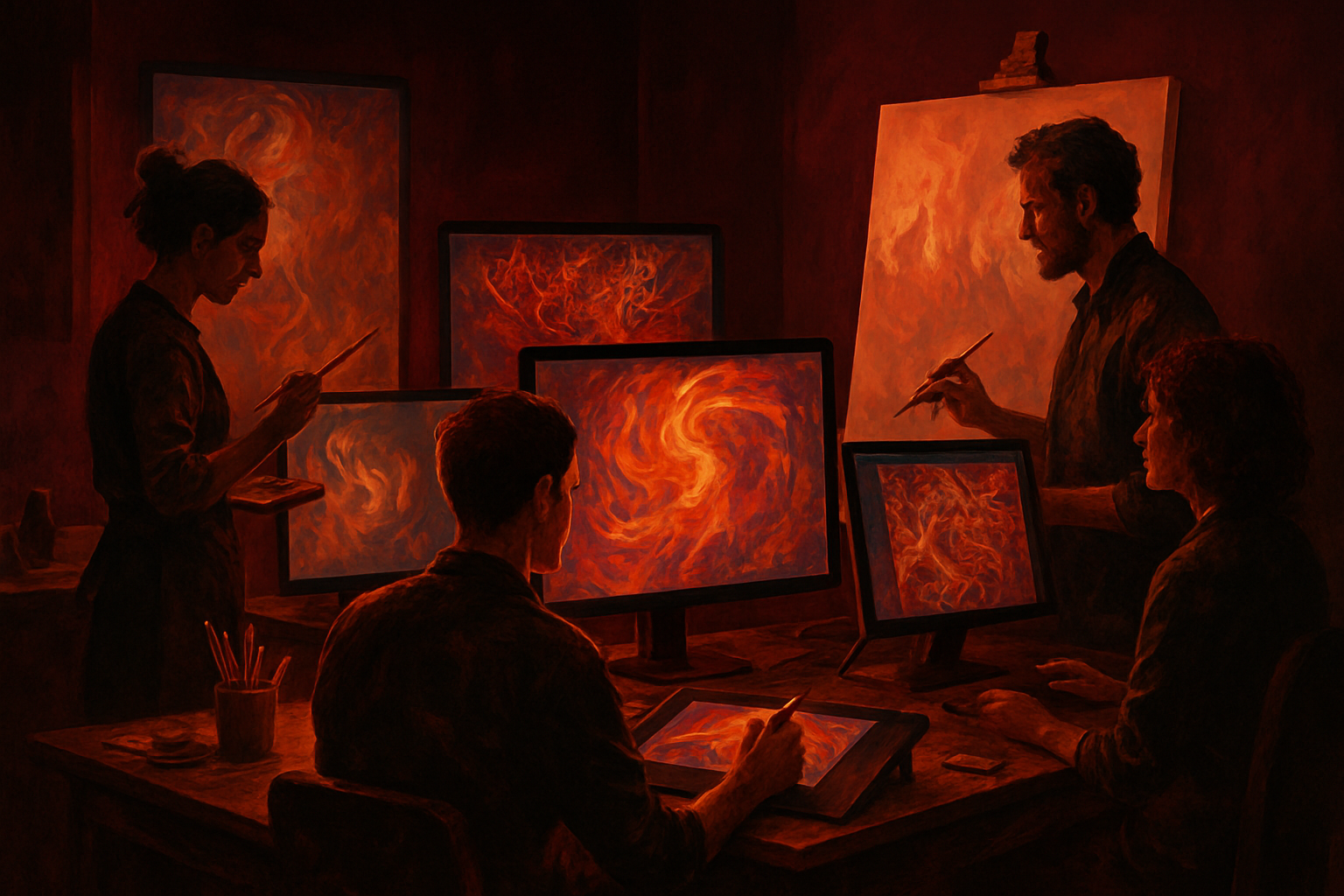
The emergence of generative AI in the realm of creative arts is often seen as a major upheaval, an event that could radically transform the way art is produced and perceived. Critics of this technology argue that large language models and image generators, which rely on advanced diffusion techniques, pose an unprecedented threat to the very essence of human expression. They fear that these tools could signal the end of autonomous human creativity, replacing the soul of art with algorithms.
However, when examining the history of art and technology in the West, it becomes clear that this fear is not new. Every major technological innovation has sparked similar reactions, where the introduction of a new tool capable of simplifying or automating previously manual processes has triggered waves of moral panic. Established artists have often reacted by denouncing a supposed "lack of soul" and retreating into rigid definitions of what constitutes "authentic" art.
The Algorithmic Workshop
In this context, the algorithmic workshop becomes a space of creation where striking 3D models take shape thanks to AI. These tools allow for pushing the boundaries of human imagination while raising questions about the true nature of creativity.
Editor's Picks
The importance of information architecture is highlighted as fundamental for the development of AI. Every challenge encountered in the field of AI points to the necessity of a solid informational structure. Furthermore, friction in an AI world is rethought, questioning why the best user experiences often seem to disappear. Companies that will succeed in this new environment will be those that can trust their teams, allowing them to understand and fully leverage the potential of AI.
Little Treasures This Week
Among this week's reflections, contrast UX in game design, explored by Alisa Smelkova, offers valuable lessons. Similarly, the mirage of consciousness in AI design, analyzed by Slava Polonski, PhD, invites deep reflection on the perception of artificial intelligence. Finally, Neel Dozome reminds us of the historical significance of the MOS 6502, nicknamed "the people's princess."
Tools and Resources
For those experiencing AI fatigue, a practical guide offers solutions to prevent AI from taking control of their daily lives. The accessibility paradox is also addressed, showing how making the web more accessible to humans has paradoxically facilitated its exploitation by machines. Lastly, the redesign of TikTok in five weeks is studied to understand the user experience issues that led to a high unsubscribe rate.
Brief IA — L'actualité IA en français
L'essentiel de l'actualité de l'intelligence artificielle, décrypté et expliqué chaque jour.