Dating Apps: Can AI Rekindle the Flame?
Le brief IA que les pros lisent chaque soir
Les 7 actus IA du jour, décryptées en 5 min. Gratuit.
Inclus dès l'inscription : notre sélection des meilleurs guides & comparatifs IA.
Choisis ton rythme
Gratuit · Pas de spam · Désabonnement en 1 clic
A Declining Culture of Dating
In the world of dating apps, one product often attracts attention, but not always for the right reasons. Many people feel almost compelled to use it, downloading and deleting it repeatedly. Positive feedback is rare, even among those who manage to achieve their goals. Users frequently complain about their experiences, swearing never to return.
You guessed it, we are talking about dating apps.
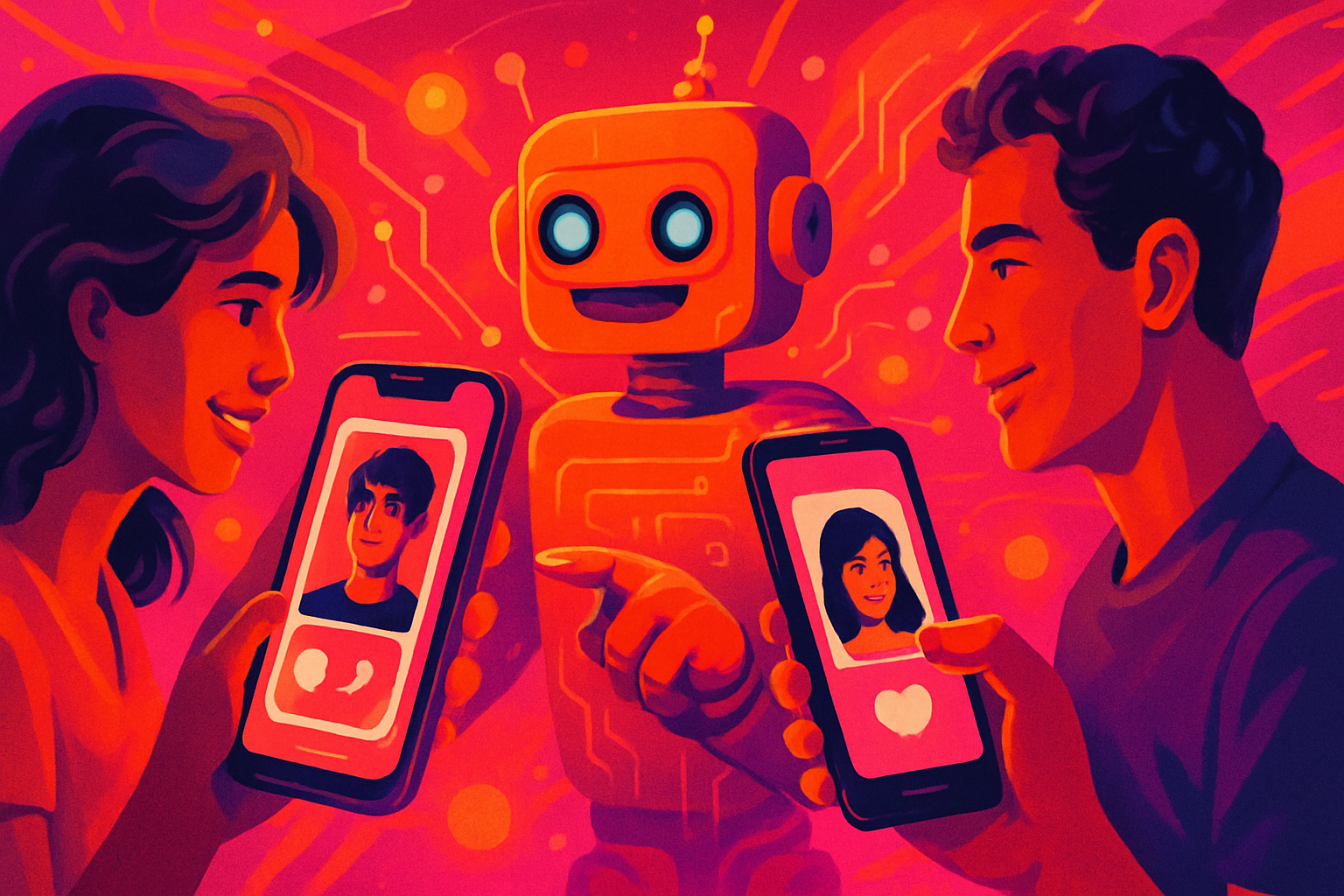
According to a survey conducted by Forbes, about 78% of users expressed feelings of burnout regarding these apps. Giants like Tinder and Bumble have seen their number of paying subscribers decline over the past two years. In response to this trend, both large companies and startups are turning to AI in an attempt to win back users. Match Group, which owns Tinder and Hinge, partnered with OpenAI in 2024, investing over $20 million in AI that year. Spencer Rascoff, CEO of Match Group, is convinced that AI will "change everything."
This perspective seems promising. But can AI really save someone from the challenges of online dating?
AI in Dating Apps
The integration of AI into dating apps is already underway, often in subtle ways. For example, Tinder's Smart Photos feature discreetly evaluates your profile pictures based on their performance and automatically highlights the best one. Hinge has introduced an AI safety feature that detects inappropriate language and prompts users to confirm their message with a "Are you sure?" Other innovative features have also emerged:
-
AI Dating Coach: Apps like Amori and Rizz position themselves as virtual assistants. Rizz, which has 1.5 million monthly users, allows you to upload a conversation and generate multiple response options (witty, formal, flirty, etc.) to copy and paste. Users seem more comfortable with this type of AI assistance, as it resembles asking a friend for advice, except this friend is available 24/7.
-
AI Compatibility Predictors: Some apps believe that similarity fosters compatibility and use AI to assess it based on factors such as appearance, personality, and hobbies. SciMatch even claims to predict personality by analyzing faces, although this method is deemed unreliable by most scientists.
-
AI Clones of Users: In 2023, a dating company named Volar was launched. Users create an AI clone of themselves through a 5 to 10-minute conversation (with the option to upload their voice), then let their clone interact with other clones. Users can monitor the conversation and initiate a real discussion if things go well. "We skip a lot of the ice-breaking stage," said founder Mr. Chiang. "We call it starting at the second date rather than the first." (Volar shut down in 2024 after failing to raise additional funds.)
How Users Really Feel
Only 15% of people believe that AI-powered dating apps will lead to more successful relationships. Women are particularly skeptical: only 10% of them are positive, compared to 20% of men. The reasons for this skepticism are quite clear.
-
Lack of Authenticity: Nearly half of dating app users are looking for long-term relationships, which means they seek honesty and commitment. As soon as they suspect AI involvement, they generally lose trust or feel betrayed. Conversations start to resemble cheesy pickup lines and repetitive small talk.
-
Poor Representation of People: A survey from Boston University revealed that 60% of respondents believe that most people lie on dating apps. The training of AI relies entirely on the data provided by users, so if the input is inaccurate, the output will be too. Hallucinations exacerbate the problem. Most people trying AI clone apps report that their clones invent hobbies and interests. Having to constantly monitor and retrain your clone defeats the purpose. And it raises a broader question: are you connecting with a real person or with an AI's interpretation of one?
-
Efficiency Can Make People More Impatient: AI dating apps promise "error-free" matches. But sometimes, efficiency is precisely the problem. People already complain about being "ghosted" constantly, even when things seem to be going well, because there is always another option just a swipe away. Research shows that continuous access to unlimited potential partners creates a "rejection mindset." Users gradually become more indifferent, with the chance of accepting a match decreasing by 27% between the first and last profile viewed. AI further lowers this cost. Why give someone a second chance if the algorithm has already said they are not your match?
-
Makes the Experience More Stressful: Many people already feel like products on display: the bio page resembles a product description, and being swiped left or right feels like being tossed in or out of someone's shopping cart. You have to find the best way to promote yourself, whether with a few cute selfies, photos with friends to prove you have a social life, or maybe a fishing or gym photo to showcase your hobbies. AI adds extra pressure, as every piece of information becomes training data. Everything must be intentional and flawless.
AI also shapes your expectations. When it tells you that someone is "perfect" for you, excitement builds even before you meet. If the in-person date doesn't go well, do you blame the algorithm or yourself, assuming there's something wrong with you?
The Real Reason AI Can't Save Dating Apps
A 2023 study of 30 dating apps found that most rely on dark patterns and gamification to generate revenue—features that users describe as manipulative and emotionally exhausting. Match animations release dopamine but are often followed by ghosting. Likes are vague until you pay. Every swipe is a reward loop, and the unpredictability of matching or rejection is what keeps users hooked.
None of this is designed for people who want to leave the app. It is designed for those who keep coming back. As an industry analysis stated, dating app fatigue is a structural failure of products optimized for engagement rather than connection. AI does not solve problems; it accelerates them.
A real and meaningful connection is not efficient, and it shouldn't be. It takes time, discomfort, and vulnerability. Technology can facilitate the process, but it cannot replace it.
Dating apps are likely one of the most challenging products to design correctly. They sit at the intersection of efficiency and something deeply personal, and there are countless variables that determine whether someone has a good user experience. Throwing AI at the surface without addressing what lies beneath will only worsen the mess.
Brief IA — L'actualité IA en français
L'essentiel de l'actualité de l'intelligence artificielle, décrypté et expliqué chaque jour.