AI Transforms Military Medical Training
AI in Military Training
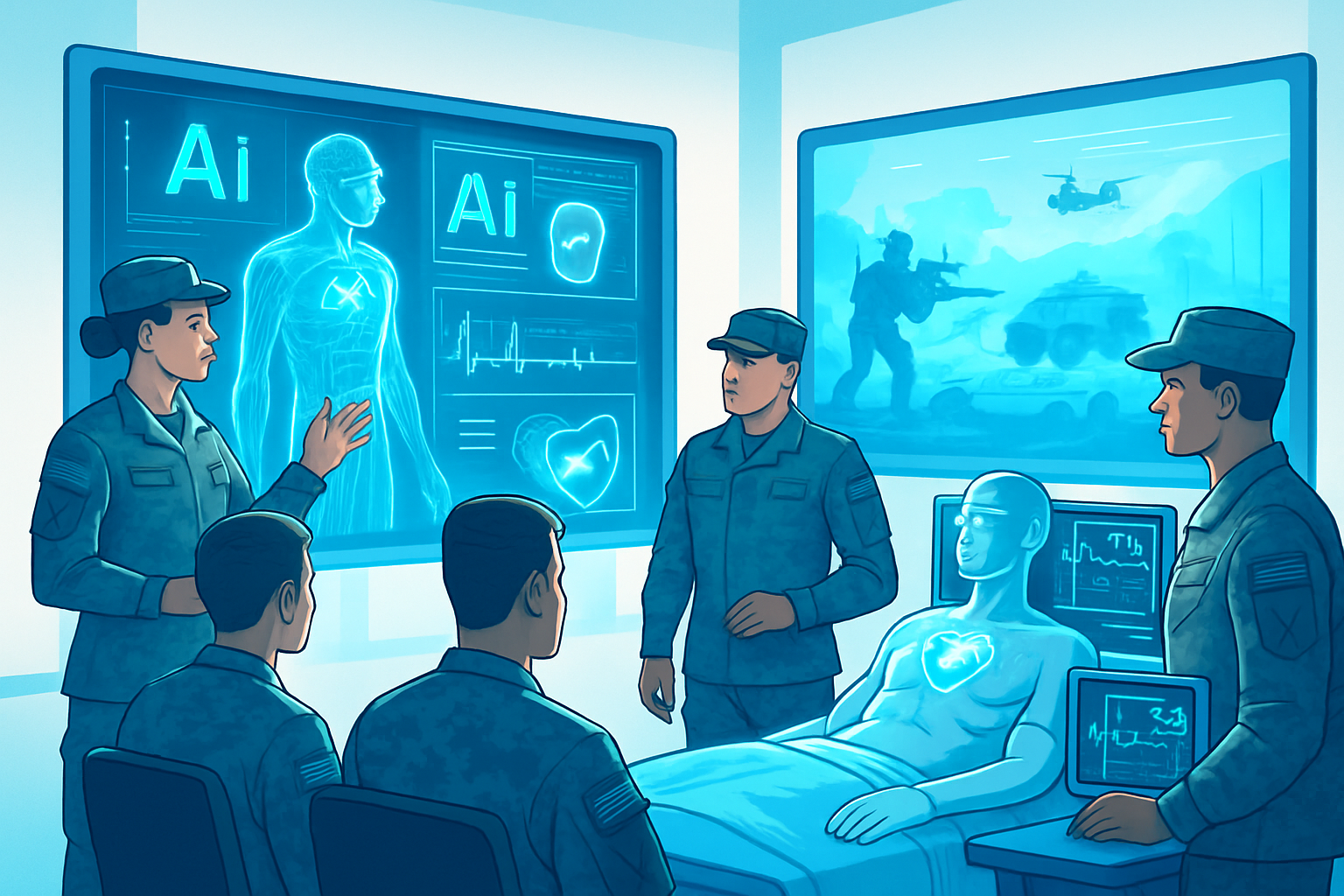
In a context where the demands of modern battlefields continue to grow, the Army is turning to artificial intelligence to enhance the training of its special operations medics. The goal is to strengthen essential skills without extending the duration of courses, which already lasts nearly nine months.
Recent conflicts, particularly in Ukraine, as well as the increasing use of drones, directly influence the content of training programs. Military medics must now prepare to operate in complex environments where injured soldiers may remain for extended periods without evacuation. To address these challenges, the military school dedicated to training special operations medics is leveraging AI to integrate new lessons into their curriculum.
New Challenges and Skills to Acquire
The army is preparing for large-scale combat operations, which involve new injuries, particularly those caused by drones. These developments require medical personnel to develop skills that were less prioritized during conflicts in Iraq and Afghanistan. However, the Joint Special Operations Medical Training Center cannot simply extend its courses to include these new skills. Colonel Ken Dwyer, the school’s commander, emphasizes the need for faster and more effective learning for students, who must be quickly integrated into the forces.
Instructors face a significant challenge: transforming students, often without prior medical experience, into highly skilled paramedics. Graduates must be capable of managing severe hemorrhages, treating complex injuries, and providing basic care to civilians, all while addressing the health needs of many soldiers outside the battlefield.
Le brief IA que les pros lisent chaque soir
Les 7 actus IA du jour, décryptées en 5 min. Gratuit.
Inclus dès l'inscription : notre sélection des meilleurs guides & comparatifs IA.
Choisissez votre rythme
Gratuit · Pas de spam · Désabonnement en 1 clic
The Importance of Tactical Skills
In addition to medical skills, students, who will serve with the Rangers, Green Berets, and Marine special units, must also master the tactical skills expected of special operators. This leaves little room in the training schedule to incorporate new skills.
To optimize this precious time, course leaders analyze student performance, including the time required to master specific skills and the number of repetitions needed. With the help of AI, they can identify how to maximize their program without replacing instructors, but by redirecting classroom hours toward the most necessary skills.
Focus on Prolonged Care
A concrete example is training in tourniquet application, a crucial skill during the Global War on Terror. Students may arrive with some familiarity or master this technique more quickly than other care methods, such as removing a tourniquet in the field. The Ukrainian experience shows that these removals, or conversions, are essential for prolonged care when evacuation is not possible. These conversions must be meticulously timed to avoid severe damage.
Training could thus focus more on conversions or other critical areas for medics, such as infection management and medication. This is part of an expanding field called prolonged casualty care, aimed at keeping injured soldiers alive when advanced care is not accessible.
Rapid Evolution Through Data
By refining training so precisely, the program can evolve more quickly. If data shows that students are mastering a skill faster than expected, instructors can reallocate that time to new priorities dictated by emerging lessons from recent conflicts.
"We owe it to them to ensure that we are creating systems" that show instructors "where we should go," said the course leader. "These are educational advancements that, three years ago, simply would not have been possible."
Brief IA — L'actualité IA en français
L'essentiel de l'actualité de l'intelligence artificielle, décrypté et expliqué chaque jour.