AI, a Family Ally: How We Teach It to Our Children
Le brief IA que les pros lisent chaque soir
Les 7 actus IA du jour, décryptées en 5 min. Gratuit.
Inclus dès l'inscription : notre sélection des meilleurs guides & comparatifs IA.
Choisis ton rythme
Gratuit · Pas de spam · Désabonnement en 1 clic
An Introduction to AI for the Whole Family
In a world where technology is rapidly evolving, one family has chosen to integrate artificial intelligence into their daily lives, not only to simplify work tasks but also to educate their children on its use. The author of this article, a freelance writer working from home, explains how she and her husband, a computer configuration engineer, decided not to hide their use of AI from their children, but rather to include them in the learning process.
The couple frequently uses AI to make their professional and personal lives more efficient. They have taken the initiative to teach their children that AI is a supportive tool, not a substitute for human thought. This approach aims to show the children how AI can be constructively integrated into their lives.
AI as an Educational and Fun Tool
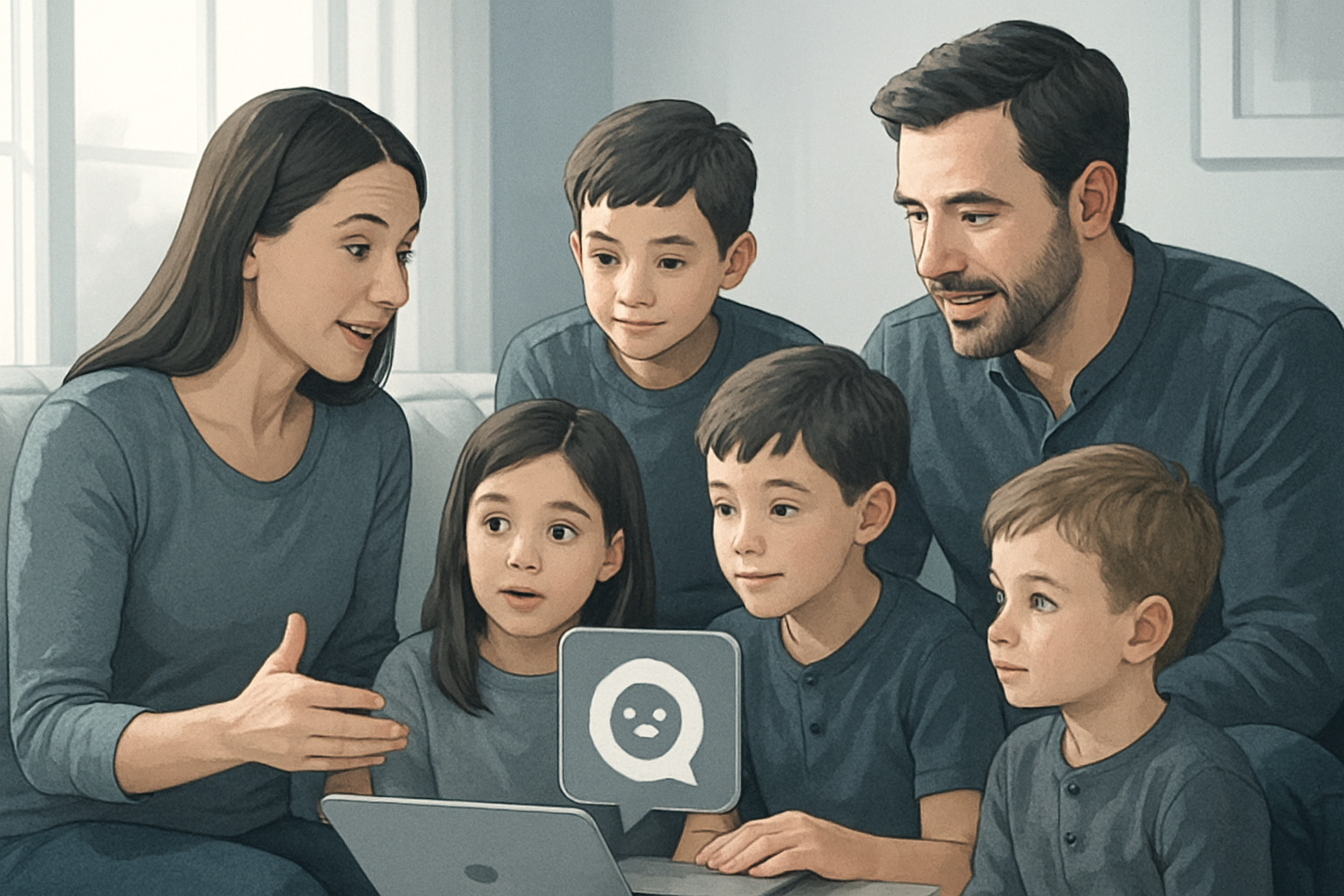
The couple's children, aged 12, 9, and 5, are used to seeing their parents focused on their screens for work. However, they didn't really understand how this technology was being used until their parents began utilizing the voice chat feature with Claude. This approach allowed the children to discover the role of AI in their parents' daily lives in an interactive way.
One day, the husband initiated a voice chat with Claude in the family living room. What started as a simple experiment quickly turned into a fun family activity. The children were captivated by the warm voice of the voice assistant and began asking their own questions, even seeking advice on how to make a microwave chocolate mug cake. This experience not only entertained the family but also opened the door to a new way of learning together.
AI in Service of Daily Life
Although AI is primarily used by the couple for professional reasons, it has also found its place in their family life. The author uses AI to generate ideas, organize research, and speed up the editing of her work, while her husband uses it to solve technical and coding problems. Outside of work, AI is used to plan meals, research products, organize trips, and even to answer the many questions from the children.
This daily use of AI allows the children to see how it can be used practically and effectively. They learn to interact with technology while developing their curiosity and ability to ask relevant questions.
Learning Through Observation and Interaction
Using live conversation with AI applications has allowed the children to learn by observing their parents solve problems in real-time. Initially, switching to voice chat was a matter of convenience, but it has proven to be a valuable educational tool.
The children understand the difference between work time and family time, and they know when it is appropriate to participate. They are fascinated by the technology and are learning to navigate it independently. For example, the 9-year-old spent an afternoon asking for strategies to improve at Scrabble, while the youngest, aged 5, asked questions about how to convince her brothers to let her play with them.
Initial Concerns and Risk Management
Like many parents, the author initially worried about the potential effects of AI on her children, particularly regarding the development of their critical thinking skills. To prevent AI from becoming a substitute for thought, the parents teach their children to use it as a supportive tool.
They emphasize the importance of developing their own ideas and opinions while using AI to help overcome obstacles or generate ideas. The parents also discuss the limitations of AI, using Claude's mistakes as learning moments to teach the children the necessity of verifying information and not blindly following technology.
The Positive Impact on Family Life
One of the greatest benefits of using AI for this family is the time it has allowed them to reclaim. By automating certain tasks, the parents can spend more time with their children and on important family activities. Work that previously took several hours can now be completed more quickly, reducing the work time that extended into evenings and weekends.
AI does not replace human connection, but it helps preserve it by freeing up time for quality moments. The parents can be more present to help their children with homework, support them at sports events, or simply enjoy relaxing moments together. For this family, the thoughtful integration of AI into their daily lives has been a major success.
Brief IA — L'actualité IA en français
L'essentiel de l'actualité de l'intelligence artificielle, décrypté et expliqué chaque jour.