NATO Bets on AI for Its Drones, but Maintains Human Control
Le brief IA que les pros lisent chaque soir
Les 7 actus IA du jour, décryptées en 5 min. Gratuit.
Inclus dès l'inscription : notre sélection des meilleurs guides & comparatifs IA.
Choisis ton rythme
Gratuit · Pas de spam · Désabonnement en 1 clic
NATO and the Integration of AI in Drone Operations
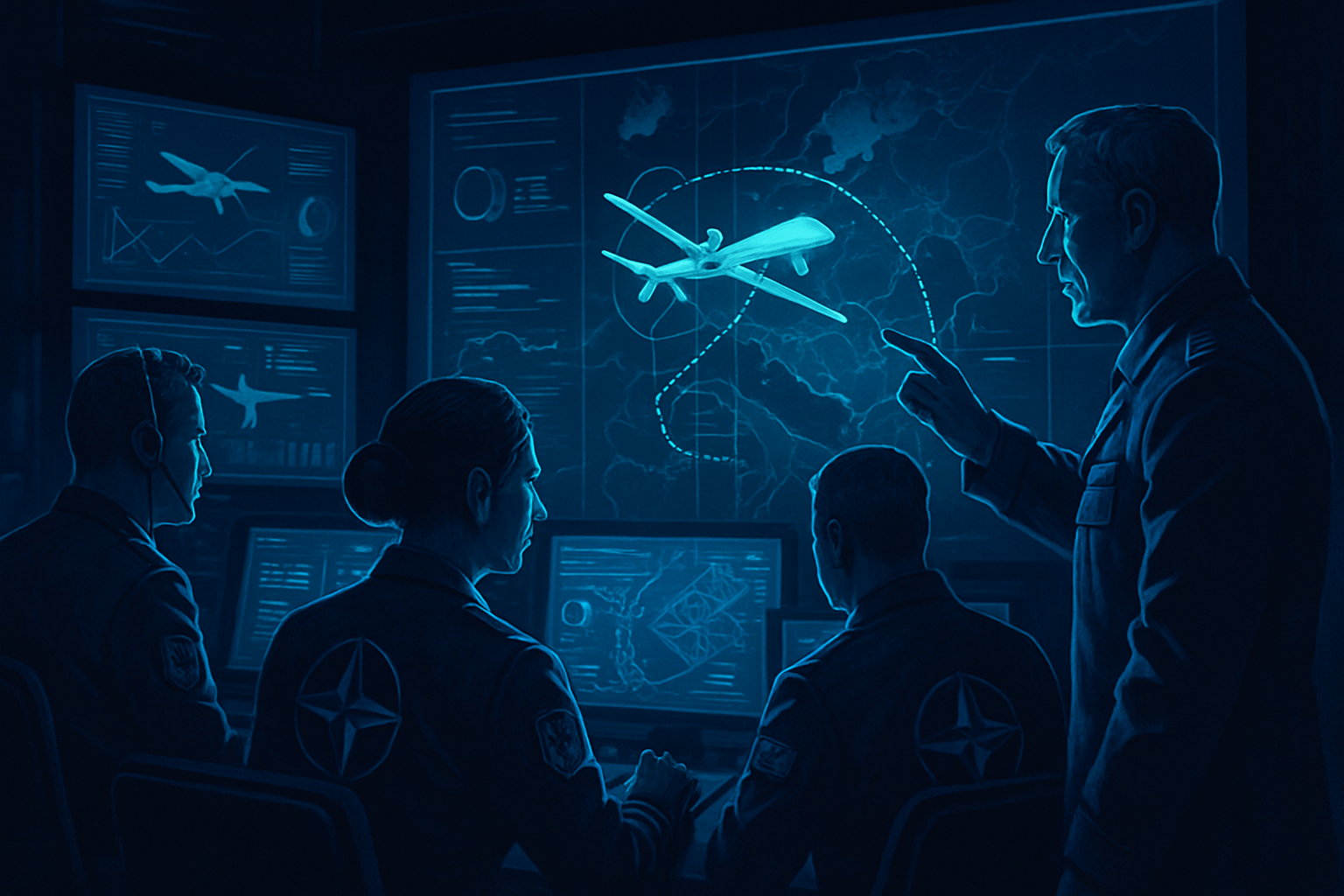
The North Atlantic Treaty Organization (NATO) is entering a new technological era by integrating artificial intelligence (AI) into its drone operations. This initiative aims to enhance the alliance's defense capabilities, particularly on its eastern flank, in response to potential threats. However, despite the increasing automation, decisions regarding target engagement will remain the responsibility of human operators, ensuring human control over lethal actions.
Strengthening NATO's Eastern Flank
As part of its defense strategy, NATO plans to utilize a complex network of drones, sensors, and AI to monitor and protect its eastern borders. This network is designed to detect and respond to any potential attacks, particularly from Russia. The deployed systems could operate semi-autonomously, but the final engagement decision will remain in human hands, thus ensuring constant oversight of military actions.
Ukraine's Approach to Drones and AI
Ukraine, facing an armed conflict, has also adopted a similar approach by integrating AI into its drone operations. While technology plays an increasingly significant role, Ukrainian military and defense companies emphasize that humans must remain at the core of strategic decisions. This philosophy reflects a desire to maintain a balance between technological innovation and human intervention on the battlefield.
The Eastern Flank Deterrence Initiative
NATO's Eastern Flank Deterrence Initiative represents a major effort to build a digital defense network along its borders with Russia and Belarus. This ambitious project includes the use of thousands of drones, sensors, and satellites, all interconnected by AI, to detect and counter potential threats. The network extends from northern Finland to the Black Sea, covering a vast strategic area. Traditional military forces, such as tanks and artillery, will continue to play a crucial role in this overall strategy.
The Role of Human Operators
According to Major Ben Schiff of the U.S. Army, while some drone systems possess limited autonomy capabilities thanks to AI, human control remains essential. Ground operators are responsible for critical decisions, particularly those concerning target engagement. AI can automate certain repetitive tasks, but human judgment is indispensable for strategic decisions.
Towards a Decentralized Destruction Network
NATO is striving to transition from a linear destruction chain to a decentralized destruction network. This new model allows for rapid data transmission from sensors to weapon systems and operators. This approach, already tested in combat, enables effective coordination of military actions, as demonstrated by the successful interception of an Iranian drone by U.S. forces in the Middle East.
The Importance of Integration in the Operational Ecosystem
Major Matt Blubaugh emphasizes that the effectiveness of a drone or sensor does not solely depend on its individual performance but on its integration into the overall operational ecosystem. This integration is crucial for maximizing the effectiveness of military operations and ensuring a coordinated response to threats.
Ukraine's Role in Military Innovation
Ukraine plays a key role in the development of AI integration in military operations. In March, the Ukrainian Ministry of Defense launched an innovative program to incorporate AI into its defense processes. This program aims to enhance decision-making, drone navigation, and strike precision while maintaining human control over critical decisions.
Technological Innovation in Ukraine
Andrii Hrytseniuk, CEO of the Ukrainian innovation platform Brave1, revealed that over 200 local companies are working on AI-based components for various military systems. These companies emphasize that, despite the increasing integration of AI, humans will continue to play a central role in controlling drones and other weapon systems.
The Evolution of Military Roles in Ukraine
In Ukraine, robots are gradually replacing soldiers in certain logistical roles, thereby reducing risks to human lives. However, military commanders stress the need to maintain human involvement in strategic decisions. This approach aims to leverage technological advantages while preserving human judgment where it is most valuable.
NATO Learning from Ukrainian Experience
U.S. Army officers have highlighted that NATO is using lessons learned from the Ukrainian experience to inform its military planning. While NATO does not seek to replicate Ukraine, it draws valuable insights from its innovations and strategies to better prepare for potential future confrontations.
Brief IA — L'actualité IA en français
L'essentiel de l'actualité de l'intelligence artificielle, décrypté et expliqué chaque jour.