The Battle of AI Assistants: Who Will Dominate the Future?
Le brief IA que les pros lisent chaque soir
Les 7 actus IA du jour, décryptées en 5 min. Gratuit.
Inclus dès l'inscription : notre sélection des meilleurs guides & comparatifs IA.
Choisis ton rythme
Gratuit · Pas de spam · Désabonnement en 1 clic
The Evolution of Technological Superpowers
Every major technological advancement has brought a new "superpower" to users. The personal computer democratized access to computing power, transforming machines once reserved for large institutions into tools accessible to everyone. The advent of the internet opened the doors to a wealth of global information, and the smartphone placed this power in every pocket, connecting everyone instantly across the globe. However, despite these advancements, users remain the primary actors in their daily tasks, juggling email management, meeting planning, and incessant decision-making.
With each platform shift, technology evolves from a simple tool to something greater. Artificial Intelligence (AI) is currently at this transitional stage. While it is primarily used to ask questions or delegate tasks, the true revolution will occur when AI understands users' needs without them having to express them.
From the Mac to the iPod, from the iPhone to Nest, these platform changes show that those who succeed in transforming a rare capability into an accessible tool for all are those who understand not only the technological change but also the behavioral change it induces.
AI Assistants: An Imminent Change
A limited number of people have had the opportunity to benefit from a personal assistant, a true "superpower" that goes far beyond simple administrative task management. A good assistant understands who you are, your relationships, your priorities, and your concerns. It anticipates your needs even before you express them, thanks to years of collaboration and mutual understanding.
Most people have never had the chance to work with such an assistant, which means they are discovering both what an assistant can accomplish and what AI can become. Currently, AI acts as a painkiller, eliminating friction and automating certain tasks. However, users still remain in charge of AI more than it manages them. This is about to change.
An effective AI assistant requires rich context to offer "superpowers." It must understand not only your preferences and habits but also anticipate your future needs.
Building an Effective AI Assistant
Imagine a freelancer juggling multiple clients and deadlines, or a parent managing a busy family schedule. An AI assistant could track these tasks, allowing the user to focus on what matters most. Similarly, a student could use it to organize their classes and prepare for exams, while an aging adult might rely on it for medication reminders and medical appointments.
An AI assistant is not limited to a simple chatbot or an agent executing a task. It is a complex combination of technologies working together to provide a seamless user experience. For example, a good AI assistant will not just inform you of a flight delay but will understand the importance of that delay, reschedule your trip, notify the relevant parties, and update your calendar accordingly.
Context is essential to give the assistant an awareness of your environment and current situation. Memory allows it to learn and adapt to your preferences and habits over time. Natural interaction and a well-defined personality are crucial for establishing trust, while skills enable the assistant to perform a variety of tasks.
Finally, the assistant's ability to think allows it to synthesize information and provide useful insights that you might not have discovered on your own. Together, these elements transform AI from a simple response tool into a truly understanding assistant.
The Adoption of AI Assistants
Many people still do not realize that they need an AI assistant, a common phenomenon with the emergence of new platforms. In the early days of personal computing, few understood the utility of a personal computer. Apple anticipated this need by introducing its products in schools and making its computers accessible to students, thereby creating familiarity and trust in the brand.
ChatGPT, for example, reached 100 million users faster than any other consumer technology in internet history. While AI adoption is still in its early stages, the next major shift will see this tool evolve from a simple chatbot to a trusted assistant working constantly alongside users.
Early experiences with AI resembled smarter searching. Today, users automatically delegate simple tasks like sports scores or weather alerts to it. As the assistant becomes more useful, users' dependence on it increases, along with the memory and trust it accumulates. Ultimately, it fully integrates into users' daily lives, helping them manage and enjoy their existence.
The iPhone followed a similar path, evolving from a simple phone to an indispensable multifunctional device. AI assistants are still in their early phase, with much potential to unlock.
The Competition for AI Assistants
Platform wars have often centered around applications, ecosystems, and operating systems. However, the current battle for AI assistants is different.
The assistant is not merely a model but a platform in itself. Just like the iPhone, which integrated hardware, software, and services to transform the way people interact with technology, AI must do the same.
The AI platform war will not be won by the model alone. Whoever succeeds in building a complete assistant experience with context, memory, interaction, skills, and thinking working together will win this battle.
Imagine telling your AI assistant that you need to go to New York for a meeting. Without context, it won’t know where to book the flight. Without memory, it will ignore your seat or hotel preferences. Context informs the model of your current situation, memory reminds it of your preferences, skills allow it to act, interaction builds trust, and thinking helps it anticipate your future needs.
Companies like Microsoft, Google, Apple, Anthropic, OpenAI, Perplexity, and xAI are competing to own this personal interaction with you. Currently, for many of them, the model is their main asset. However, models are quickly becoming commodities. Users' personal devices will connect to different AI "brains" based on what is most economical, fast, or private.
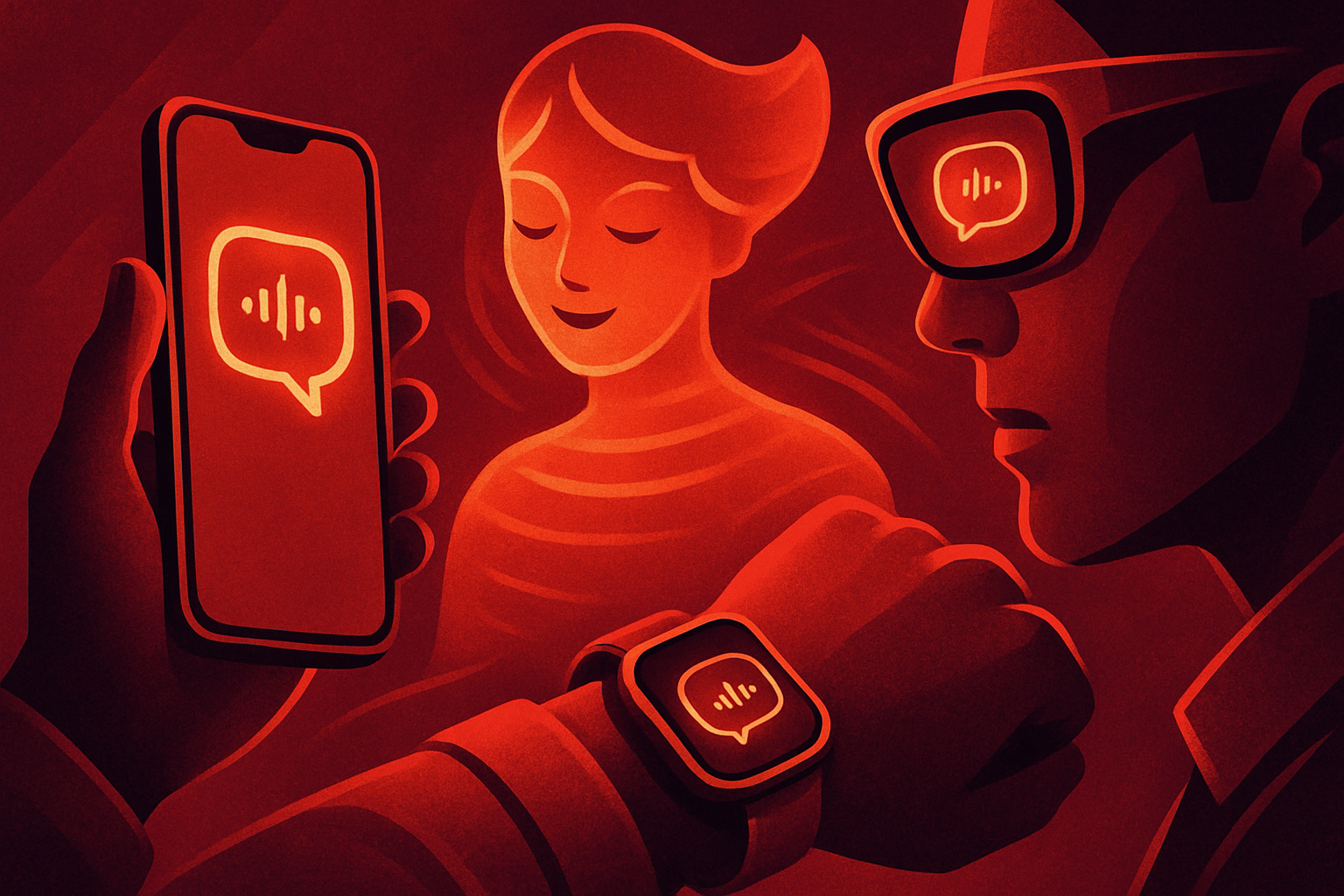
The true asset will be the complete assistant built around you over time. No single cloud service can have a comprehensive view of your life, but a connected ecosystem of devices can. Your phone knows your location, your watch tracks your heart rate, your laptop manages your calendar, and your glasses know who you are talking to. Combined, these signals create a powerful portrait that the assistant can use to better understand you.
This ecosystem forms a Federation of Devices. Whoever controls this federation has the foundation to build the most reliable and valuable AI assistant.
The Limits of the Cloud
A true AI assistant is not something you consult a few times a day. It is constantly at work, requiring continuous computing power. If every interaction has to go through the cloud, the cost of a personal AI assistant becomes comparable to that of a human assistant, which is unaffordable for most consumers.
The only solution is to bring intelligence closer to the user. Take the example of a home security camera: you don’t want every image sent to a remote server to detect motion. Processing is done on the device for reasons of cost, speed, and privacy. Similarly, smart glasses that translate a conversation in real-time cannot wait for a round trip to a data center.
By bringing intelligence closer to the user's devices, it becomes possible to create AI assistants that are both efficient and accessible.
Brief IA — L'actualité IA en français
L'essentiel de l'actualité de l'intelligence artificielle, décrypté et expliqué chaque jour.