Europe Redefines AI: From Regulation to Heavy Industry
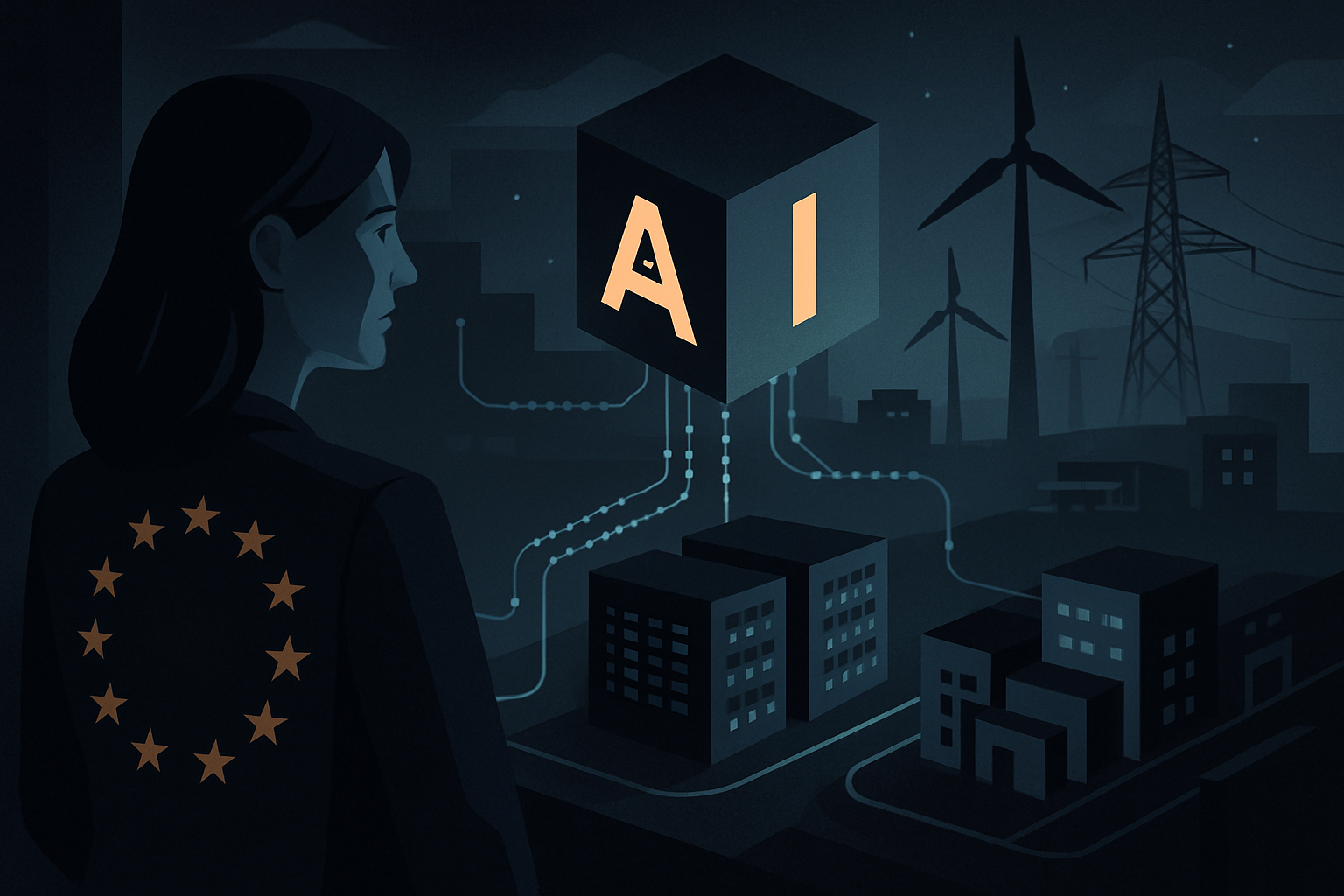
A Strategic Turning Point for AI in Europe
On June 3, the European Commission released an innovative roadmap concerning digitalization and artificial intelligence (AI) in the energy sector. This document marks a significant shift in doctrine, where AI is now viewed as a strategic industrial issue rather than merely a digital question.
Historically, Brussels focused on regulation, with initiatives such as the General Data Protection Regulation (GDPR), the AI Act, the Data Act, the Data Governance Act, and the Chips Act. These measures aimed to frame the use of technologies and protect data. However, the Commission is now emphasizing the creation of material conditions to develop a genuine European AI industry, based on four pillars: energy, computing, data, and networks.
AI, a New Heavy Industry
Until now, attention has primarily been on models, algorithms, and data. Discussions centered around the power of language models and the risks associated with their deployment. However, this phase is gradually being replaced by a more fundamental reality: the availability of infrastructure.
Currently, data centers consume about 2.5% of electricity in Europe. According to the Commission's estimates, their installed capacity could increase from 12 GW to 28 GW by 2030. This expansion occurs in a context where the electrification of the economy is intensifying, making access to electricity as crucial as access to talent or capital. Data centers will also need to participate in balancing the energy system, rather than simply consuming available electricity.
Europe Facing Global Competition
While the United States and China are massively investing in their AI infrastructures, Europe has primarily focused on regulation. In the United States, announced investments over the past eighteen months amount to hundreds of billions of dollars. Companies like OpenAI, Oracle, and SoftBank have launched ambitious projects. Meanwhile, China is integrating AI into its national industrial planning while simultaneously developing its electrical and digital infrastructure. Europe must therefore avoid becoming a mere consumer of technologies developed elsewhere.
Le brief IA que les pros lisent chaque soir
Les 7 actus IA du jour, décryptées en 5 min. Gratuit.
Inclus dès l'inscription : notre sélection des meilleurs guides & comparatifs IA.
Choisissez votre rythme
Gratuit · Pas de spam · Désabonnement en 1 clic
Data Centers: Strategic Assets
The European Commission now considers data centers as strategic assets. It proposes tripartite agreements between energy operators, public authorities, and data center operators to coordinate their development with national and European energy policies. Long-term power purchase agreements and the use of waste heat for urban networks are encouraged.
Towards Algorithmic Sovereignty
This strategy marks the return of a European industrial policy. Historically, the construction of the single market relied on competition and regulatory harmonization, but recent crises have altered this approach. Initiatives like the Chips Act for semiconductors and AI Factories for computing capabilities illustrate this evolution. The energy-AI roadmap fits into this continuity, recognizing that certain infrastructures are too strategic to be left solely to market dynamics.
For the first time, the Commission asserts that future AI models used in the energy sector must be developed in Europe. The goal is to create specialized models to improve the forecasting of renewable production and the management of networks. This ambition reflects the emergence of algorithmic sovereignty. The issue is not to directly compete with generalist models but to ensure that critical systems for European energy supply do not depend solely on external actors.
Energy Data: A New Asset
Energy data is now seen as a strategic asset for the development of AI in Europe. This approach aims to ensure that Europe can develop and master its own technologies in an increasingly competitive sector. This logic echoes that which led to the creation of Airbus in the aerospace industry, aiming to maintain control over essential technologies for the continent's strategic autonomy.
Brief IA — L'actualité IA en français
L'essentiel de l'actualité de l'intelligence artificielle, décrypté et expliqué chaque jour.