The U.S. Navy Bets on AI to Revolutionize Its Fleet
A Strategy for an AI-Focused Fleet
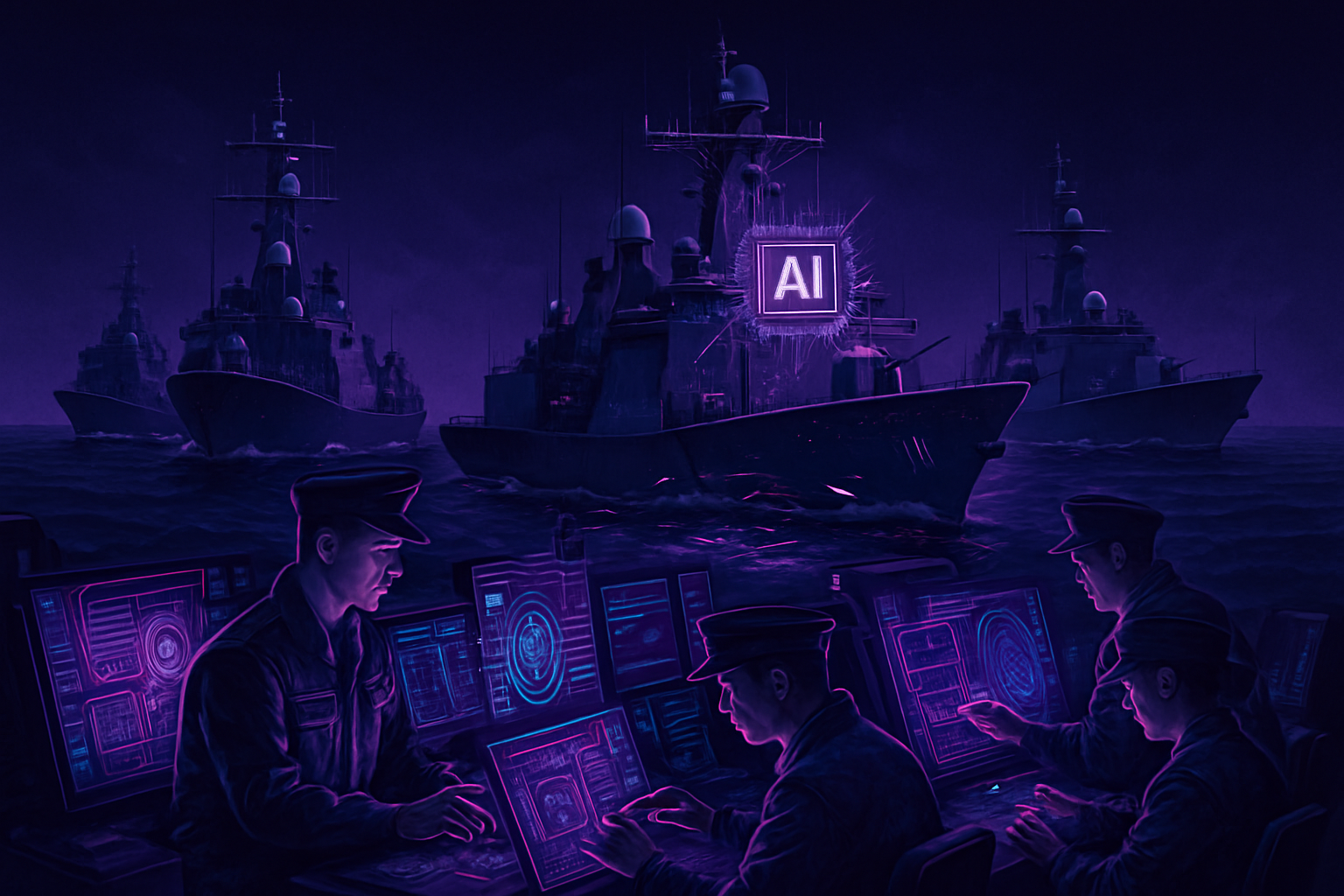
The U.S. Navy recently unveiled an ambitious strategy aimed at transforming its fleet into an "AI-focused" force. This strategic plan aims to integrate artificial intelligence into all aspects of its naval operations. The idea is to prepare personnel to effectively utilize data and AI while adapting to the rapid technological changes that characterize our era.
The Navy's vision is to create an "AI-first" fleet, focusing on data enhancement, accelerated technology adoption, and training sailors to be adept with new technologies. This recently published strategy emphasizes increased use of AI and data while ensuring that personnel are trained to master these tools and keep pace with their rapid development. This initiative is part of a broader transformation within the U.S. military, which is incorporating AI into its operations, missions, and systems.
The Importance of Speed in Future Combat
The significance of this initiative lies in the fact that future naval battles could be determined by a force's ability to collect, process, and act on information faster than its adversaries. Execution speed could become a decisive factor in upcoming conflicts.
This week, the Navy shared details about its roadmap to "militarize data and artificial intelligence." This plan, developed over more than a year, aims to build a data-ready and AI-enabled force.
A Roadmap to Outpace Adversaries
According to Hung Cao, Acting Secretary of the Navy, this strategy positions the Department of the Navy to outpace any adversary by learning and fighting faster through rapid deployment of data and artificial intelligence. He stated that this is the roadmap for building an "AI-first" fleet, transforming information into an advantage in combat and enabling faster and better decision-making.
The Six Pillars of the Plan
The plan focuses on six key areas:
- Accelerating AI Use: Identifying the most promising projects for large-scale implementation.
- Streamlining Data: Improving the collection, organization, and interpretation of data for faster understanding by sailors, which is essential for new technologies integrated into the armed forces.
- Enhancing Hardware: Strengthening data and AI capabilities.
- Optimizing Organizational Processes: Allowing more individuals to have influence and authority over the use of data and AI.
- Establishing Partnerships: Collaborating with industry, academia, the expanded federal government, as well as American allies and partners.
Le brief IA que les pros lisent chaque soir
Les 7 actus IA du jour, décryptées en 5 min. Gratuit.
Inclus dès l'inscription : notre sélection des meilleurs guides & comparatifs IA.
Choisis ton rythme
Gratuit · Pas de spam · Désabonnement en 1 clic
AI Serving Personnel
The integration of AI is not limited to weapons and technologies; it also extends to personnel for document processing and repetitive tasks. The Navy plans to develop its personnel to be more skilled in data and AI technologies. This includes recruiting staff with specific skills, developing expertise within the workforce, and helping prepare workers for the rapid pace of technological change.
Towards an "AI-First" Fleet
Ultimately, this plan will lead the Navy toward what Cao described as an "AI-first" fleet. Navy spokesperson Lt. Jake Ryan explained to Business Insider that this fleet will deliberately integrate artificial intelligence across all naval operations to enhance the U.S. combat advantage in the digital age, where the speed of information gathering is now the decisive variable for maintaining dominance.
Alignment with U.S. Military Strategies
The Navy's AI plan aligns with broader U.S. military strategies to leverage these technologies. The service has invested in automation and AI in shipbuilding, including an AI program that reduced a submarine planning task from 160 hours to 10 minutes, as well as automated factories to manufacture parts for advanced nuclear submarine programs.
The Army and AI
The Army is also testing the use of AI in its new warfare software, Next Generation Command and Control, identifying specific use cases for the technology while keeping soldiers involved. AI and automation have helped synthesize and process data, as well as predict supply, ammunition, and maintenance issues.
The Pentagon's Impact
As U.S. armed forces explore AI opportunities in weapons such as unmanned systems, intelligence, and target analysis, the Pentagon has also recognized the value of using AI in its more mundane administrative tasks, thereby reducing the cognitive load on service members. The Department of Defense's AI program recorded 1.5 million daily users last month, up from 80,000 in December 2025.
Brief IA — L'actualité IA en français
L'essentiel de l'actualité de l'intelligence artificielle, décrypté et expliqué chaque jour.