Dario Amodei: Anthropic's AI Threatens Global Employment
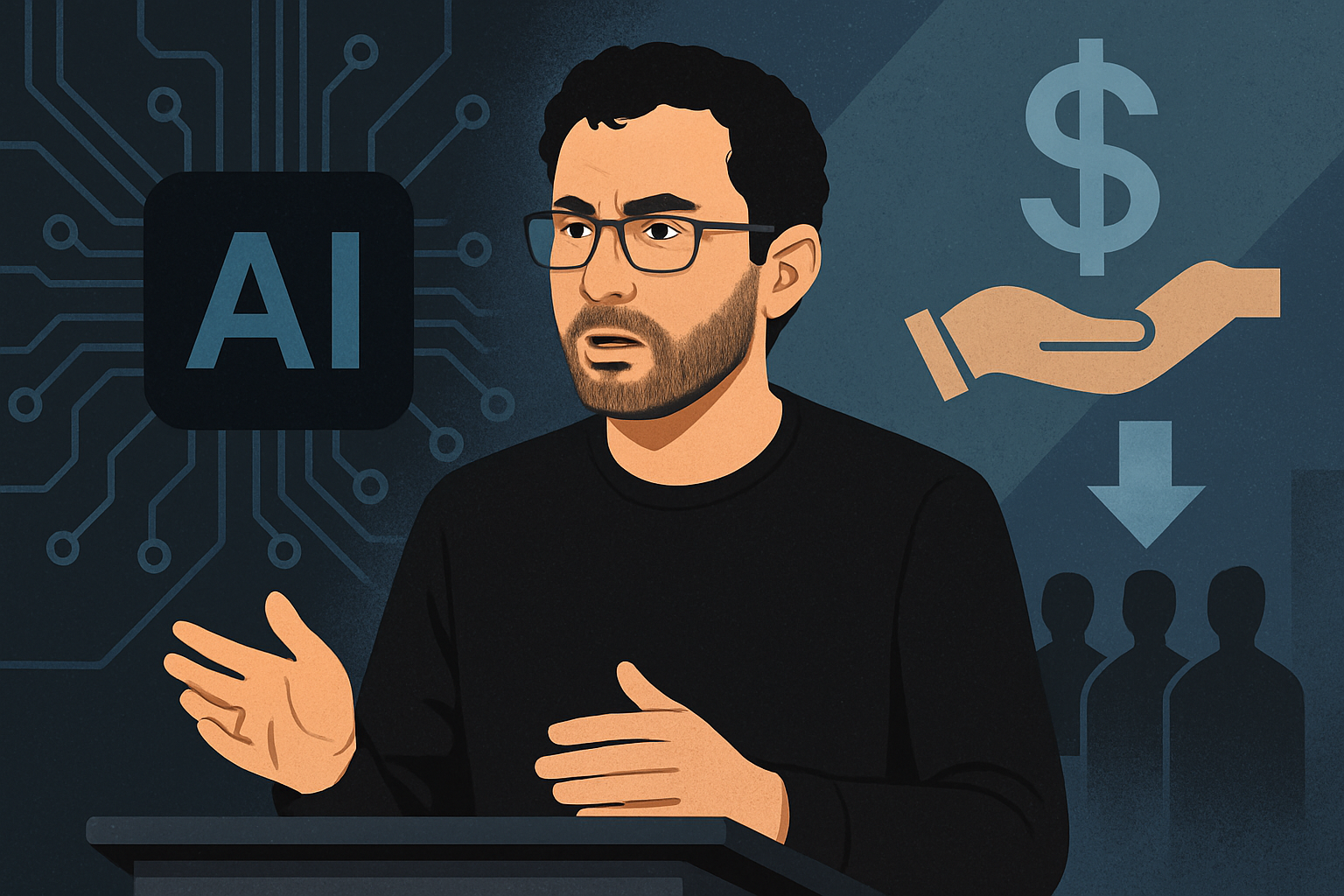
Anthropic's CEO Warns About AI Risks
Dario Amodei, CEO of Anthropic, recently published a policy essay in which he warns that job losses related to artificial intelligence could be an intrinsic feature of this technology. According to him, this situation may not simply be a temporary growing pain, but a structural consequence of AI development.
In this essay, Amodei proposes measures to offset these losses, such as the establishment of a universal basic income. These comments come as Anthropic prepares for a historic IPO, marking a crucial period for the company.
Amodei clarifies that he does not seek to be a "doomsayer" regarding the impact of AI on employment. However, he emphasizes that the massive displacement of jobs could be an inherent property of the technology, due to its ability to replicate human cognition on a large scale.
A Lasting Threat to Employment
Amodei has already sounded the alarm on this issue. He previously warned that AI could eliminate up to half of entry-level office jobs within the next five years. He also cautioned about a potential increase in the unemployment rate, which could reach between 10% and 20%.
His latest essay does not solely focus on predicting a job apocalypse but rather on the actions that governments should consider if a lasting displacement occurs. He suggests slowing the damage while sharing the gains generated by AI.
Proposals to Mitigate Effects
Amodei calls for better "measurement and monitoring" of AI's effects on the labor market, particularly through the expansion of government statistics. He also proposes "pro-employment incentives," such as wage insurance for workers forced to accept lower-paying jobs, tax incentives for job retention, and subsidies for workforce training.
Le brief IA que les pros lisent chaque soir
Les 7 actus IA du jour, décryptées en 5 min. Gratuit.
Inclus dès l'inscription : notre sélection des meilleurs guides & comparatifs IA.
Choisissez votre rythme
Gratuit · Pas de spam · Désabonnement en 1 clic
He emphasizes the need for a better job matching infrastructure to facilitate the transition of workers to new opportunities. Amodei also urges companies and policymakers to stop "downplaying" the risk of job loss and to take proactive measures to mitigate these impacts.
If AI permanently reduces the demand for human labor, Amodei believes that governments may need to go further. He envisions long-term income supports, such as universal basic income, funded by taxes on affected businesses or higher capital gains taxes. He also mentions universal capital accounts to redistribute wealth created by AI.
A Shift in Tone in the AI Industry
This essay comes amid a shift in tone among leaders in the AI industry. Figures like Amodei and Sam Altman, CEO of OpenAI, are now emphasizing productivity gains and new economic opportunities, rather than warnings about job losses.
Business Insider recently reported that these leaders, who once highlighted the disruptive effects of AI, are now focusing on how workers and society can benefit from the technology's gains. This comes as they prepare for highly anticipated IPOs.
In his latest policy memo, Amodei stated that Anthropic aims to help its enterprise clients find new revenue and "do more with their existing workforce," rather than solely focusing on cost savings. However, he added that if the benefits of AI are as significant as he argues, society needs a plan for workers who may not automatically share in these gains.
Brief IA — L'actualité IA en français
L'essentiel de l'actualité de l'intelligence artificielle, décrypté et expliqué chaque jour.