OpenAI: Sam Altman Bets on Proactive AI
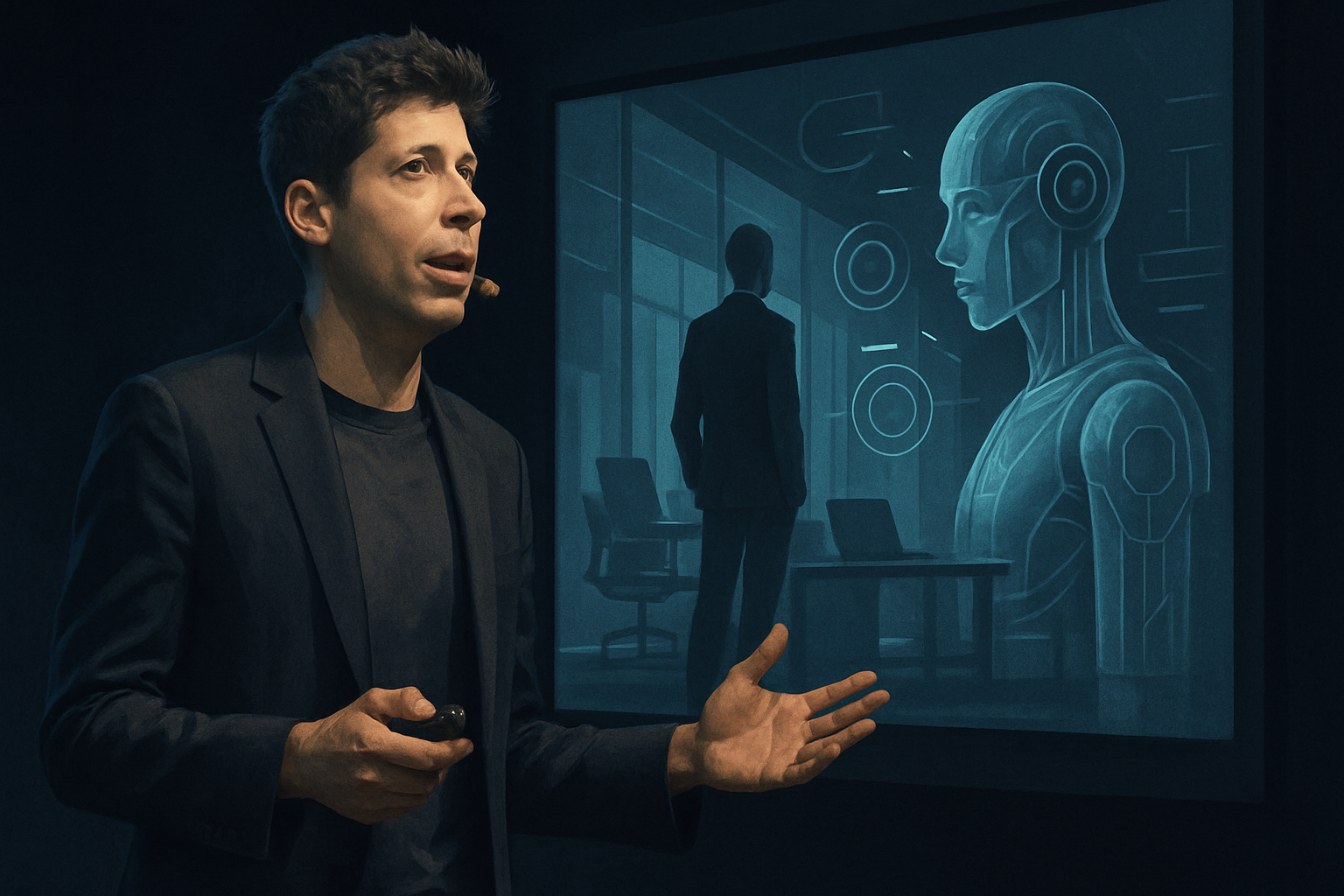
Sam Altman, the CEO of OpenAI, recently shared his vision for the future of artificial intelligence at a business-focused event. According to him, proactive AI, which operates continuously in the background, represents the next major phase after chatbots and AI agents. This approach aims to address a fundamental problem: most users do not know what to ask of AI. By directly integrating the context of a business, proactive AI could autonomously manage tasks without requiring human intervention.
Altman emphasized that many companies are struggling to cope with the rapidly rising costs associated with AI. Since the beginning of the year, these costs have become a major issue. For instance, Uber has already exhausted its AI budget for the year by the first quarter. Altman described this increase in costs as "probably the second biggest theme." OpenAI aims to help businesses derive more value from the technology while reducing expenses.
Currently, agent-based systems, such as Codex, represent the largest category of AI products. However, users are often confused about how to use the various available tools and struggle to combine the necessary plug-ins. OpenAI is therefore working on a super app that integrates the functionalities of Codex, ChatGPT, and other tools to simplify this usage.
Le brief IA que les pros lisent chaque soir
Les 7 actus IA du jour, décryptées en 5 min. Gratuit.
Inclus dès l'inscription : notre sélection des meilleurs guides & comparatifs IA.
Choisissez votre rythme
Gratuit · Pas de spam · Désabonnement en 1 clic
Another significant challenge is that most users do not know how to fully leverage AI systems. Altman noted that even when impressive use cases are demonstrated, customers do not use AI optimally. He mentioned that "the activation energy is a bit too high," which complicates learning new ways of working. Proactive AI could be the solution to this problem, automating tasks without requiring a deep understanding from users.
For this vision to become a reality, major adjustments will be necessary. Companies will need to rethink how they deploy AI, adapt their security protocols, and reassess their allocation of computing resources. An AI operating continuously with access to all the context of a business imposes very different data protection requirements compared to a simple chat window. Altman stated that "if there is one thing to prepare for the next phase in the coming year, this is the one I would choose."
Brief IA — L'actualité IA en français
L'essentiel de l'actualité de l'intelligence artificielle, décrypté et expliqué chaque jour.