Léon XIV in France: Guarantees and Limits for AI
Le brief IA que les pros lisent chaque soir
Les 7 actus IA du jour, décryptées en 5 min. Gratuit.
Inclus dès l'inscription : notre sélection des meilleurs guides & comparatifs IA.
Choisis ton rythme
Gratuit · Pas de spam · Désabonnement en 1 clic
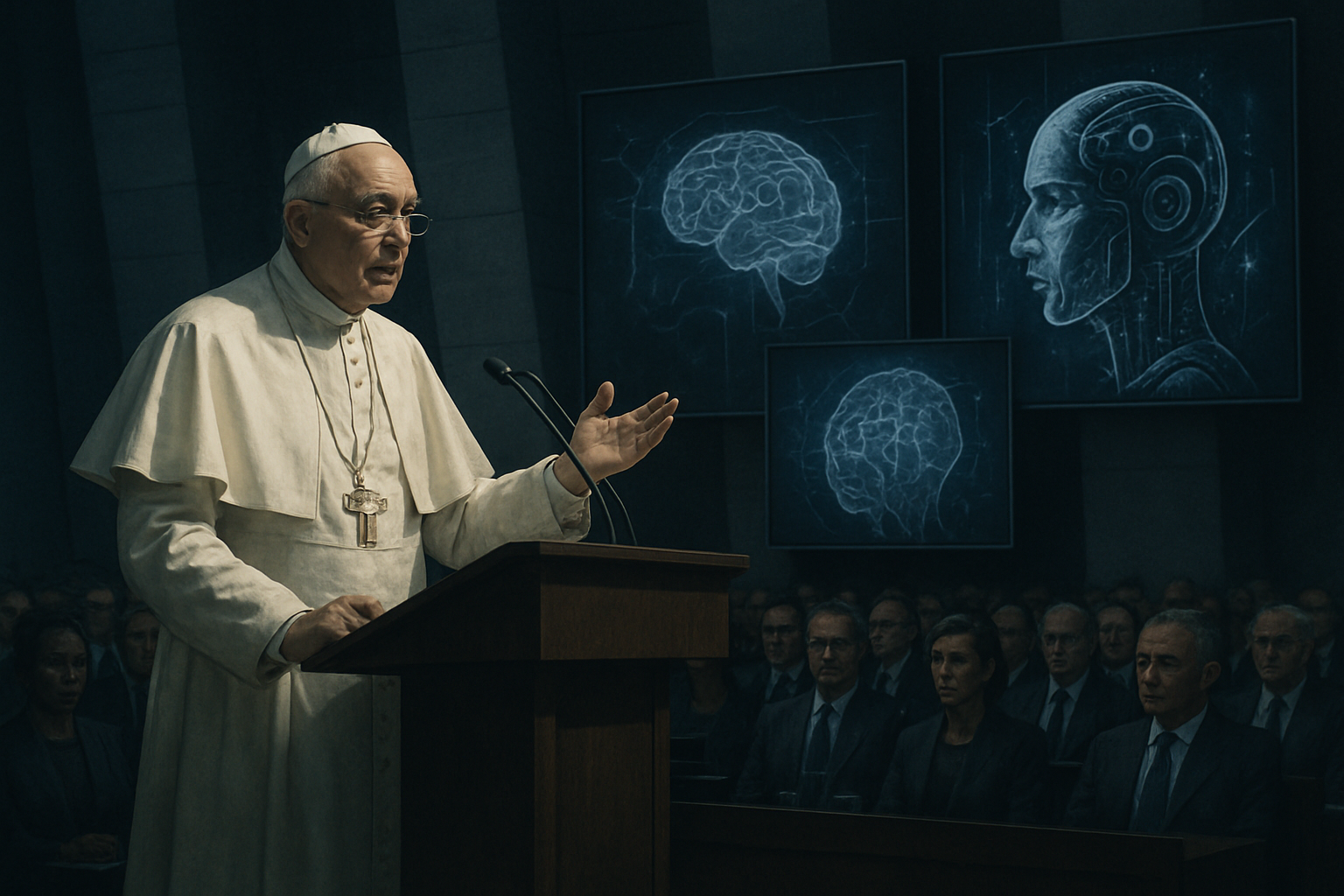
On a four-day trip to France, Léon XIV advocates for accountability mechanisms, avenues for recourse, and independent oversight for AI, even if it means slowing down certain deployments. This position extends commitments made by the Vatican with Microsoft and IBM and the warning issued by François at the G7 regarding autonomous weapons.
Microsoft and IBM Partnered with the Vatican Since 2020
In February 2020, the Pontifical Academy for Life signed the Rome Call for AI Ethics with Microsoft, IBM, and several other partners. The focus is particularly on transparency, privacy preservation, reliability, and discrimination prevention. In June 2024, Pope François addressed this theme before G7 heads of state, stating that no machine should make the decision to take a human life. Léon XIV aligns with this by emphasizing human responsibility and the social effects of choices made through AI. The Vatican does not claim to provide technical answers but reminds that the burden of responsibility falls on those who develop, market, and exploit these technologies. It also raises the question of accountability when automated decisions, such as job denials, credit refusals, or healthcare access, are made by an algorithm.
Léon XIV Calls for Responsibilities, Recourse, and Oversight
The Pope demands that clearly defined responsibilities frame the use of artificial intelligence, that automated decisions be contestable, and that independent oversight be established. He believes that certain deployments should be able to be slowed down if protections are insufficient. Léon XIV expresses concerns about the consequences of automation on employment and the trend of delegating thought to machines. He calls for learning to "fast from AI," particularly in schools, to preserve the effort to learn and creativity.
Autonomous Weapons, Bias, and Concentration at the Heart of Risks
The phrase "disarm AI," highlighted during the presentation of the Magnifica humanitas letter on May 25, is not limited to the issue of autonomous weapons, although their rise is a major concern for Léon XIV. It also pertains to technological tools that may exclude individuals from employment, access to healthcare, or other services due to biases in data, as well as the centralization of data, infrastructure, and decision-making power among a small number of large tech companies, which could escape public oversight. Léon XIV does not deny the benefits that AI can bring and has acknowledged, before the Pontifical Academy of Sciences, its contributions to medicine, energy, and scientific research. However, he reminds of the risks of surveillance, manipulation, discrimination, and the significant consumption of water and energy by AI-related infrastructures. He calls for regaining control over the uses of AI while recognizing its contributions.
Two Speeches in Paris Kick Off a Four-Day Visit
Arriving in France on September 25, Léon XIV begins a four-day stay, including stops in Paris, Saint-Denis, Lourdes, and Metz. During his address at the Élysée, he emphasized that artificial intelligence can increase its power without necessarily improving our lives, stressing the importance of placing humans at the center of technological progress and training minds in the ethics of discernment. A few hours later, during his speech at UNESCO, he addressed the impact of AI in the spread of false information and highlighted the need to preserve the capacity for reflection and discernment among young people.
Brief IA — L'actualité IA en français
L'essentiel de l'actualité de l'intelligence artificielle, décrypté et expliqué chaque jour.