Actors Replaced by AI Doubles in Micro-Dramas
The Rise of AI Micro-Dramas: A Disruption for Actors
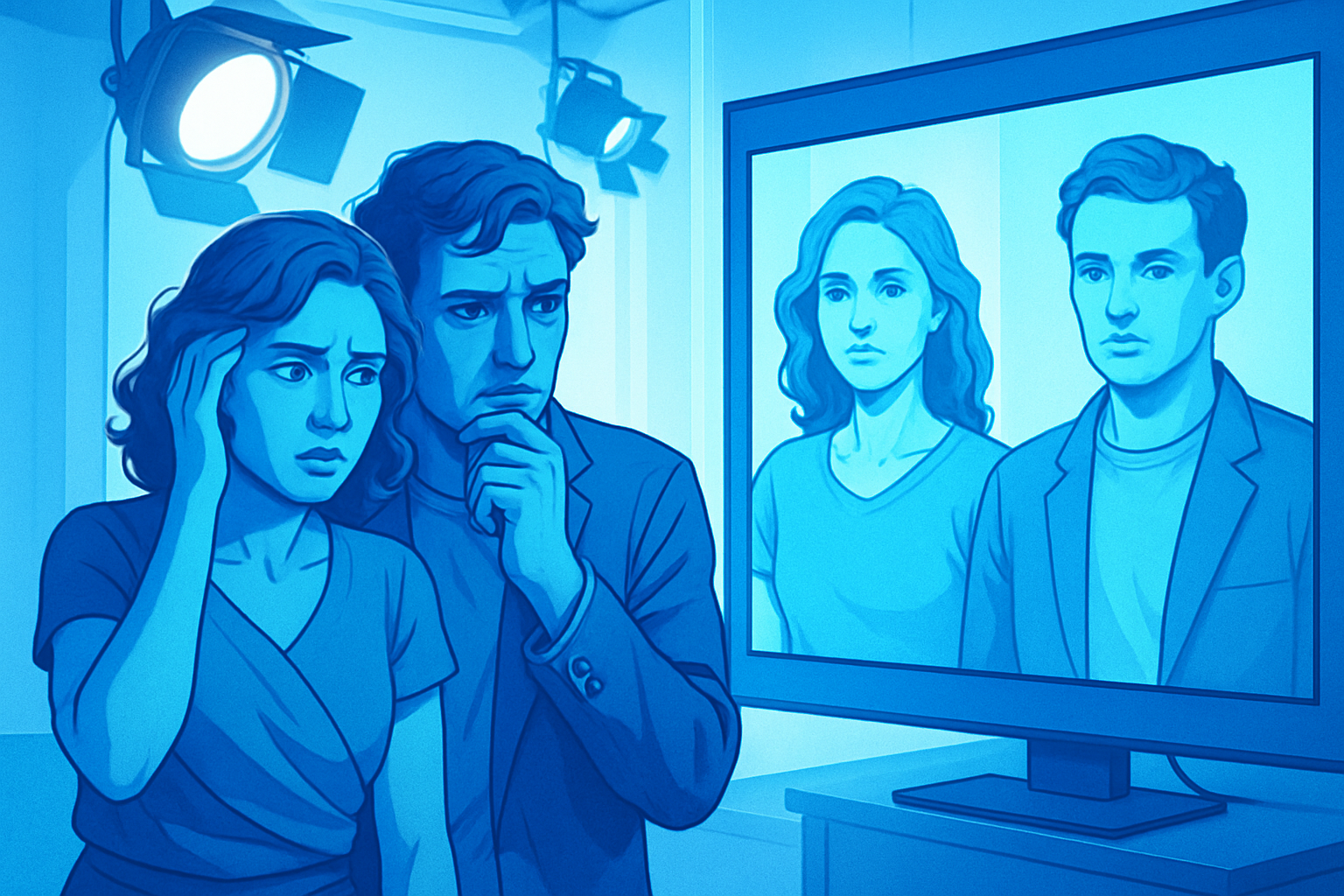
Brittany Marsicek recently faced an unexpected situation: a vertical drama in which she had acted was remade, but this time with an AI-generated character that bore an uncanny resemblance to her. This phenomenon, where AI micro-dramas utilize the appearances and voices of actors without their consent, is gaining traction in the mobile entertainment industry. Actors find themselves powerless in the face of this rapid evolution, with few avenues to defend themselves or seek compensation.
Ashley BeLoat, another actress, had a similar experience. She discovered that a series she had starred in the previous year, "Hate the Way I Love You," had been recreated with AI actors. The AI character, although younger and more glamorous, mimicked her movements and voice. BeLoat, who had drawn on her personal experience as an oncology nurse for the role, felt this was an infringement on her work. She attempted, through her agent, to contact the MoboReels app to have this AI version removed or to obtain compensation, but to no avail.
BeLoat told Business Insider that it felt like an infringement on the personal experience she had drawn upon for the role, as a nurse who had worked in oncology and faced cancer in her personal life. "Being an actor is a very vulnerable thing," she said. "It forces us to live private moments in public."
She went on to explain that if trust is lacking with those she works with, it not only prevents her from delivering something good to the audience but also takes away the reason she does this job. BeLoat stated that through her agent, she had tried to contact the app, hoping to have the AI version of the show removed or to receive compensation. So far, she has not received a response.
An Industry in Transformation
BeLoat's experience is not isolated. The micro-drama sector, valued at $1.4 billion in the United States, has quickly integrated AI into its production processes. Many actors and producers have reported that their work has been transformed into AI versions without their consent. This trend is part of a larger movement where AI is reshaping various aspects of the entertainment industry. Some micro-drama apps have even replaced human actors with synthetic versions, creating misleading promotions to attract new viewers.
Micro-dramas, designed for mobile consumption, had become an opportunity for actors amid a slowdown in film and television production. Now, these actors must wonder if their work is not contributing to the rise of their own AI replacements.
Actors Facing a Lack of Protection
Brittany Marsicek also encountered a similar situation with a MoboReels show, "Ex-Husband, Step Aside, Lady Boss Returns," which was remade with AI. Although the character looked different, it acted and sounded like her. Marsicek, who has appeared in over 25 verticals, highlighted the lack of protection against AI in her contracts, which often grant producers broad editing permissions. These jobs, often non-unionized, involve early-career actors who hesitate to speak out for fear of repercussions.
Le brief IA que les pros lisent chaque soir
Les 7 actus IA du jour, décryptées en 5 min. Gratuit.
Inclus dès l'inscription : notre sélection des meilleurs guides & comparatifs IA.
Choisissez votre rythme
Gratuit · Pas de spam · Désabonnement en 1 clic
"You think, okay, maybe they’ll edit it to be horizontal instead of vertical," Marsicek said about the contract. "You don’t think their editing includes completely changing your likeness." Actors also claim to have felt the impact of AI on the number of auditions and jobs they have been able to secure. BeLoat had worked full-time in verticals but has since returned to her nursing job.
The Potential Impact on Hollywood
This situation could foreshadow what lies ahead for Hollywood as AI increasingly infiltrates television and film. Currently, studios have the freedom to use AI, although there are restrictions and the risk of negative public backlash. According to the 2026 contract with the SAG-AFTRA actors' union, studios can create AI avatars as long as they negotiate with the union and obtain consent from actors to use their voice or likeness.
Jonathan Handel, an entertainment lawyer, compared this situation to a "canary in the coal mine," emphasizing that the reputational barrier could erode as acceptance of AI in micro-dramas grows, thus putting pressure on Hollywood to adapt to this economic shift.
The Testimonies of Betrayed Actors
Evan Gambardella expressed his feeling of betrayal after discovering his face in an AI series without his involvement. Having starred in "Straight Until He Kissed Me," a "boys' love" drama about a medical student and a CEO, he recognized his likeness in "Mafia King's Contract Groom." While he was grateful to GoodShort for launching his career, he believes he should have been informed and compensated for the use of his image.
Gambardella highlighted the lack of solid protections against AI in his contract and decided to focus on seeking work with companies that still hire real actors. Since sharing his experience on social media, he has not received any new job offers, feeling blacklisted.
Gambardella stated that he did not believe his contract had strong protections against AI and that he could not prove that the AI character was based on him, so he saw no point in fighting. For now, he is concentrating on finding work with micro-drama companies that still cast real people. He added that since he spoke out about his experience on social media, he had not received any work and felt he had been blacklisted.
The Response from Platforms and the Future of Micro-Dramas
A representative from GoodShort stated that the app had acquired "Mafia King's Contract Groom" from a third-party creator and does not support the unauthorized use of actors' images or voices. The company is working with its partners to maintain respectful standards for performers and transparency regarding the use of AI.
Some actors have chosen to voice their complaints on social media to raise awareness among fans and encourage them to boycott AI versions of themselves. Gambardella received comments from fans believing that his AI lookalike was him, highlighting the growing difficulty of distinguishing the real from the unreal as AI videos become more realistic.
One of the major players in micro-dramas, ReelShort, has tested AI with "Poolboy," a queer-themed hit, followed by an anime version, "Under the Surface." Jen Parkhill, the director of the original, emphasized that AI taking jobs from artists is no longer an idea but a reality that requires discussions about profit-sharing and the intellectual property rights of artists.
Some actors believe that AI films will not have longevity, but Marsicek is not as optimistic. She points out that even if part of the audience turns away from verticals, their reduced production costs continue to generate profits.
Brief IA — L'actualité IA en français
L'essentiel de l'actualité de l'intelligence artificielle, décrypté et expliqué chaque jour.