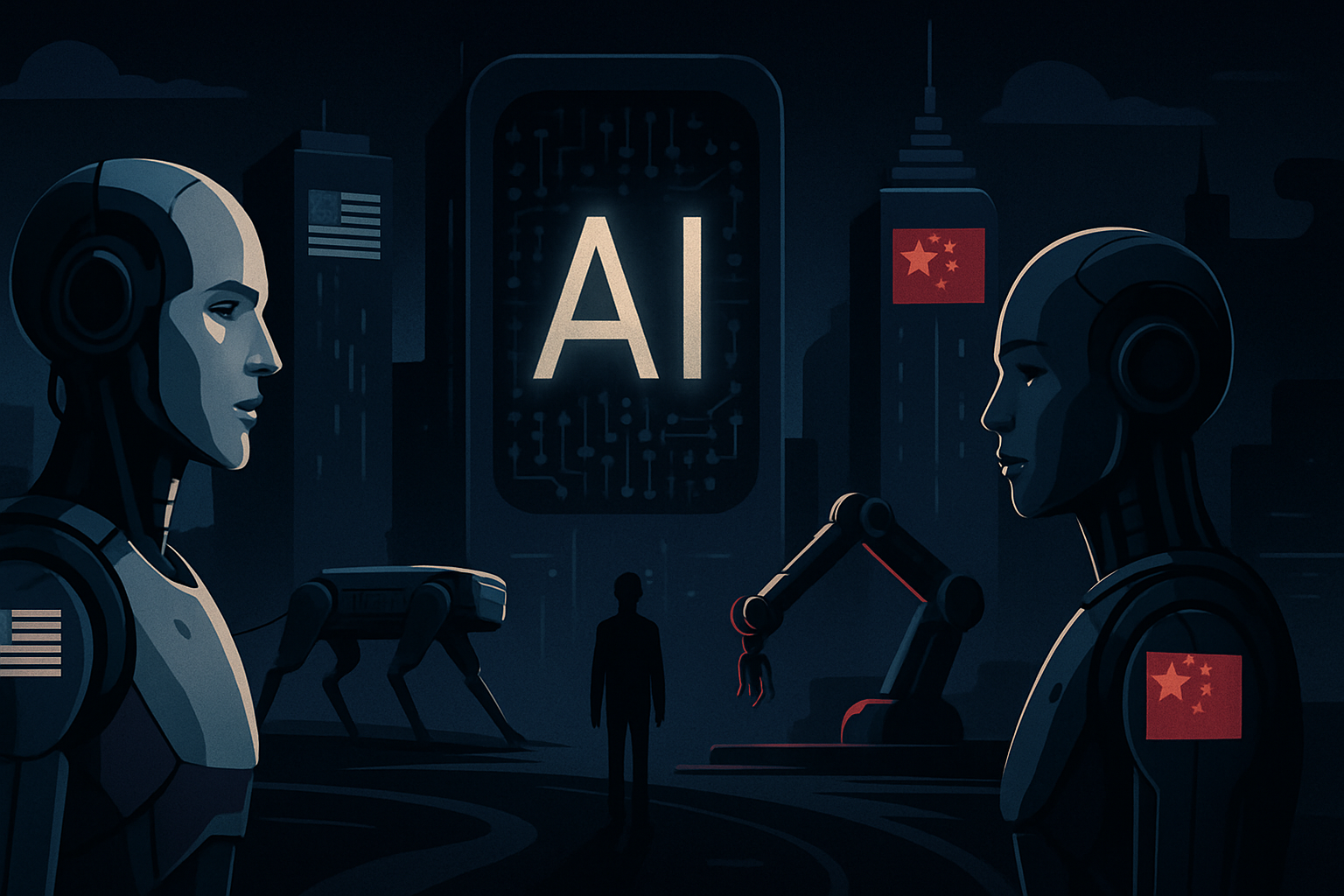
Global Models: The U.S. Risks Falling Behind China
Le brief IA que les pros lisent chaque soir
Les 7 actus IA du jour, décryptées en 5 min. Gratuit.
Inclus dès l'inscription : notre sélection des meilleurs guides & comparatifs IA.
Choisis ton rythme
Gratuit · Pas de spam · Désabonnement en 1 clic
Global Models: A Revolution in Progress
The next step in the evolution of artificial intelligence focuses on transitioning from text to understanding the physical world. Researchers emphasize that American policymakers have yet to grasp the magnitude of this transformation, while China is already taking the lead in the field of robotics.
Unlike large language models that predict the next word in a sentence, global models anticipate events in a physical environment. They utilize data from videos, images, texts, audio, and other sensors to comprehend three-dimensional spaces. Researchers believe this technology could be just as transformative as large language models. Some experts, like Yann LeCun, consider these models essential for advanced AI.
Applications and Challenges of Physical AI
The applications of global models are vast, ranging from domestic and industrial robotics to simulating molecular environments for pharmaceutical development, as well as autonomous driving. This technology, grouped under the term "physical AI," could transform numerous sectors.
However, American policymakers are falling behind, as explained in a Politico article. Russell Wald from Stanford's Human-Centered Artificial Intelligence Institute recalls having warned Congress about large language models before the launch of ChatGPT in 2022, to no avail. Today, he observes that the same scenario is repeating itself with global models, noting that many legislators do not even know what a global model is.
Infrastructure Challenges and Chinese Advancements
Global models require considerable computing power, exacerbating an already high demand. Blaine Fisher from Tulane University highlights that meeting the data needs of language models is already complex, and global models additionally require physical hardware like robots. The American tech industry is calling for a national robotics strategy to strengthen supply chains, especially in light of Chinese competition.
Wald warns of a potential bottleneck similar to that of 5G: even if a breakthrough in global model research is achieved, the necessary infrastructures may be lacking. Meanwhile, a bipedal robot from the Chinese brand Honor recently set a new record for the human half-marathon, illustrating China's lead.
Societal Risks and Governance
Global models pose societal risks that surpass those of large language models. They require appropriate governance, particularly concerning privacy, labor markets, and national security. The ability to analyze the real world could enhance surveillance systems and autonomous weapons. Fisher also warns of the risk that individuals may retreat into virtual worlds with AI avatars, to the point of no longer wanting to leave their homes.
Brief IA — L'actualité IA en français
L'essentiel de l'actualité de l'intelligence artificielle, décrypté et expliqué chaque jour.