OpenAI and Microsoft Adjust Their Employment Forecasts
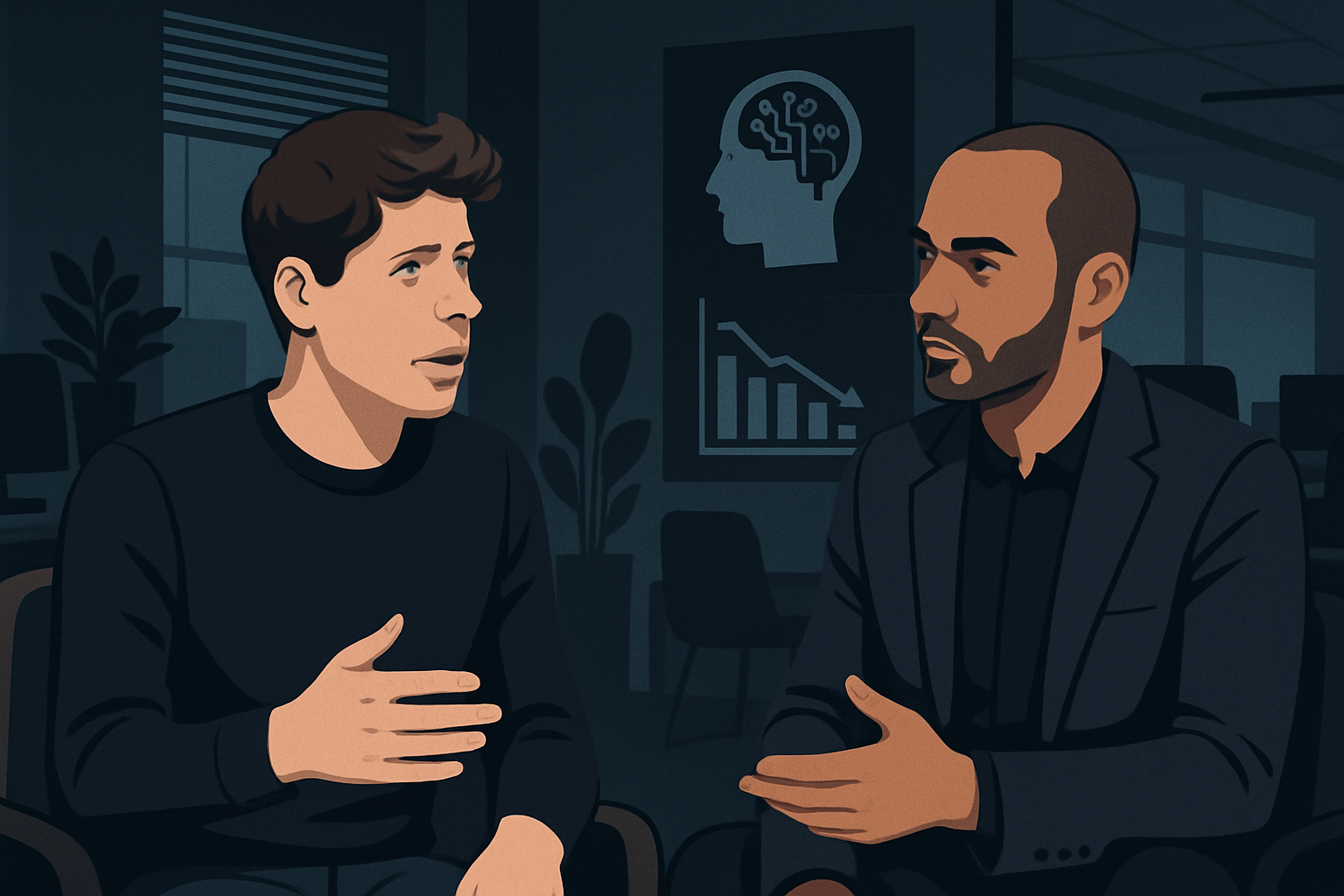
The discourse on the impact of artificial intelligence on the job market is evolving. Sam Altman, CEO of OpenAI, recently acknowledged that he was wrong in predicting a "job apocalypse." At an event organized by the Commonwealth Bank of Australia, Altman expressed his relief that the impact of AI on entry-level white-collar jobs has not been as severe as he had anticipated.
Altman shared a personal experience that influenced his change of perspective: using AI to draft emails and Slack messages, which he found to be "dehumanizing." This experience led him to rethink the potential impact of AI on jobs.
Mustafa Suleyman, head of AI at Microsoft, has also adjusted his rhetoric. In The Verge's "Decoder" podcast, he clarified a previous statement regarding the automation of office tasks. In February, Suleyman had told the Financial Times that most office tasks, such as those performed by lawyers, accountants, project managers, or marketing executives, would be fully automated by AI within 12 to 18 months. He specified that he was referring to the automation of specific tasks, like reading emails, and not the disappearance of the professions themselves.
Le brief IA que les pros lisent chaque soir
Les 7 actus IA du jour, décryptées en 5 min. Gratuit.
Inclus dès l'inscription : notre sélection des meilleurs guides & comparatifs IA.
Choisissez votre rythme
Gratuit · Pas de spam · Désabonnement en 1 clic
These adjustments come as the AI industry faces growing skepticism. A May Economist-YouGov poll revealed that 71% of Americans believe that AI development is progressing too quickly. Microsoft President Brad Smith emphasized that AI will displace certain jobs, but the pace of this transformation may differ from initial forecasts.
Dario Amodei, CEO of Anthropic, has also warned about job displacement. Last year, he cautioned that AI could eliminate up to half of all entry-level white-collar jobs in the next 1 to 5 years. However, he highlighted that AI could create new economic opportunities. He predicted that AI would enable small teams to create businesses generating millions in revenue.
Meanwhile, political resentment is growing. Data centers are quickly becoming a contentious issue. In June, Seattle adopted a one-year moratorium on new data centers. Overall, the industry is facing a striking reality: the technology it considers one of the greatest advancements in human history is massively unpopular in the United States.
Brief IA — L'actualité IA en français
L'essentiel de l'actualité de l'intelligence artificielle, décrypté et expliqué chaque jour.