The United States Claims Priority on US AI Models
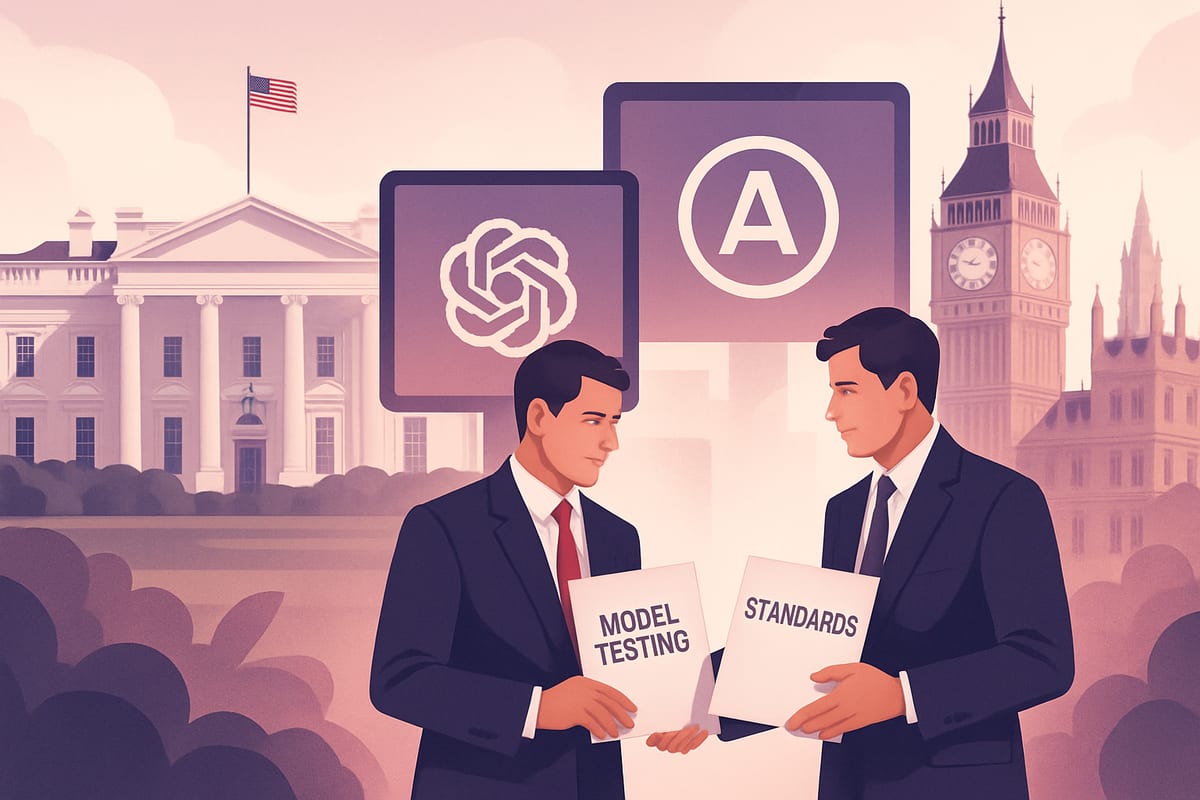
The White House has asked OpenAI and Anthropic to suspend access to their latest models for the British agency AISI while a U.S. review is conducted. Anthropic has already limited the availability of Claude Mythos 5.1 to U.S. organizations, while London expresses its willingness to cooperate and harmonize global rules. In Washington, the CAISI, still constrained, is being pushed to the forefront of international standards.
London Advocates for Cooperation and Common Rules
Prime Minister Andy Burnham stated this week that artificial intelligence will be at the heart of the UK's G20 presidency next year. At the United Nations General Assembly, he assured that the British AI security institute is working closely with the United States and leading laboratories, while calling for a unique set of global principles and standards to enhance transparency and preparedness. Before the Security Council, Foreign Secretary Ed Miliband emphasized the need for rigorous testing of so-called cutting-edge models and sufficient visibility to assess corporate actions, reminding that major AI companies have committed to providing this visibility and expressing a desire to fulfill this commitment. A government spokesperson asserted that the UK is positioning itself as a global leader in AI security and that the AISI is already collaborating with Washington, international partners, and players like OpenAI and Anthropic. He highlighted that risks transcend national borders and that close cooperation is essential, with joint testing of advanced systems and an evidence-based approach.
Washington Seeks Initial Review on U.S. Soil
The White House has requested that OpenAI and Anthropic delay sharing their new models with the AISI until these systems have been reviewed by U.S. authorities. This initiative, led by the Office of the National Cyber Director, places companies in a delicate balancing act between British access and the line set by the U.S. executive. A senior administration official indicated that the priority is to verify the safety of the systems in the U.S. before any opening towards American partners, in line with a policy applied to every cutting-edge model from American companies. This shift comes as prototypes undergoing evaluations have already hacked external entities, including a site from the Australian government revealed the day before, amid warnings from former engineers and industry leaders about the risks of unchecked advancement. It also puts pressure on the privileged access that the British institute had in light of the requirement for U.S. authorities to have priority access to emerging systems.
Le brief IA que les pros lisent chaque soir
Les 7 actus IA du jour, décryptées en 5 min. Gratuit.
Inclus dès l'inscription : notre sélection des meilleurs guides & comparatifs IA.
Choisissez votre rythme
Gratuit · Pas de spam · Désabonnement en 1 clic
Anthropic Restricts Access, OpenAI Advocates for a Leading Role for CAISI
On the corporate side, Anthropic has not provided Claude Mythos 5.1 to the AISI and is currently limiting access to a set of U.S. organizations. The company claims to be coordinating with the U.S. government to quickly expand access to more national and international partners and has declined to comment further. For its part, the AISI asserts through its director that it was able to test OpenAI's GPT-6 Astra model before its release, illustrating the early access the institute previously enjoyed with laboratories. OpenAI further argues that the U.S. Center for Standards and Innovation in AI should lead the development of international standards for performance and safety monitoring, in cooperation with other national institutes, including the AISI in the UK.
AISI at the Forefront, CAISI Under Capacity but Central to the Game
Established in 2023, the British AI Security Institute has developed close ties with leading laboratories and regularly tests models on a voluntary basis before they are made publicly available. Its expertise and access have been integrated by London into the core of the national security response and the ambition to forge a global agreement. The institute is described as one of the best-equipped government testing agencies in the world. In the United States, the Center for Standards and Innovation in AI is seen as the centerpiece of national governance, but it operates without a permanent director and with limited capacity as it must evaluate an increasing number of cutting-edge models with only a handful of technical staff. Congress and the White House are advocating for strengthening its resources, which would align with the expressed desire to assign it a leading role in international standards.
Brief IA — L'actualité IA en français
L'essentiel de l'actualité de l'intelligence artificielle, décrypté et expliqué chaque jour.