LLMs on the Decline: The Industry Focuses on Specialized AIs
Le brief IA que les pros lisent chaque soir
Les 7 actus IA du jour, décryptées en 5 min. Gratuit.
Inclus dès l'inscription : notre sélection des meilleurs guides & comparatifs IA.
Choisis ton rythme
Gratuit · Pas de spam · Désabonnement en 1 clic
LLMs Falling Short of Industrial Demands
Large language models, or LLMs, have revolutionized the way we approach language-related tasks, especially since the advent of ChatGPT. These models have become essential for activities such as content writing, document summarization, and customer support. However, in industrial processes where quality, traceability, and stability are paramount, LLMs quickly reveal their limitations. Each new version of these models requires adjustments, which can be complex to manage.
In this context, many companies, particularly in the industrial sector, choose not to rely solely on LLMs. They turn to more specialized artificial intelligence technologies, stemming from traditional machine learning, computer vision, or sequential optimization. These alternatives offer longer life cycles and integrate better with existing systems, while ensuring a more predictable return on investment.
This article explores alternative solutions to LLMs, highlighting the observed uses in large companies and how they combine them to create sustainable value. The goal is to guide decision-makers in identifying the AI technologies best suited to their operational and industrial needs.
Alternatives to LLMs: Solutions Tailored to Industrial Needs
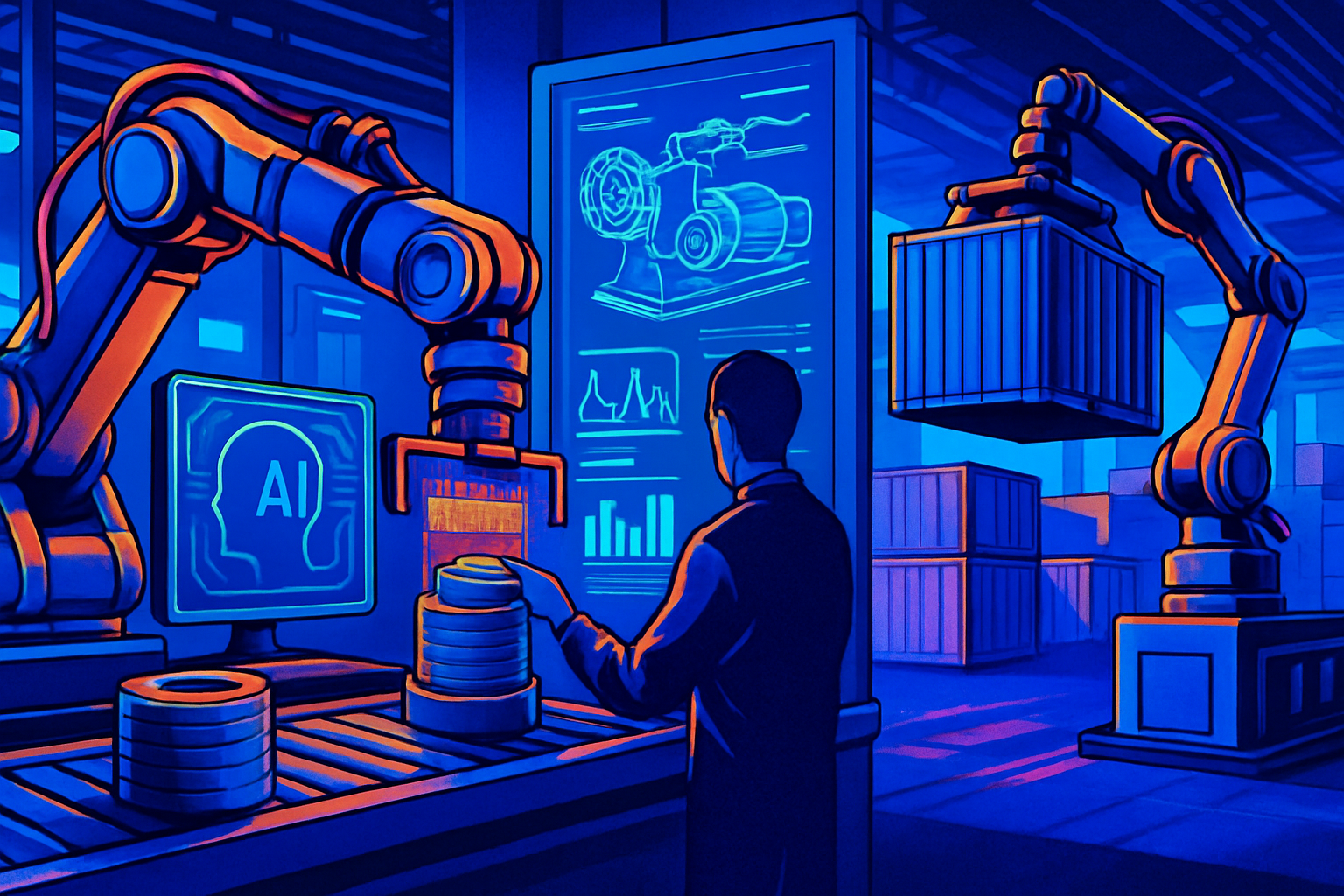
In the industrial and logistics sector, four main families of AI technologies stand out as alternatives to LLMs.
-
Computer Vision: This technology is used to analyze images and videos, particularly in quality control and inspection tasks. For example, in the automotive industry, manufacturers like Stellantis use vision systems to inspect robotic welds in real-time and detect defects on production lines. These solutions, based on convolutional neural networks trained on specific data, offer superior accuracy and stability compared to LLMs, as they do not require frequent updates.
-
Predictive Maintenance and Sensor Data Analysis: General Electric, through its subsidiary GE Vernova, has been using predictive analytics solutions like SmartSignal for several years. These tools combine machine learning and digital twins to analyze vibrations, temperatures, and pressures of energy or aerospace equipment, thereby anticipating failures weeks in advance. The results are significant, with a substantial reduction in unplanned downtime and optimization of maintenance interventions.
-
Reinforcement Learning and Operational Optimization: In the maritime logistics sector, CMA CGM deploys AI solutions to optimize ship routing, energy consumption, and container loading. These systems learn through simulation and continuous adjustment in complex environments, where LLMs lack the precision and reliability needed for critical sequential decisions.
-
Intelligent Document Processing via Specialized OCR: The European Patent Office has deployed a finely tuned OCR model in partnership with Mistral AI. This system processes hundreds of thousands of pages of complex patents, including chemical formulas, tables, and multilingual data, with very high accuracy. It transforms scanned documents into structured, actionable data for prior art searches, a use case far beyond the standard capabilities of conversational LLMs.
These technologies share a common advantage: better lifecycle management and easier integration into constrained industrial environments.
Strategies for Integrating AI Technologies in Companies
Mature companies do not settle for just one technology. They build hybrid architectures where each component addresses a specific need. The main criterion remains the alignment between technology and the nature of the process: required stability, data volume, regulatory constraints, and level of criticality.
In the manufacturing sector, computer vision is often favored for quality control, while predictive maintenance protects critical assets. In logistics, reinforcement learning optimization is frequently combined with document processing for order management. The European Patent Office illustrates a targeted approach: a specialized OCR addresses a problem of volume and document complexity that LLMs do not solve effectively.
The combination of these technologies also requires appropriate governance. High-performing companies create autonomous units close to the field, capable of experimenting quickly and relaying results. They avoid functional silos and align projects with customer value creation rather than centralized budgets. This emerging organization allows for pragmatic integration of AI technologies, limiting risks associated with rapid technological changes.
The final choice also depends on sovereignty and compliance criteria. In Europe, the ability to deploy solutions on local infrastructure or in a single container is a decisive advantage for regulated sectors.
Future Perspectives for Specialized AI Technologies
Alternatives to LLMs do not aim to replace them but to complement the technological landscape usefully. Companies that succeed will be those that can assemble a hybrid ecosystem: LLMs for language and creative tasks, specialized technologies for critical industrial processes.
For leaders, the first step is to conduct a precise diagnosis. This involves identifying processes where stability and traceability take precedence over text generation. Pilot projects should be conducted in autonomous units, with clear indicators of return on investment and risk management.
Training for technical and operational teams remains essential. Skills in computer vision, predictive maintenance, or optimization cannot be acquired solely through the use of a chatbot. Finally, organizations must anticipate the evolving European regulatory landscape, particularly the AI Act, which strengthens transparency and robustness requirements for high-impact systems.
LLMs have transformed productivity in many areas, but they are only part of the answer to industrial challenges. Alternative technologies—computer vision, predictive maintenance, reinforcement learning optimization, or specialized OCR—offer mature, stable, and directly actionable solutions. Companies that can intelligently combine them within an agile, value-oriented organization will build a sustainable competitive advantage beyond merely racing for language models.
Brief IA — L'actualité IA en français
L'essentiel de l'actualité de l'intelligence artificielle, décrypté et expliqué chaque jour.