Lessonweaver formalizes approved guidelines for AI agents
Le brief IA que les pros lisent chaque soir
Les 7 actus IA du jour, décryptées en 5 min. Gratuit.
Inclus dès l'inscription : notre sélection des meilleurs guides & comparatifs IA.
Choisis ton rythme
Gratuit · Pas de spam · Désabonnement en 1 clic
A project called Lessonweaver aims to transform real errors observed in agents into persistent instructions, without using LLMs and under human control. The tool, currently in alpha and rule-based, focuses on an auditable pipeline to expose only approved and revisable instructions.
Lessonweaver is in alpha with rule-based detection
The project is in an early alpha status, featuring conservative rule-based detection and format requirements for traces. The writing is described as a work aimed at superior quality, and the entire system integrates into a broader framework called Weaver Stack. The promoters encourage users to test the tool on their own traces and report cases that the detector might overlook.
A human-controlled pipeline without LLMs
Designed as a deterministic tool controlled by humans, Lessonweaver operates without LLMs in the loop. Candidate lessons undergo structured human review, with their promotion conditioned on lint checks; only approved instructions are exported as revisable artifacts, such as AGENTS.md fragments, skills or rules for Claude, and Copilot instructions. The approval step blocks incomplete revisions unless there is explicit and traceable circumvention. During execution, lessons are loaded through lexical retrieval with a character budget, allowing agents to start each run equipped with instructions validated by humans.
Preventing the same mistakes from recurring
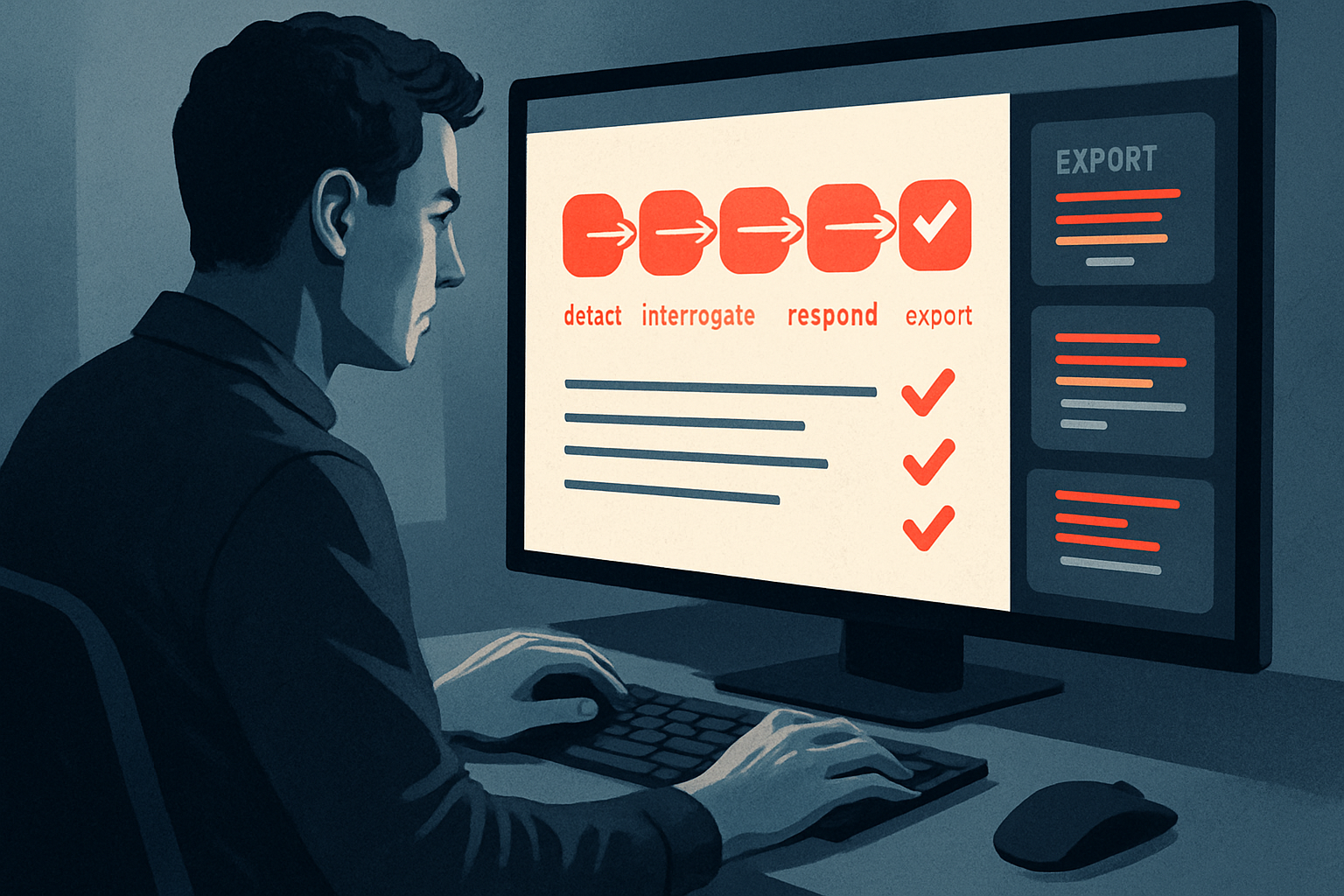
The tool aims to convert agent failures into persistent instructions. One cited example highlights the difficulty: an agent validated a pull request on a Tuesday without consulting the diff, prior to human intervention. The issue lies in the fact that corrections are not retained over time, leading to a preference for a middle-ground solution between automated self-editing—considered unreliable and difficult to verify—and manual updates, deemed less adaptable. Technically, Lessonweaver relies on execution traces to identify recurring failure patterns and applies a pipeline consisting of five phases: detect, query, respond, approve, export.
Brief IA — L'actualité IA en français
L'essentiel de l'actualité de l'intelligence artificielle, décrypté et expliqué chaque jour.