Linq Secures $90 Million to Equip AI Agents
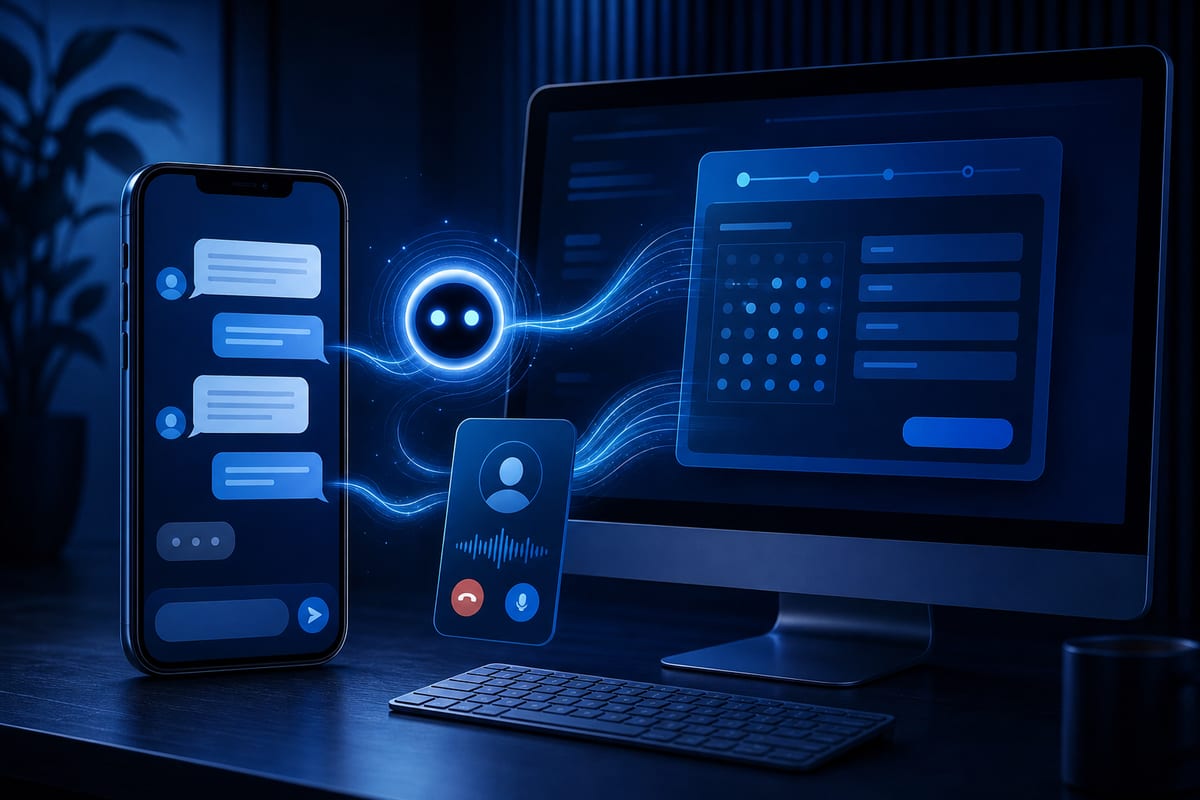
Linq announced this week that it has raised $90 million to provide telephonic and computing capabilities to AI assistants. Its offering is aimed at developers who want to delegate tasks on websites, within software, or to human interlocutors.
An agent could follow up after a call
A reservation could be accepted over the phone without being confirmed yet: the company would then send a link to a mandatory form. In this scenario, an agent limited to voice exchanges would need to hand off the task, while an assistant equipped to read messages and use a computer could complete the process. The distinction lies in execution: drafting a response to a request to reschedule an appointment does not necessarily suffice to accomplish it.
Linq provides access to a physical computing infrastructure on which agents can manipulate software and consult websites on behalf of a user. This capability can be particularly useful when a service accessible to humans lacks a practical means to perform the same operation from another application. Linq's CEO, Elliott Potter, predicts that a simple instruction to pay rent will replace a journey across five screens. He presents his company as a provider of tools typically used by humans, intended for agents tasked with duties for clients.
Le brief IA que les pros lisent chaque soir
Les 7 actus IA du jour, décryptées en 5 min. Gratuit.
Inclus dès l'inscription : notre sélection des meilleurs guides & comparatifs IA.
Choisissez votre rythme
Gratuit · Pas de spam · Désabonnement en 1 clic
Investors and potential clients of Linq
Andreessen Horowitz led the funding round, which also included TQ Ventures, Mucker Capital, Abstract, Anthos, and Left Lane Capital. Its co-founder and general partner, Ben Horowitz, is set to join Linq's board of directors. He predicts that agents will exchange and perform tasks in a manner similar to humans and asserts that Linq's infrastructure enables these activities at scale.
Versatile assistants or agents offered by companies already familiar to their users: the future uses are not yet determined. Linq could sell its tools to developers in these various categories, who need to connect with people and execute their requests.
Messaging and calls for assistants
Linq's initial focus was on messaging. The company claims to have processed over 1 billion messages and cites DoorDash, Town, Tomo, as well as hundreds of other clients. At DoorDash, a conversation already allows users to search for a meal, prepare their cart, and then pay.
The HD Calling for Agents voice product adds calls to the tools offered to developers. An agent could receive their instructions in writing, then call a company to reschedule an appointment. The user could continue their activities while waiting for a response regarding availability.
Brief IA — L'actualité IA en français
L'essentiel de l'actualité de l'intelligence artificielle, décrypté et expliqué chaque jour.