LLM: JSON vs Function Call, Which Mode to Choose?
Le brief IA que les pros lisent chaque soir
Les 7 actus IA du jour, décryptées en 5 min. Gratuit.
Inclus dès l'inscription : notre sélection des meilleurs guides & comparatifs IA.
Choisis ton rythme
Gratuit · Pas de spam · Désabonnement en 1 clic
Understanding Structured Outputs from LLMs: JSON and Function Calling
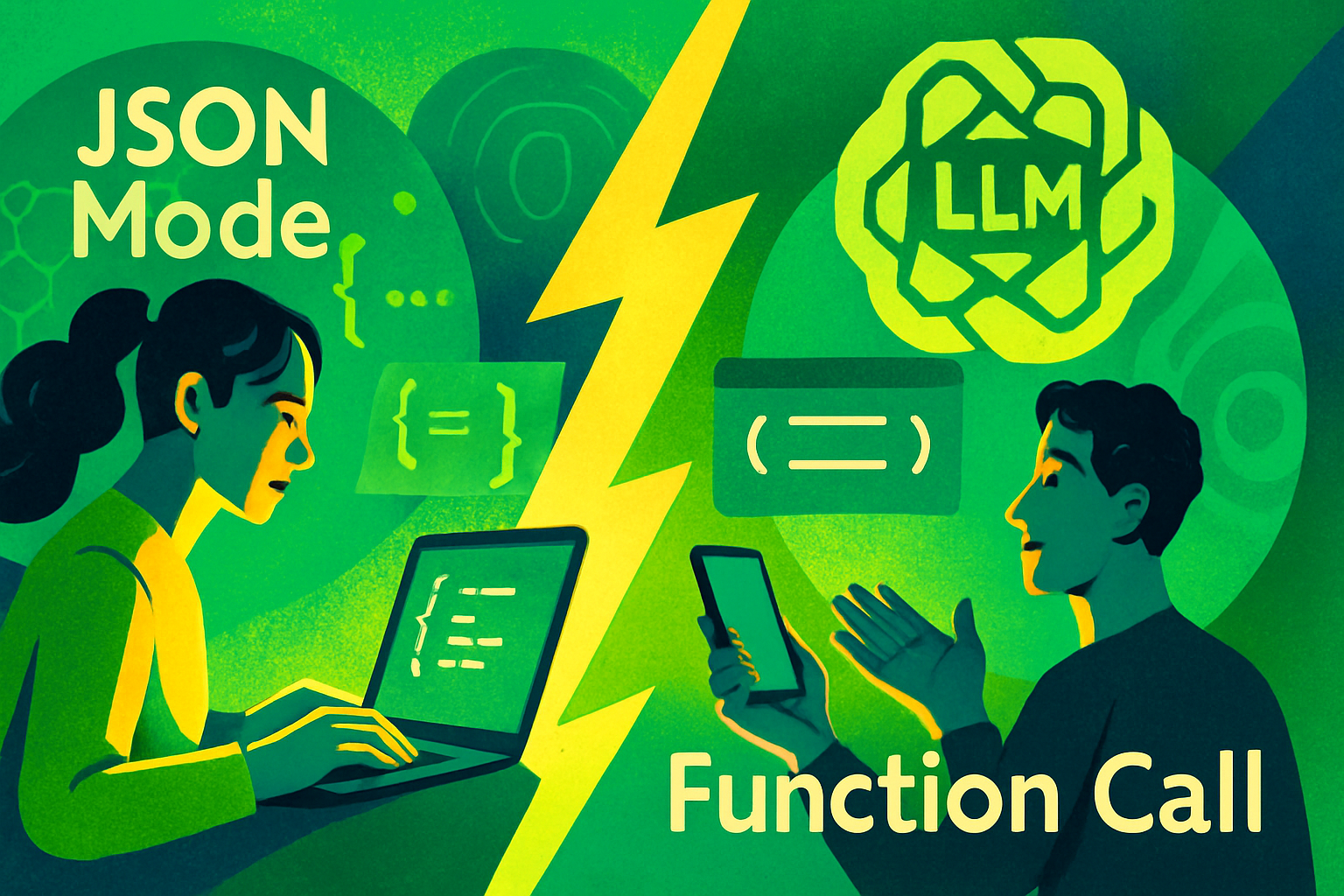
To make the most of a LLM (large language model), it is crucial to master the methods that allow for structured and reliable responses. Among the available options, two approaches stand out: JSON mode and function calling. Each of these methods has its own characteristics, advantages, and limitations, and their use will depend on the specific needs of your project.
JSON Mode: Structure and Clarity
JSON mode is a method that allows structuring the responses of an LLM in a way that makes them easily interpretable by automated systems. This approach is particularly advantageous when data needs to be processed or analyzed automatically.
-
Advantages:
- The generated responses are easily analyzable, facilitating their integration into automated processes.
- This mode allows for hierarchical organization of information, which is ideal for systems requiring a clear data structure.
- It is particularly suited for integrations with external systems, where data consistency is essential.
-
Disadvantages:
- Using JSON mode may require additional validation to ensure that the data conforms to the expected format, which can add a layer of complexity.
- This method is less flexible when it comes to generating narrative or more complex responses, where some freedom of form is required.
Function Calling: Dynamism and Interactivity
Function calling is a method that allows the LLM to perform specific actions based on precise instructions. This includes executing calculations, accessing databases, or interacting with external APIs.
-
Advantages:
- This approach allows for dynamic interactivity, providing real-time responses that can adapt to the immediate needs of the user.
- It is capable of executing complex tasks requiring external data, which is crucial for applications needing precise and contextualized responses.
- Ideal for applications where the accuracy and context of responses are paramount.
-
Disadvantages:
- Implementing and managing function calling can be more complex, requiring a more robust infrastructure.
- Integrating external calls may introduce latencies, which can affect the user experience if speed is a critical factor.
Choosing the Right Method
The choice between JSON mode and function calling should be guided by the specific needs of your application:
-
JSON Mode: Prefer this method when you need structured data for later analysis or when working on integrations with other systems, where data structure is crucial.
-
Function Calling: Opt for this method if your application requires real-time interactivity or if you need to perform specific tasks based on external data.
By mastering these two methods, you will be able to maximize the efficiency of your LLM, tailoring its capabilities to the demands of your project for optimal results.
Brief IA — L'actualité IA en français
L'essentiel de l'actualité de l'intelligence artificielle, décrypté et expliqué chaque jour.