Mark Zuckerberg Unveils His Ambitious Vision for the Future of AI
Le brief IA que les pros lisent chaque soir
Les 7 actus IA du jour, décryptées en 5 min. Gratuit.
Inclus dès l'inscription : notre sélection des meilleurs guides & comparatifs IA.
Choisis ton rythme
Gratuit · Pas de spam · Désabonnement en 1 clic
Mark Zuckerberg Unveils His Ambitious Vision for the Future of AI
Key Points from Zuckerberg's Manifesto
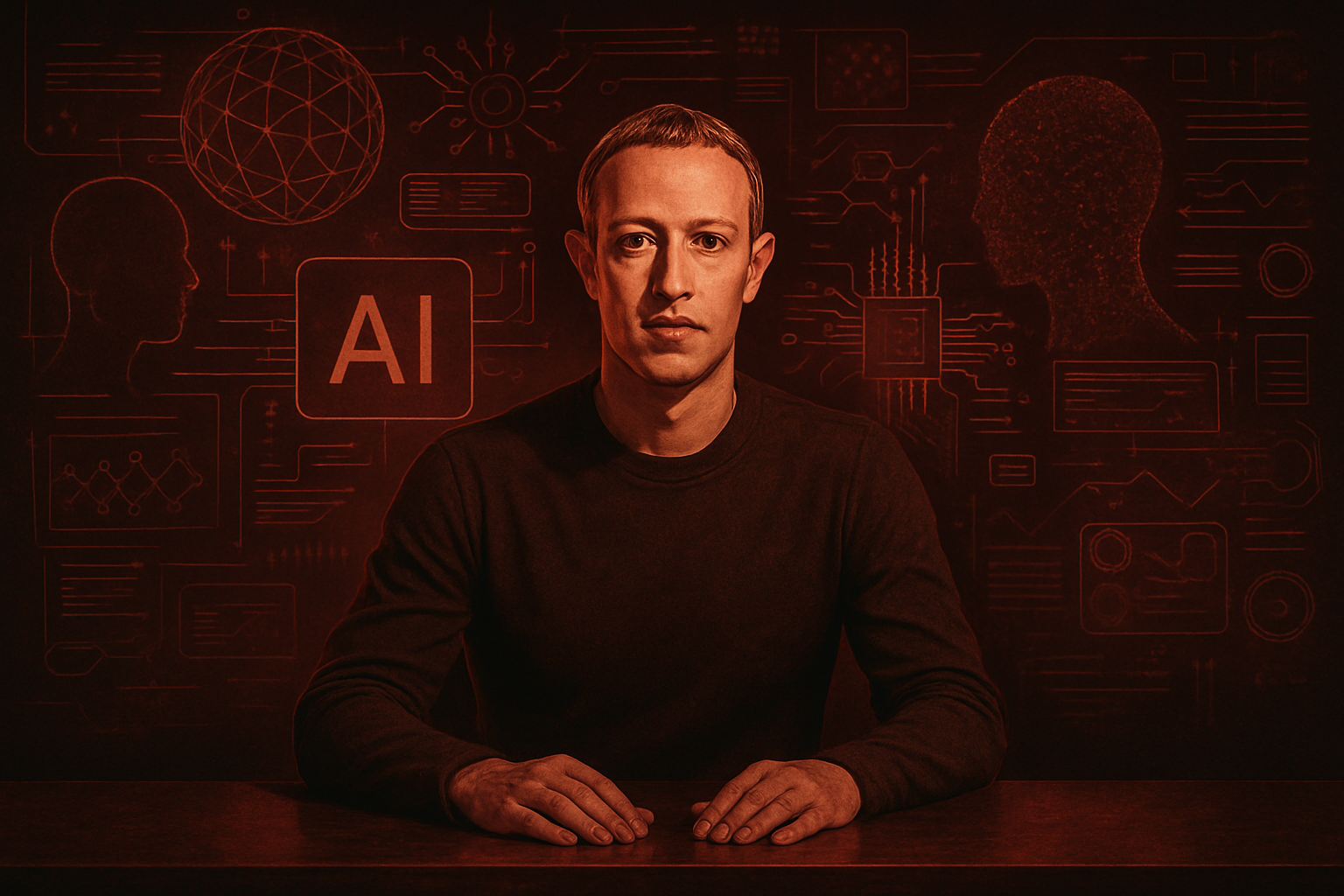
Meta CEO, Mark Zuckerberg, has much to say about the ideal future he envisions for humanity coexisting with artificial intelligence. His latest essay, titled “The Future is for Everyone”, spans over 6,500 words and outlines his beliefs on the development, expansion, and regulation of this technology, as well as how Meta positions itself to achieve these goals.
Here are some of the main takeaways from Zuckerberg's essay:
Influencing the Public on Data Centers
Zuckerberg stated that the development of sustainable infrastructures means that communities must significantly benefit from every project. This includes promises to build energy-generating infrastructures “wherever we invest,” which could potentially provide low-cost energy to communities, as well as a commitment to “restore more water than we use in the watersheds where we operate by 2030.” Meta is also launching a Future Is For Everyone Fund to support local communities, and Zuckerberg claims that the company offers free training and “guaranteed well-paying jobs” for skilled workers in areas where Meta builds data centers.
An Open AI for Everyone
Meta plans to focus its efforts on “delivering personal superintelligence to billions of people and small businesses,” arguing that this will enable everyone to become more entrepreneurial. This involves offering the technology “for free or at the lowest possible cost,” and publishing more AI models as open source that anyone can download. According to Zuckerberg, this “will bring an abundance of personal autonomy, expression of ideas, deepening of relationships, economic and financial prosperity, health improvements, and inventions we cannot imagine today.” He also mentions that this will impact “certain aspects of our work,” but dismisses concerns that AI will lead to an overall reduction in jobs.
Less Government Surveillance
Zuckerberg emphasizes the importance of the United States leading the open-source AI ecosystem, citing concerns that competing models published by foreign labs “hold several advantages” due to fewer restrictions on training data. He proposes that the U.S. needs to rethink policies regarding the distillation and use of data, arguing that while “some have tried to present distillation as harmful,” the U.S. will not be able to keep pace if it continues to restrict AI models from learning from other models.
Zuckerberg states, “I don’t believe that restricting access to foreign open-source models is an effective solution.” It is worth noting that these concerns are likely expressed in response to the release of open-weight models by Chinese AI companies like Alibaba and Moonshot, which are not truly open source, and that the models published by Meta so far are not genuinely open source either. He also argues that access to personal superintelligence is essential for individuals to maintain their freedom and should only be subject to restrictions “when truly necessary.”
But Also, More Government Surveillance
In cases involving cybersecurity, Zuckerberg proposes that leading AI labs work with the U.S. government to strengthen critical infrastructures, and he believes that open-source AI models will improve the security of systems over time—especially “once superintelligence allows most of the world’s code to be verifiable and secure.” This plan includes pushing AI developers to share training information for new models “for governmental use and review” in an intermediate manner, rather than waiting until training is complete, aligning with the Trump administration's AI testing framework.
Zuckerberg stated, “In this way, the government will have early access to the most powerful models and an army of skilled engineers to identify and fix security issues. Labs should also work with law enforcement to help identify malicious actors attempting to hijack their systems.”
Brief IA — L'actualité IA en français
L'essentiel de l'actualité de l'intelligence artificielle, décrypté et expliqué chaque jour.