GPT-5.5 and Opus 4.7 Fail AI Reasoning Test
Le brief IA que les pros lisent chaque soir
Les 7 actus IA du jour, décryptées en 5 min. Gratuit.
Inclus dès l'inscription : notre sélection des meilleurs guides & comparatifs IA.
Choisis ton rythme
Gratuit · Pas de spam · Désabonnement en 1 clic
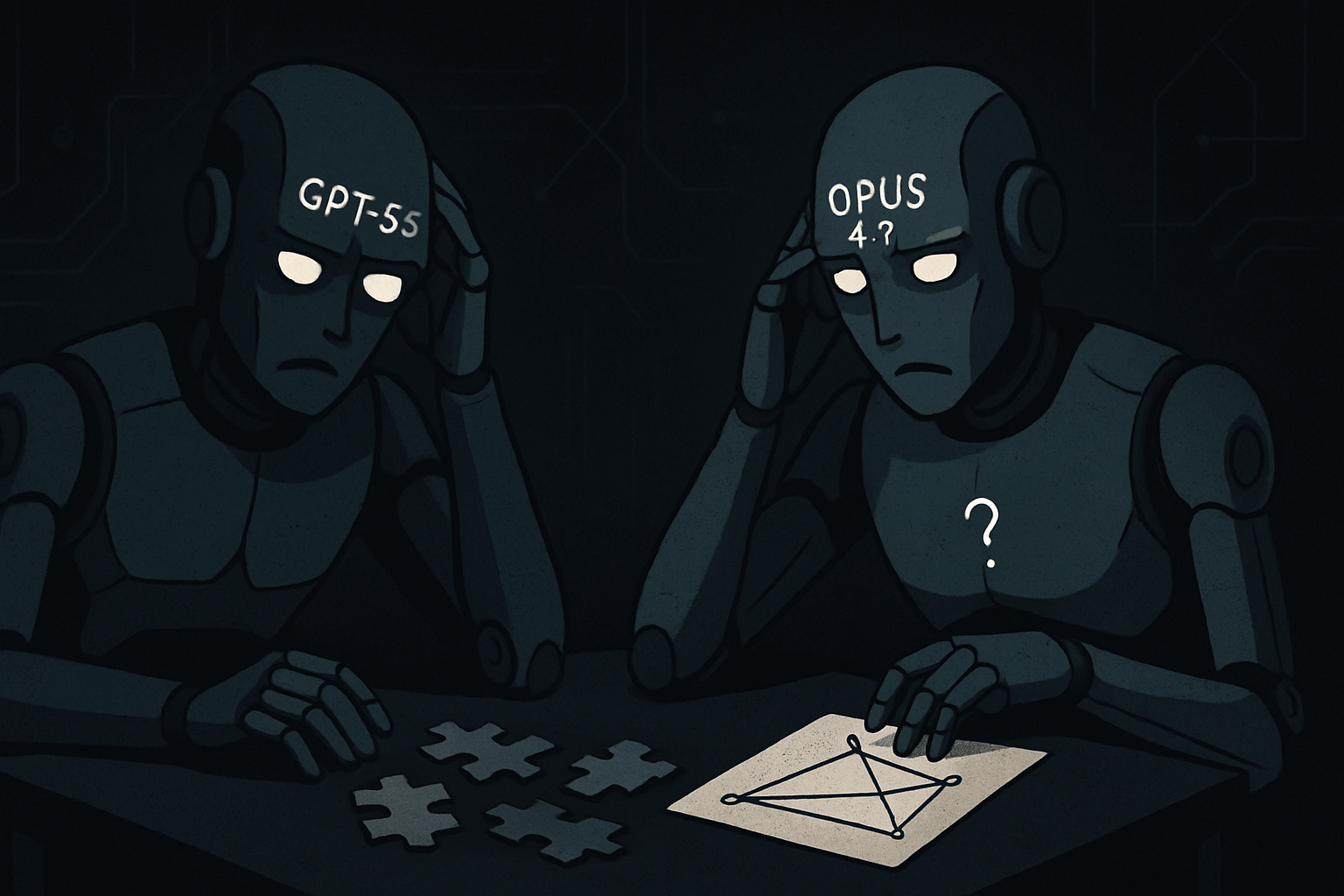
Artificial intelligence, despite its impressive advancements, still faces major obstacles in the realm of reasoning. A recent study conducted by the ARC Prize foundation has highlighted significant weaknesses in the reasoning capabilities of the latest AI models, including OpenAI's GPT-5.5 and Anthropic's Opus 4.7. These models, while at the forefront of technology, exhibit systematic errors that raise questions about their reliability, especially in critical applications.
Results of the ARC-AGI-3 Analysis
The study relied on the ARC-AGI-3 benchmark, which evaluates the reasoning ability of AI models across 160 game parts. The results are concerning: the GPT-5.5 and Opus 4.7 models managed to achieve a success rate of less than 1% on tasks that humans solve easily. These errors manifest according to three main patterns, although these are not detailed in the study's summary. These shortcomings underscore the persistent challenges faced by AI researchers, despite technological progress.
Consequences for the AI Sector
The implications of these results are vast for the AI sector. Reasoning ability is crucial for many applications, particularly in health, finance, and security. If AI models fail to solve simple reasoning problems, their adoption in critical sectors could be compromised. These errors could lead to serious consequences, such as incorrect decisions based on flawed analyses. This also raises questions about accountability and the trust that users can place in these systems.
Reactions and Future Perspectives
Reactions to this study vary. Some experts believe that these results are not surprising, given the complexity of human reasoning and the current limitations of AI models. Others call for deeper reflection on how these systems are developed and deployed. The AI research community may need to reassess its priorities, focusing on improving reasoning capabilities rather than merely increasing the size of models or the amount of data used for training.
Competing companies, such as Google and Microsoft, may be influenced by these results, prompting them to intensify efforts to develop more robust and reliable models. Furthermore, regulations surrounding AI could evolve to require stricter standards regarding the performance of AI systems in sensitive applications.
In summary, the analysis by the ARC Prize foundation highlights crucial issues in the development of AI. The systematic reasoning errors observed in the GPT-5.5 and Opus 4.7 models underscore the need for ongoing research and increased vigilance in the adoption of these technologies. As AI continues to integrate into our daily lives, it is imperative to monitor these developments and ensure that the systems being developed meet expectations for reliability and safety.
Brief IA — L'actualité IA en français
L'essentiel de l'actualité de l'intelligence artificielle, décrypté et expliqué chaque jour.