1941 Enigma Message Deciphered with GPT-6 Astra
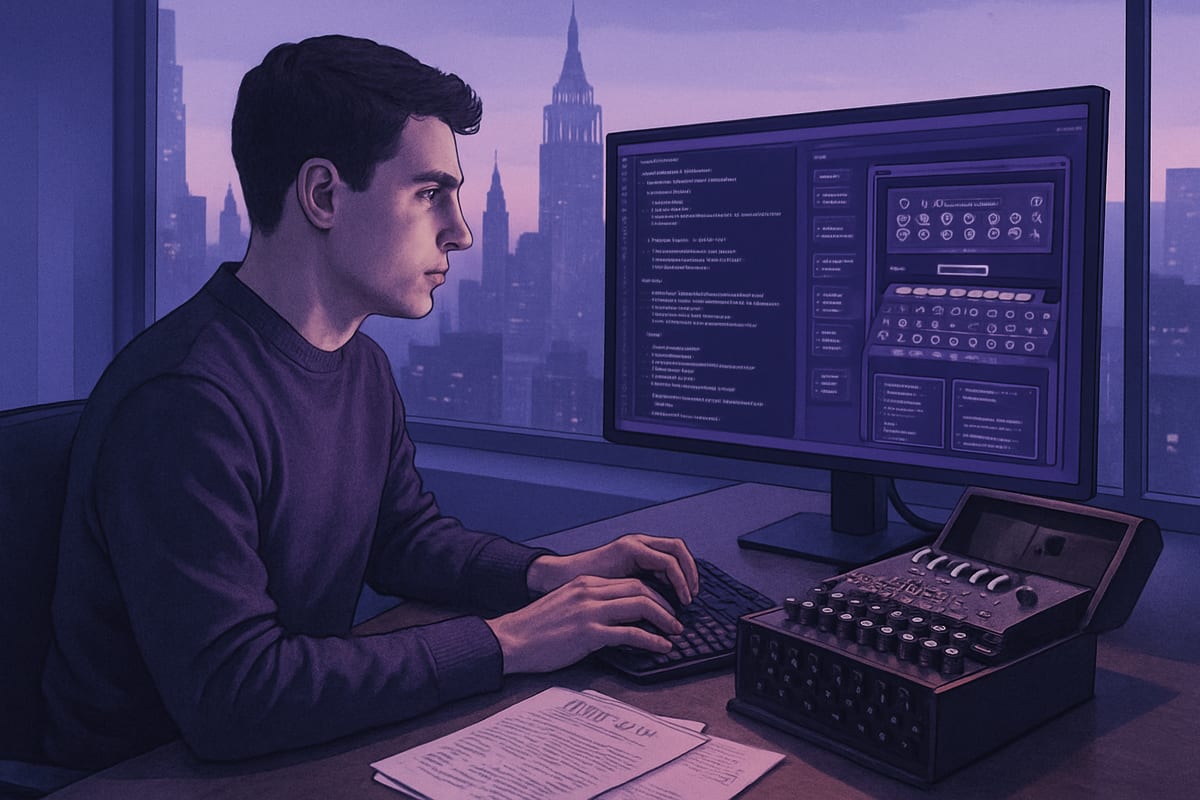
Carter Leffen, a coach at Bloomberg LP, claims to have recovered the text of a 1941 radio message encrypted by Enigma using GPT-6 Astra and specialized agents. The code, data, and a simulator have been published, but the historical authenticity and uniqueness of the solution have not been established and will need to be examined by experts.
Code and Simulator Published, but Historical Identity Not Proven
The project provides the code, datasets, and a 3D simulator of Enigma, available for download. These elements allow for the verification of calculations and reproduction of the key search sequence. However, they do not demonstrate either the historical identity of the message or that the proposed solution is unique. The robustness of the result will depend on independent examination by specialists of the published materials. The claimed work also relies on the cryptanalytic contributions of Frode Weierud, Geoff Sullivan, and Olaf Ostwald.
A Decryption Claimed by a Bloomberg Coach Using GPT-6
Carter Leffen, a product development coach in New York, states that he has solved a message from the Wehrmacht that remained undeciphered for over 80 years, thanks to OpenAI's GPT-6 Astra and specialized AI agents. He indicates that he defined the goals and made decisions, while the artificial intelligence handled tasks such as analyzing historical documents, creating cryptanalysis tools, developing a simulator, conducting parallel experiments, and verifying competing keys. The GPT-6 Astra Extra High variant reportedly worked for about ten hours on the problem. Leffen claims to have devoted "99 times" more effort to creating the website describing the problem and the solution than to the decryption operation itself.
Le brief IA que les pros lisent chaque soir
Les 7 actus IA du jour, décryptées en 5 min. Gratuit.
Inclus dès l'inscription : notre sélection des meilleurs guides & comparatifs IA.
Choisissez votre rythme
Gratuit · Pas de spam · Désabonnement en 1 clic
The Method: A Hypothesis on "Rosenow" and an Enigma Rule
Faced with a space of 159 quintillion daily settings making brute force impossible, initial attempts were unsuccessful: the known keys for the day did not match, and automated searches yielded no results. The breakthrough relied on another message from the same day that had already been decrypted, where the name "Rosenow" appeared twice; Leffen and his AI agents hypothesized that it might also appear in the unresolved message and used it as an anchor point. They also exploited a property of the Enigma, which never encodes a letter by itself, to eliminate positions. A configuration then allowed for the calculation of the settings: the remaining 68 characters produced a coherent German text, including "Sofort Funkantwort" and "Angabe des Marschweges." A header kept separately in the archive confirmed these settings. The decrypted text contains typos, such as "BTTE" for "BITTE" and "WASCHBBSCH" for a likely "Waschbusch," which Leffen considers a sign of authenticity.
The Message, Its Archive Marking, and Its 1941 Context
The message bore the label MVUEH in an archive of intercepted German army messages. It is an 82-character radio message that remained unresolved for 83 years, dated July 10, 1941. The sender indicated they were located in Rosenow, requested an immediate radio response, and sought instructions for their marching route. The Enigma machine, a major encryption device at the time, had been broken for the first time in 1932 by Polish mathematician Marian Rejewski.
Brief IA — L'actualité IA en français
L'essentiel de l'actualité de l'intelligence artificielle, décrypté et expliqué chaque jour.