Meta and AI: Disturbing Clickbait Articles
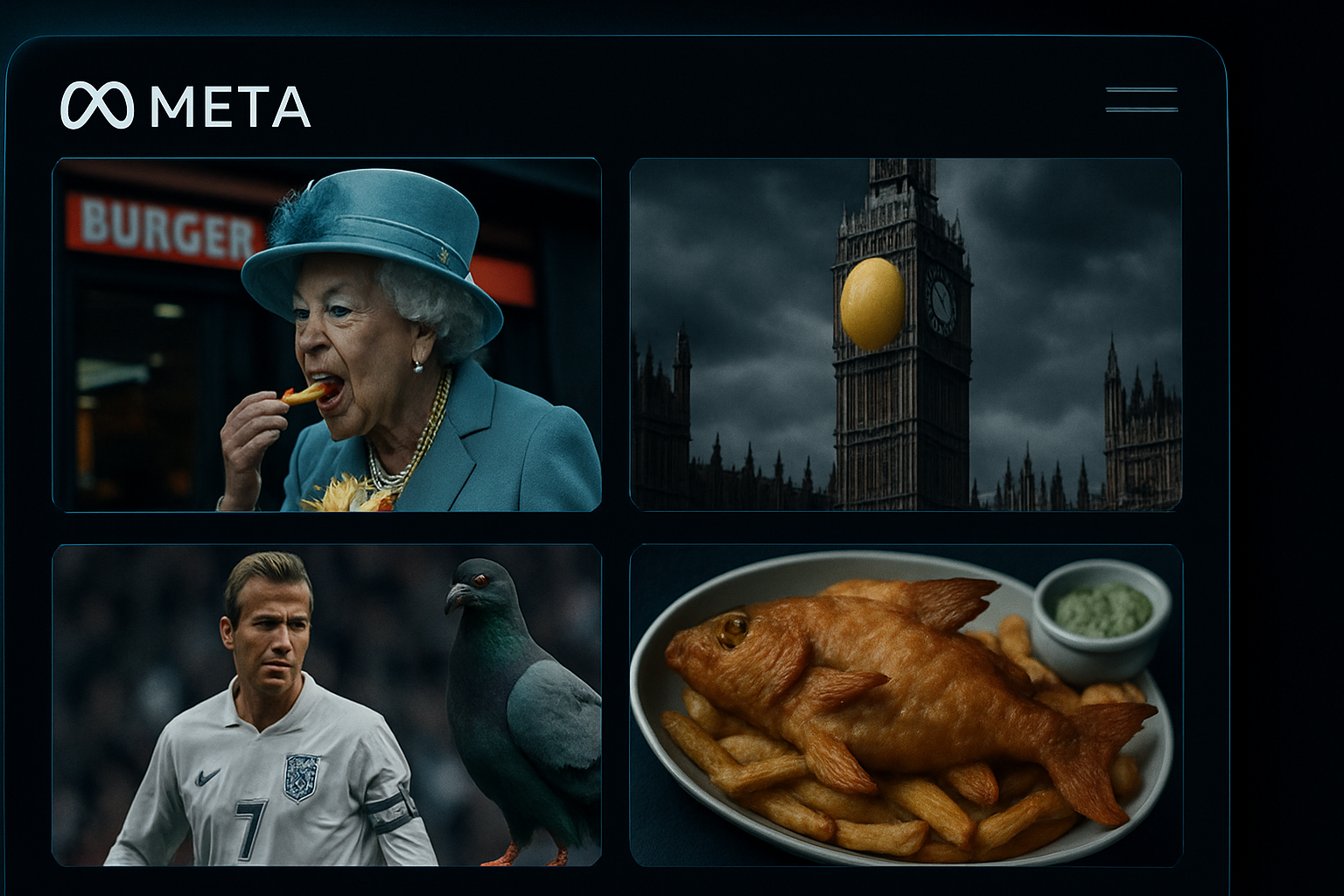
Meta recently launched a new feature in its Meta AI application that generates clickbait-style articles using artificial intelligence. This section, titled “For You,” offers a selection of stories entirely created by AI, the quality of which is often called into question.
The Meta AI app, introduced in April 2025, initially featured a public “Discovery” feed that displayed images and conversations generated by AI. However, this feed has been replaced by a standard chatbot interface and a “For You” page, where users can click to generate complete stories.
Generated Content
During testing, the article suggestions were heavily focused on British themes, addressing topics such as tea, manners, pubs, royalty, and football. Among the proposed stories were titles like “A royal butler has finally settled the debate on milk first,” suggesting that tea should be served first. Another story, “The psychology of joining a queue without knowing why,” explores a typically British behavior. Other articles included “The anatomy of the famous British sigh” and “Inside the extreme sport of visiting every pub in the UK.” Some stories were even more absurd, such as “When a small problem means total disaster.”
Content Issues
The text generated by the AI often resembled filler without substance, merely repeating the topic without providing concrete information. I attempted to trace the origin of some stories. For example, the royal butler story seems to stem from a BBC comedy series from 2018, while the “Rolex experience” story appeared to be a pure invention, generated without any reference. Clicking multiple times on the same cards yielded generated stories that remained within the same limits but were slightly different. Typing the same title in another chat produced a completely different response. My chat history revealed hidden prompts intended to trigger article generation, including internal instructions and metadata.
Le brief IA que les pros lisent chaque soir
Les 7 actus IA du jour, décryptées en 5 min. Gratuit.
Inclus dès l'inscription : notre sélection des meilleurs guides & comparatifs IA.
Choisissez votre rythme
Gratuit · Pas de spam · Désabonnement en 1 clic
Generated Images
The articles were accompanied by images, many of which were harmless, but some depicted real people, including public figures, and contained errors. For instance, an article titled “Who really pays the royal family in 2026?” showed two Queen Elizabeth IIs, despite her passing several years prior. The images also featured typical AI elements, such as impossible hands and bodies in unnatural angles. One image even turned out to be a GIF of an elderly couple dancing, performing movements impossible for a human body.
Meta's Reactions
It was unclear whether the app had the right to generate images of real people in accordance with Meta's rules, which state that users should be informed when posts are created by AI. Despite this, there was no indication in the feed or articles that the content was AI-generated. Meta declined to answer numerous questions regarding the purpose of this feature, the nature of the produced content, the safety measures in place, and the compliance of images of real people with its own AI content policies. A spokesperson for Meta stated that the goal was to suggest what is most relevant to the user but then clarified that this feature was a limited test and would be discontinued. This raises further questions: how was this test limited if several of my colleagues also had access to this feature? What does “proactively” really mean? And, most importantly, who asked for this in the first place?
Brief IA — L'actualité IA en français
L'essentiel de l'actualité de l'intelligence artificielle, décrypté et expliqué chaque jour.