Meta Cuts $3.9 Billion in Taxes Thanks to AI
Le brief IA que les pros lisent chaque soir
Les 7 actus IA du jour, décryptées en 5 min. Gratuit.
Inclus dès l'inscription : notre sélection des meilleurs guides & comparatifs IA.
Choisis ton rythme
Gratuit · Pas de spam · Désabonnement en 1 clic
Meta reduces its U.S. tax bill through the research tax credit, classifying its AI data centers as "pilot models" and its purchases of Nvidia chips as experimental expenses. The company has become the primary beneficiary of the scheme while acknowledging legal risks in its filings. Its auditor, EY, has approved and promoted the approach, as the projects unveiled by Mark Zuckerberg showcase several gigawatts of power.
Risks Acknowledged by Meta and EY's Green Light
Meta states in its filings that its savings from the tax credit could be challenged and has increased its reserves for uncertain tax positions by 45%, reaching $18.74 billion. Internal accountants consider the strategy legally risky. EY, Meta's auditor, has validated the approach, contributed to its implementation, and is now offering it to other groups to offset their AI chip purchases. Even in the event of a review by the IRS, the company would likely come out ahead as the capital would have been invested in the meantime, positively affecting the stock price. The tax credit dates back to 1981. Its proponent, Congressman James Shannon, recalls that it aimed at "human power, knowledge, information" and believes that its current use far exceeds the original intent.
The Mechanism Used and the Savings Achieved
Meta's strategy involves leveraging the federal research tax credit by classifying its AI data centers as "pilot models" and Nvidia chips as experimental materials. According to reported amounts, the company saved $700 million in 2023, then $2 billion the following year, and $3.9 billion in 2025, thus becoming the top beneficiary of the scheme among publicly traded companies. Meta claims to have invested $200 billion in R&D over the past five years. The facilities classified in this way continue to be presented as "pilot models" for tax purposes.
Giant Infrastructures Presented as "Pilots"
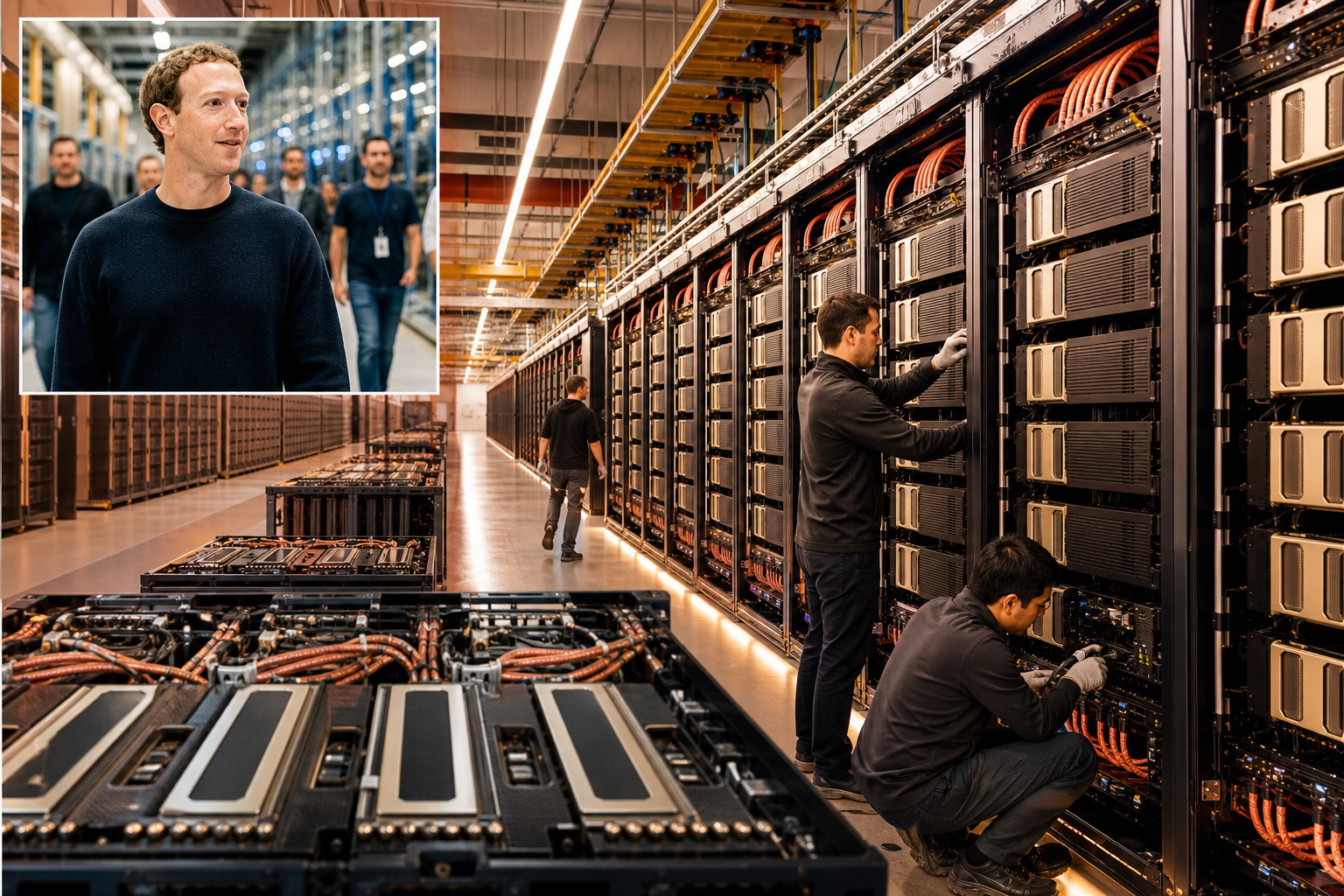
Mark Zuckerberg has expressed his intention to allocate several hundred billion dollars to computing in order to develop superintelligence, based on various clusters totaling several gigawatts. The first cluster, Prometheus, is already partially operational. A second, Hyperion, is announced to reach 5 GW over time. In January 2025, he specified that these centers would power the group's products and activities and presented a project for a site of over 2 GW, described as covering a significant part of Manhattan. In June 2026, Meta detailed an infrastructure relying on Nvidia, AMD, AWS, Arm, and Broadcom, as well as its own MTIA chips. Zuckerberg assured that he has the necessary capital to carry out these plans.
Brief IA — L'actualité IA en français
L'essentiel de l'actualité de l'intelligence artificielle, décrypté et expliqué chaque jour.