Meta Challenges Google with Content Seal, a Risky Bet on AI
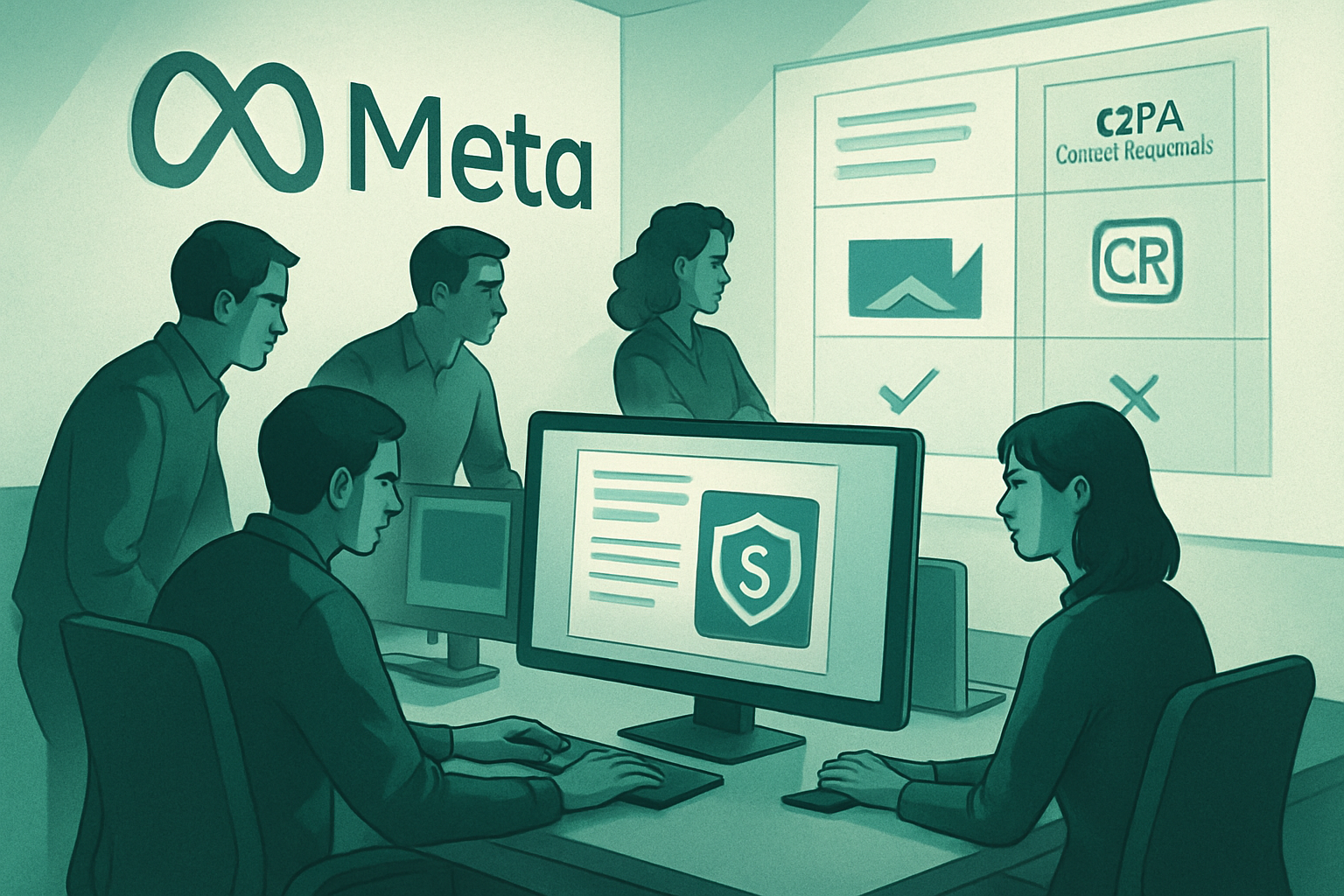
Meta and Its Commitment to AI Detection
In March, Meta's Oversight Board urged the company to uphold its public commitments by using its own tools to limit the spread of misleading AI-generated content on its platforms. This recommendation aimed to enhance Meta's transparency and accountability in the face of the proliferation of potentially harmful content.
Launch of Content Seal
In response to this request, Meta introduced a new technology called Content Seal in July. This invisible watermarking system is designed to mark images generated by Meta's AI model. However, this announcement was quietly integrated into a broader communication regarding the company's image and video generation tools, known as Muse.
Le brief IA que les pros lisent chaque soir
Les 7 actus IA du jour, décryptées en 5 min. Gratuit.
Inclus dès l'inscription : notre sélection des meilleurs guides & comparatifs IA.
Choisissez votre rythme
Gratuit · Pas de spam · Désabonnement en 1 clic
Doubts Surrounding Content Seal
Despite this advancement, Content Seal fails to convince some experts who regularly examine AI labeling systems. They point out the existence of already well-established solutions, such as C2PA Content Credentials, which offer proven guarantees in the detection and traceability of AI-generated content. This situation raises questions about the effectiveness and relevance of Meta's approach in light of alternatives already recognized in the industry.
Brief IA — L'actualité IA en français
L'essentiel de l'actualité de l'intelligence artificielle, décrypté et expliqué chaque jour.