Meta: AI Revolutionizes Consumer App Development
Le brief IA que les pros lisent chaque soir
Les 7 actus IA du jour, décryptées en 5 min. Gratuit.
Inclus dès l'inscription : notre sélection des meilleurs guides & comparatifs IA.
Choisis ton rythme
Gratuit · Pas de spam · Désabonnement en 1 clic
Meta: AI Revolutionizes the Development of Consumer Applications
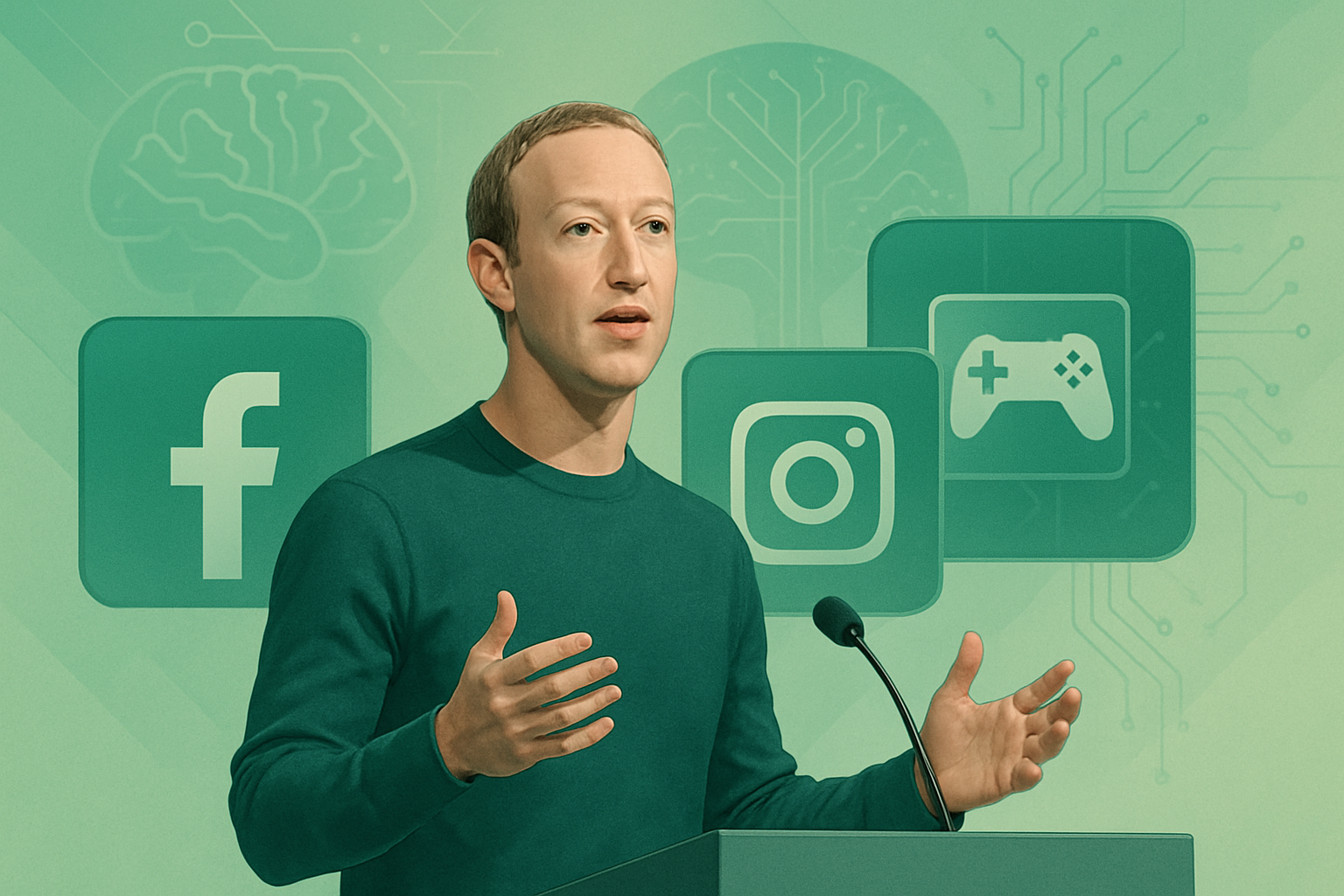
Meta is using AI to rapidly launch applications, with more in the pipeline. During this week's second-quarter earnings call, Meta's CEO, Mark Zuckerberg, stated that the social media giant has new applications under development, following a recent series of launches that include an app for Marketplace sellers, one for Facebook groups, a game app coded on the vibe, a new Instagram photo app, and an experience involving AI-generated bedtime stories.
Meta has spent years trying and failing to produce new standalone social applications to complement its core platforms. Now, the company claims that large language models (LLMs) enable faster software delivery, allowing it to test new ideas at a more accelerated pace.
“I am… excited to see how AI is helping our teams accelerate product development,” Zuckerberg told investors during Wednesday's call. “Earlier this year, we launched Instagram Instants. We also just launched Forum, a standalone app for groups, and Seller, a standalone app for Marketplace. I expect it to be much easier to launch new applications. We plan to develop more ideas and use our recommendation systems to scale them,” he added.
“AI enhances our core business; it makes our apps more relevant and provides better outcomes for businesses. We are starting to roll out more innovative products, and we will have many more soon,” Zuckerberg stated.
Meta has taken this path before. In its early days, Meta (then known as Facebook) led an internal incubator called Creative Labs, aimed at testing new social concepts.
This effort resulted in a few launches: the photo-sharing app Slingshot, an anonymous chat app Rooms, a competitor to Flipboard called Paper, the photo-sharing app Moments, and a collaborative video app known as Riff. These experiments ended in 2015, and all the apps were eventually shut down as the company struggled to find an audience for its efforts.
In the early 2020s, Meta tried again, this time with an internal R&D group, NPE Team, which tested applications including the chat app Bump, the social music app Aux, the task app Move, the dating app Spark, the calling app CatchUp, the zine creator E.gg, the events app Venue, the Q&A app for creators Hotline, the Cameo competitor Super, the couples app Tuned, the music app BARS, and others.
Once again, none became a breakout success, and the apps were shut down.
Today, Meta can point to at least one example of how AI is helping new applications grow. It has finally achieved modest success with Threads, which now boasts 500 million monthly active users. Zuckerberg likes to say that Threads will one day become the company's next billion-user app.
With Threads, Meta learned to heavily rely on its existing user base to initially populate the app, then continued to promote it massively across its existing platforms, including Facebook and Instagram. But LLMs are another key factor in Threads' growth, as the company has stated that it is seeing “significant gains” from its AI-powered content recommendations.
“We are finding that LLMs are increasingly capable of providing gains in ranking and recommendations,” Meta's Chief Financial Officer, Susan Li, told investors during the call. “Firstly, they make our existing systems smarter by understanding what the content is really about and generating better training data. Secondly, LLM-powered agents also assist in technical development by assessing content quality, detecting trends, and testing ranking changes.”
Li added that earlier this year, Meta reached a milestone: every Reel and every post in the Feed on Instagram is now automatically processed by an LLM and analyzed for its subject and tone, which helps improve recommendations.
The company is also developing native recommendation systems based on LLMs, which could help it better scale new applications as they arrive.
Investors did not follow up with the company's executives to ask more questions about the new applications Meta has in the works, as they were more concerned about AI spending and Meta's growing ambitions in the enterprise sector. However, Zuckerberg suggested that people won’t have to wait long to see what’s coming, stating that “new consumer products” will be “launched soon.”
Brief IA — L'actualité IA en français
L'essentiel de l'actualité de l'intelligence artificielle, décrypté et expliqué chaque jour.