Meta launches Muse Voice Transcribe at $0.18/hour, 70+ languages
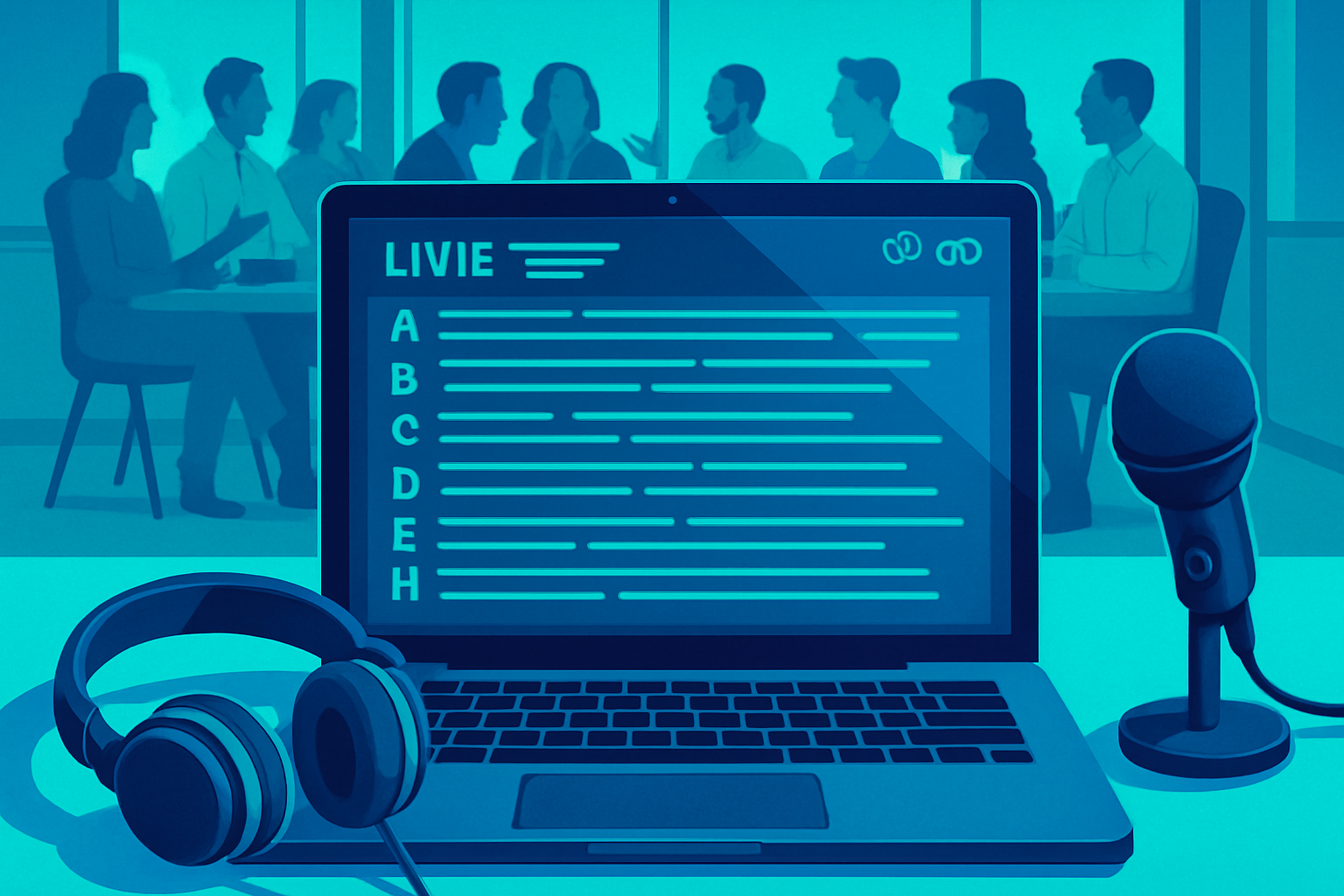
Meta introduces Muse Voice Transcribe, a real-time audio transcription model priced at $0.18 per hour. Validated by an independent assessment, it promises diarization, phrase detection, and code-switching management, and is already integrated into Meta AI. The company is focusing on price and immediate availability while keeping the model size and training data confidential.
Meta focuses on price and keeps model size under wraps
Meta does not disclose the number of parameters, the volume, or the sources of the audio data, nor does it publish the model weights. Muse Voice Transcribe continues the trajectory of Muse Spark 1.1 and 1.2, with a strategy centered on price rather than maximum performance. The cost is set at $3 for 1,000 minutes of audio. In the summer of 2025, Meta restructured its AI division under the supervision of the Superintelligence Labs, attracting researchers from OpenAI, Google DeepMind, and Apple, with offers reaching up to $300 million over four years. Some of these newcomers did not stay long and returned to OpenAI after just a few weeks.
Third-party measurements quantify the performance gap
Artificial Analysis confirms the performance claims made by Meta. Muse Voice Transcribe shows an error rate of 3.1% in English, with a delay of 0.16 seconds after speech ends. ElevenLabs Scribe v2 Realtime achieves 3.6% and 0.14 seconds, AssemblyAI Universal-3.5 Pro Realtime 4.0%, and Cartesia Ink-2 3.4% or 4.0% depending on the method of detecting end-of-statement.
Adaptive processing in 80 ms segments
Audio is divided into 80-millisecond segments. After each segment, the model decides whether to continue listening or to produce the next word, thereby modulating the amount of context used. A longer wait time improves accuracy but increases latency; Muse Voice Transcribe dynamically adjusts this delay for each word based on its difficulty, processing simpler words more quickly and allowing more time for complex words. This behavior is learned through reinforcement, with rewards for low error rates and short delays.
Le brief IA que les pros lisent chaque soir
Les 7 actus IA du jour, décryptées en 5 min. Gratuit.
Inclus dès l'inscription : notre sélection des meilleurs guides & comparatifs IA.
Choisissez votre rythme
Gratuit · Pas de spam · Désabonnement en 1 clic
Integrated diarization and long recordings without post-processing
Speaker separation and phrase detection are integrated into the same model and trained alongside speech recognition. Voice changes are signaled, with each segment receiving an identifier from A to Z, and the beginnings and ends of statements are marked. The system can identify up to 20 speakers, and even more than 20 simultaneously, and can handle recordings exceeding one hour without requiring post-processing. During a presentation involving eight participants, Meta reported that the system associated speech with each person in real-time.
Support for over 70 languages and code-switching management
The model supports over 70 languages, with 25 tested in-depth according to Meta. It manages code-switching within the same sentence. Indicators of language, keywords, and context can enhance accuracy, particularly for proper nouns like Meta, Muse, or Menlo Park.
Deployment in Meta AI and immediate access
Muse Voice Transcribe is available in Meta AI and via the Meta Model API. This model is used for voice dictation in Meta AI and Muse Code. It can be tested by holding down the "Fn" key in any application.
Vision of personal agents and debate over glasses
Meta links this announcement to Mark Zuckerberg's vision of a "personal superintelligence." In a scripted presentation, Meta employees argue that the reliability of voice recognition forms the foundation for personal AI agents capable of listening to conversations through AI glasses. In Germany, a ban on Meta's camera glasses was discussed, but the Federal Network Agency decided not to pursue this path.
Pricing positioning and competitive dynamics
The service is priced at $0.18 per hour, positioning Meta below competitors like OpenAI and ElevenLabs. For comparison, Cartesia Ink-2 costs $4, and ElevenLabs Scribe v2 Realtime as well as Deepgram Flux are priced at $6.50. OpenAI launched GPT-Realtime-Whisper in May for the same use and reduced the prices of its transcription models in July.
Brief IA — L'actualité IA en français
L'essentiel de l'actualité de l'intelligence artificielle, décrypté et expliqué chaque jour.