Meta bets on AI connectors with Muse
Le brief IA que les pros lisent chaque soir
Les 7 actus IA du jour, décryptées en 5 min. Gratuit.
Inclus dès l'inscription : notre sélection des meilleurs guides & comparatifs IA.
Choisis ton rythme
Gratuit · Pas de spam · Désabonnement en 1 clic
Meta is testing Muse, a connector system designed to link AI agents to online services. With promises of commission-based revenue and openness to developers, adoption hinges on the willingness of platforms: Amazon has blocked Muse, while Shopify is partnering with the project.
Contrasting Adoption and Revenue Opportunities Around Muse
The utility of Muse relies on the availability of services ready to provide connector keys, and companies' reactions are mixed. Amazon has blocked Muse agents from making purchases on its site, citing its terms of service. In contrast, Shopify CEO Tobi Lütke announced a partnership and the implementation of agent-based payments with Shop Pay across all Shopify stores. Mark Zuckerberg indicated on September 8 that Meta could earn a small commission on transactions made via Muse, potentially paid by businesses, which would allow the agent to be free for most users. However, the realization of this vision depends on companies' acceptance of providing these keys, a control issue that could either open a new phase of the internet or close it off.
Meta Opens Muse Connectors to Developers
Meta is seeking to convince companies to adopt the connector approach and has announced the opening of Muse's connectors to developers, a statement shared on X by Alexandr Wang. According to him, connecting software to Muse would allow users to utilize a service simply by asking for it. This possibility of integration could intensify competition among services if users choose to go through agents for travel bookings, product orders, advertising expense management, or project organization, thereby pushing companies to make their services easily accessible to these agents.
Connectors Link AI Agents to Online Services
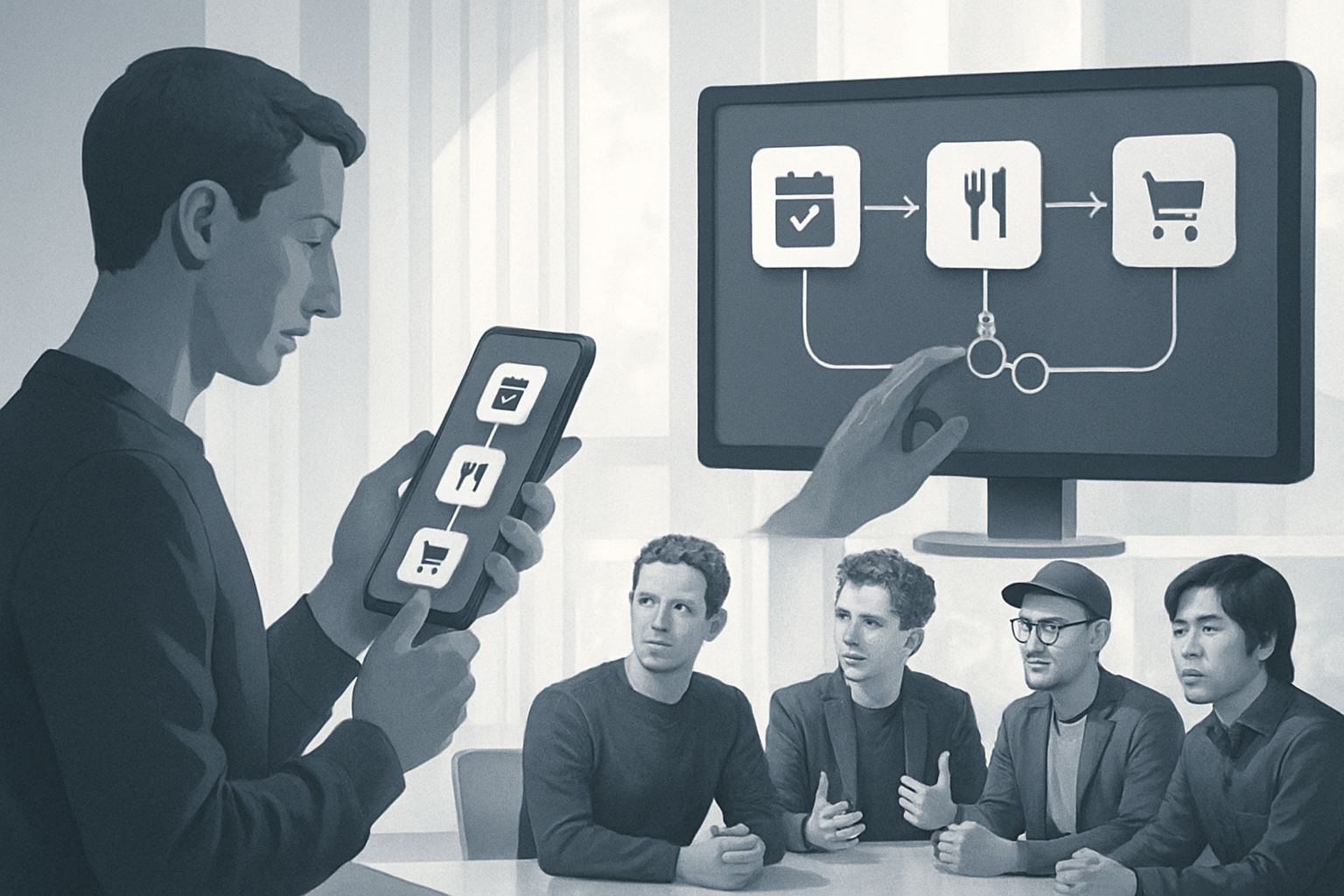
Connectors serve as keys linking AI agents to internet applications, enhancing the accuracy of their actions. A connector is a link that, with the user's consent, grants access to an online service, often relying on the service's API to enable communication between software. For example, an AI assistant can organize a dinner by checking a calendar via a connector, searching for a table with another, and then making the reservation, allowing the agent to focus on a specific task.
Muse on Display and the Bet on an Upcoming Turning Point for the Web
Meta is experimenting with this approach through Muse, a consumer-oriented agent capable of managing tasks that involve switching from one application to another, while Claude and ChatGPT are primarily business-oriented. This Monday, Muse held the top spot among the most downloaded free apps on the App Store in the United States. Several figures in Silicon Valley believe that connectors could represent the next major evolution of the internet; Aaron Levie, CEO of Box, compares their potential impact to that of the App Store, which shifted a significant portion of usage to mobile applications. According to this vision, a new stage of the web could rely on these connectors, with Muse seen as a key experiment in a possible large-scale change.
Brief IA — L'actualité IA en français
L'essentiel de l'actualité de l'intelligence artificielle, décrypté et expliqué chaque jour.