Meta Bets on Muse for Consumer AI
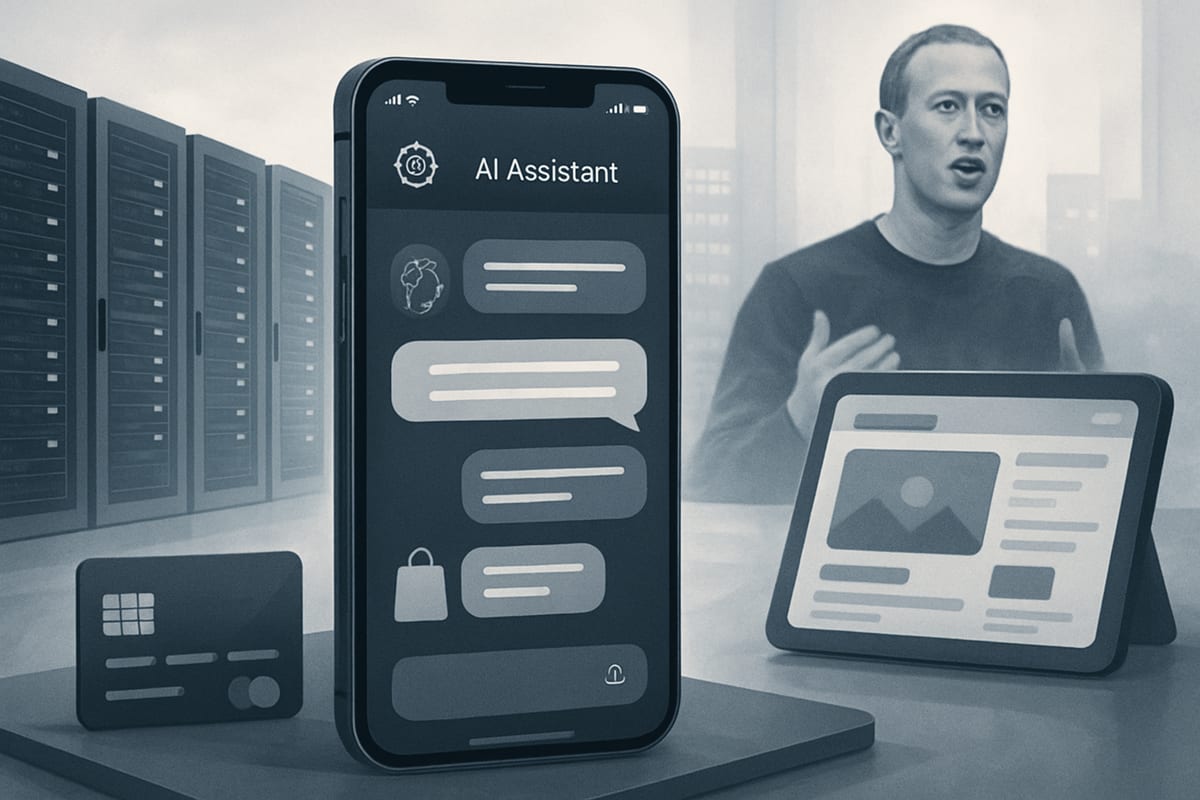
Muse, Meta's AI agent, has made a significant impact on the App Store rankings. The company is pursuing a consumer-oriented strategy, highlighted by payment partnerships, massive distribution capabilities, and repeated statements from Mark Zuckerberg about ease of use.
Amazon Blocks Muse for Shopping, PayPal and Shopify Align
Muse is not accepted by all commerce ecosystems: Amazon has already blocked its use for shopping. In contrast, PayPal and Shopify are partnering with Meta's agent to facilitate connections between buyers and their payments. Meta emphasizes its financial resources and political capital to build large data centers, relying on its ability to promote its internal applications, such as Threads, to its billions of users.
Muse Surpasses ChatGPT in Free AI Apps
Muse has reached the top of the App Store rankings and has surpassed ChatGPT as the best free AI app, marking a notable start. Meta's AI agent is thus described as a successful application. This traction places Muse at the heart of the company's consumer offering.
Mixed Launches Before Muse: Celebrity Chatbots and Vibes
Before Muse, Meta experimented extensively on the consumer side. The company deployed chatbots featuring celebrity voices, including a chatbot associated with John Cena that was reported for inappropriate exchanges with what he thought was a minor user. It also allowed the creation of chat characters on Instagram. In generative video, the Vibes app significantly underperformed compared to OpenAI's Sora 2 at its launch.
Le brief IA que les pros lisent chaque soir
Les 7 actus IA du jour, décryptées en 5 min. Gratuit.
Inclus dès l'inscription : notre sélection des meilleurs guides & comparatifs IA.
Choisissez votre rythme
Gratuit · Pas de spam · Désabonnement en 1 clic
Competition from Instinct and OpenClaw, Muse's Positioning
Muse's technical superiority is not established and remains debatable. Instinct, a similar product, has a growing user base. Observers have noted similarities between Muse and OpenClaw, the latter attracting more technical profiles and having launched the trend of personal agents. According to the thesis put forth, the main obstacle for a consumer AI agent is to clearly indicate the tasks that can be accomplished to the user. A former Google employee reminds us that user experience, design, and ease of use are essential.
Meta's Line According to Zuckerberg: Simplicity and Scale
Mark Zuckerberg traces the genesis of the AI agent strategy back to April and proposes a "mother test" to judge simplicity. He stated that there are many agents but few he would give to his mother, and that Meta would refine its agent to offer a more polished, tuned, and easy-to-use product. The stated goal is a high-performing consumer application, distributed to the existing billions of users. In April, he presented this plan to Wall Street, criticizing the complexity of setting up OpenClaw and believing that a significantly better and simpler agent could grow from hundreds of thousands or millions of users to billions. This thesis associates this approach with a choice to let Anthropic and OpenAI focus on AI risks while Meta capitalizes on its ability to create and promote consumer applications.
Brief IA — L'actualité IA en français
L'essentiel de l'actualité de l'intelligence artificielle, décrypté et expliqué chaque jour.