Meta Opens Muse to Connectors, Shopify and Stripe Onboard
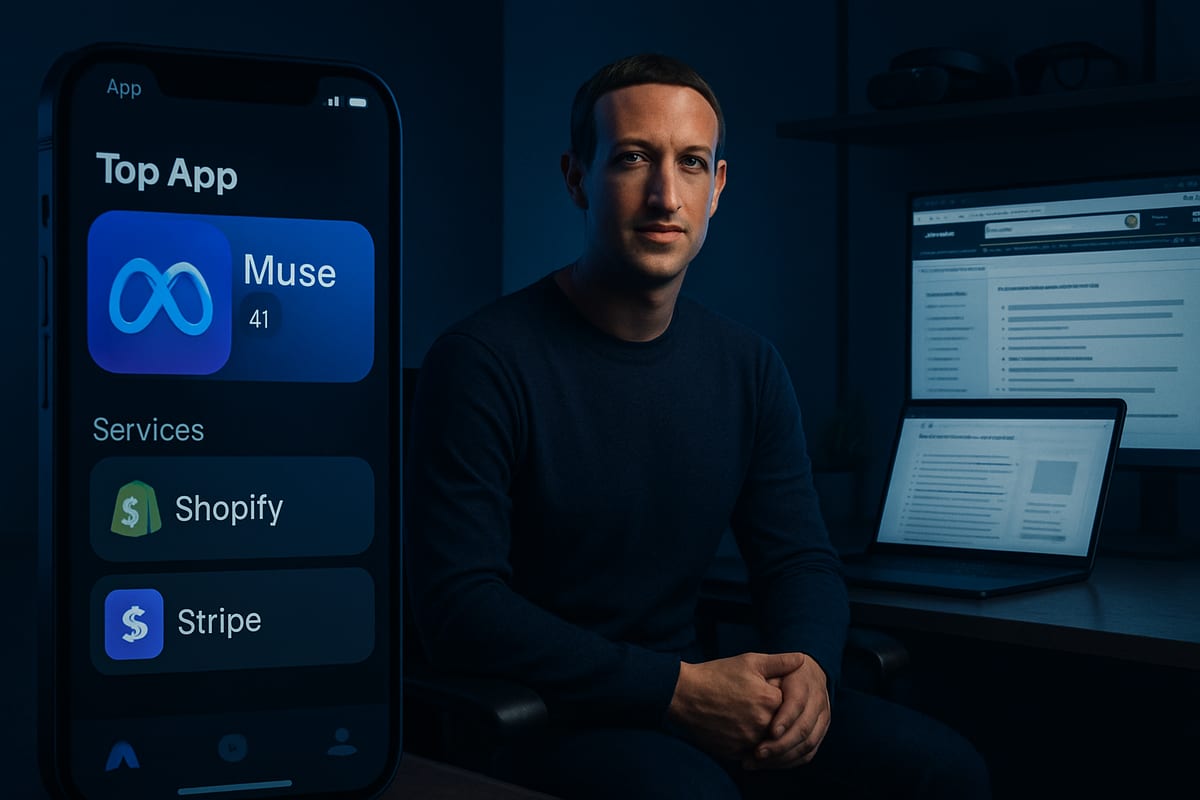
Meta's AI agent, Muse, tops the App Store and opens up to third-party connectors. Shopify activates Shop Pay, Stripe handles payments, while Amazon closes doors. Markets react, and the battle to become the starting point for online usage begins.
Amazon restricts access to Muse, Shopify and Stripe bet on it
Amazon has already restricted access to Muse in certain sections of its e-commerce platform. This stance contrasts with that of Shopify, which has officially supported purchases on Muse via Shop Pay, as well as Stripe, which offers the payment solution used to finalize purchases across much of the web. Amazon's decision shows that some companies may choose not to hand over customer relationship management to another major tech player. If Muse is adopted by millions, Amazon risks missing out on sales from this customer base. In theory, Amazon has the option to prevent Google Search from accessing its online store, but it refrains from doing so, as Google is used by billions of users to search for products. Nicolas Bustamante from Microsoft believes that if Instacart implements agents while Amazon refuses them, demand could gradually shift towards Instacart, placing Amazon in a dilemma regarding customer management. Meanwhile, OpenAI, SpaceX, and others are also working on AI agents intended to become consumers' preferred assistants. There is no certainty that Meta will succeed in establishing its platform.
Muse connectors: opening to third parties and review process
Meta has opened Muse to external developers through a connector platform that allows services to be directly integrated into the agent. These connectors perform tasks on behalf of a user: booking flights through a travel service, managing appointments from a calendar, or sending messages via a messaging service. Developers can create their connectors and submit them for review. Meta states that they will be evaluated based on functional, security, and legal criteria, with end-to-end testing. Once approved, they become discoverable in Muse, and publishers assess their eligibility for featured placement. Meta describes this system in a manner similar to the control Apple exerts over its mobile platform, leveraging Muse's initial momentum to attract the ecosystem.
Le brief IA que les pros lisent chaque soir
Les 7 actus IA du jour, décryptées en 5 min. Gratuit.
Inclus dès l'inscription : notre sélection des meilleurs guides & comparatifs IA.
Choisissez votre rythme
Gratuit · Pas de spam · Désabonnement en 1 clic
Public traction: Muse leads, stock market rises
Muse ranks first in downloads on the App Store and reached the top last week, remaining the most downloaded free app on Monday, ahead of ChatGPT. The support announced by Shopify via Shop Pay was followed by a rise in Shopify's stock price. On Monday, Meta's stock recorded an 11% increase, nearing a peak reached the previous summer; some investors seem to bet that the company has discovered a new way to position itself between consumers and businesses.
The target: becoming the starting point for online usage
Internet platforms derive their value from controlling the starting point of digital activities, the top of the funnel. Google Search has become one of the most profitable internet companies by establishing itself as the gateway for information searches and subsequent actions, and Apple's App Store has become indispensable because developers target hundreds of millions of iPhone users. Companies adapt where customers are. Meta hopes to make Muse a similar starting point, although the platform strategy remains difficult to execute. Greg Isenberg believes that being early on Muse could be as valuable as being ahead of the App Store in 2009, and that every company will need an agent strategy. He anticipates that connectors will become internal showcases for agents, and that a company's API could take precedence over its app if agents, rather than people, increasingly select services. If Muse were to become the primary interface for accomplishing tasks, developers and businesses could be incentivized to connect to it.
Zuckerberg's long-term ambition and precedents
Meta has been building a technology platform for years, investing tens of billions in virtual reality and then smart glasses. In 2021, Apple restricted cross-app tracking and advertising targeting, reminding Mark Zuckerberg of the power of platform owners. Muse, Meta's AI agent, could represent, according to this trajectory, the clearest opportunity to achieve this goal. If AI agents became the primary means of accomplishing tasks online, owning a leading agent platform could hold value comparable to that of a mobile operating system or a search engine.
Brief IA — L'actualité IA en français
L'essentiel de l'actualité de l'intelligence artificielle, décrypté et expliqué chaque jour.