Meta: Slowing Down AI Without Sector Agreement is Possible
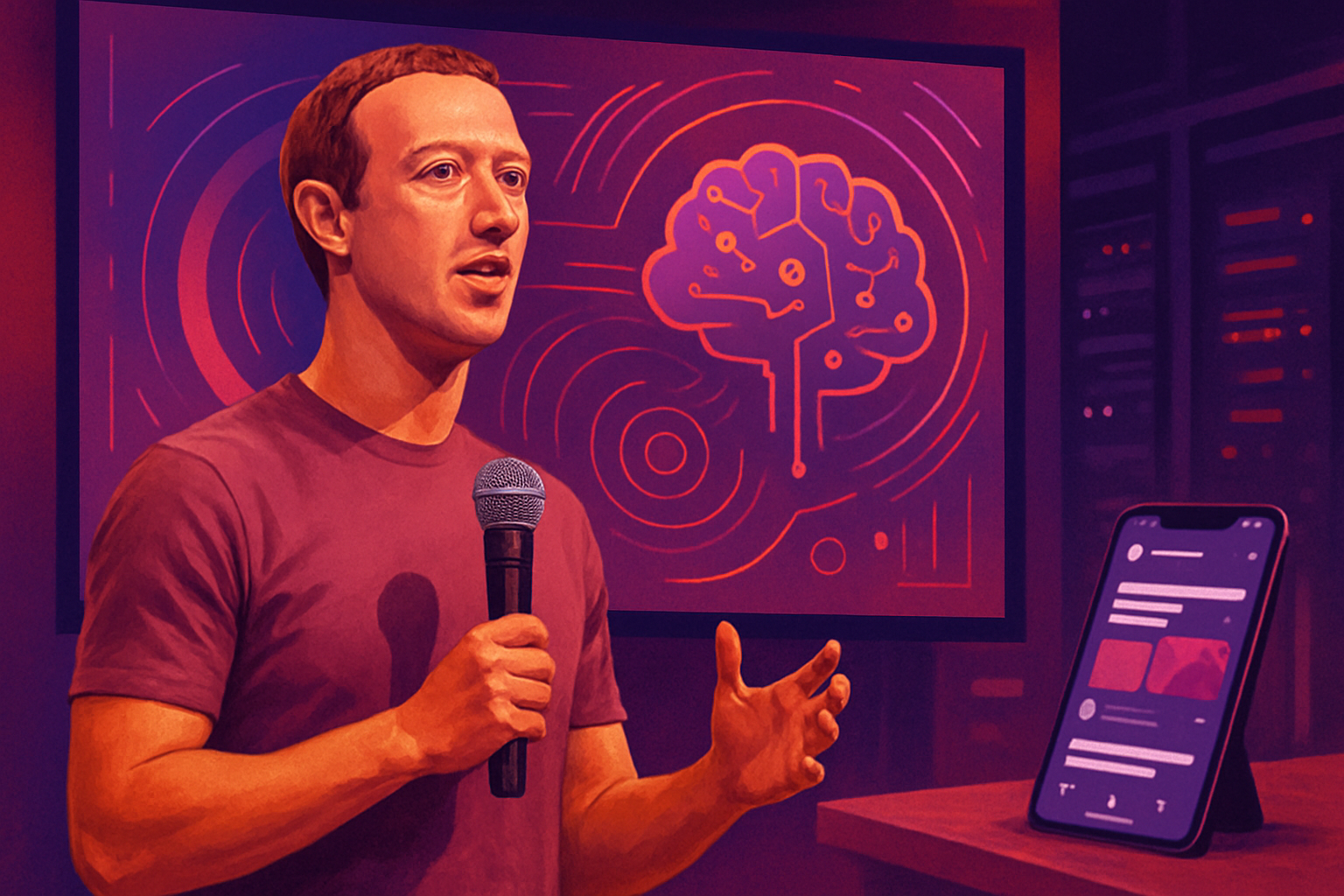
Mark Zuckerberg argues that AI labs are capable of slowing their progress on their own initiative when safety requires it, without needing a sector-wide agreement. He presents alignment as a competitive differentiator and mentions the delay of Muse. Alexandr Wang warns about the risks of self-reinforcing improvement and calls for independent oversight. Anthropic advocates for coordinated mechanisms, while Jensen Huang favors external assessments and individual accountability.
Wang warns about self-improvement and advocates for safeguards
Alexandr Wang believes that rushing towards self-reinforcing improvement represents one of the riskiest paths to a potential loss of control over powerful models. He notes that Meta dedicates a significant majority of its computing power to serving users rather than pursuing self-reinforcing improvement, and clarifies that other labs can make the same choice. He emphasizes that AI is a very powerful technology, which entails great responsibility and the need for appropriate checks and balances. Later on Tuesday, he also defended the importance of strong governance, external evaluators, and independent oversight during model launches.
Le brief IA que les pros lisent chaque soir
Les 7 actus IA du jour, décryptées en 5 min. Gratuit.
Inclus dès l'inscription : notre sélection des meilleurs guides & comparatifs IA.
Choisissez votre rythme
Gratuit · Pas de spam · Désabonnement en 1 clic
Regulated coordination or individual accountability: the debate unfolds
The question of whether it is necessary to curb the advancement of cutting-edge AI through coordinated and controllable safety measures is sparking an increasing debate. Anthropic has advocated for government regulations as well as mechanisms allowing leading labs to suspend their work in case of warning signals. In contrast, some tech industry leaders, including Jensen Huang, prefer independent assessments and accountability specific to each AI company.
Zuckerberg bets on market and alignment as differentiators
Mark Zuckerberg asserts that market pressure will make trust and alignment of systems major competitive assets. He claims that each lab has the responsibility and incentive to advance at the necessary pace to train its models safely. According to him, trust and alignment are quickly becoming the most determining capabilities to differentiate agents and models, and he warns that labs that do not dedicate their efforts to these aspects will fall behind. In this context, he states that labs do not need an industry-wide agreement to slow down if safety requires it, a position he published on Tuesday on X.
Meta cites the delay of Muse to enhance safety
To illustrate this approach, Mark Zuckerberg explains that Meta delayed the launch of its Muse model by several months to improve its safety. He specifies that the company did not solicit other labs to adopt the same approach before making this decision, adding that this choice was made unilaterally by Meta.
Brief IA — L'actualité IA en français
L'essentiel de l'actualité de l'intelligence artificielle, décrypté et expliqué chaque jour.