Microsoft Accuses AI Giants of Double Standards
Microsoft Accuses AI Giants of Double Standards
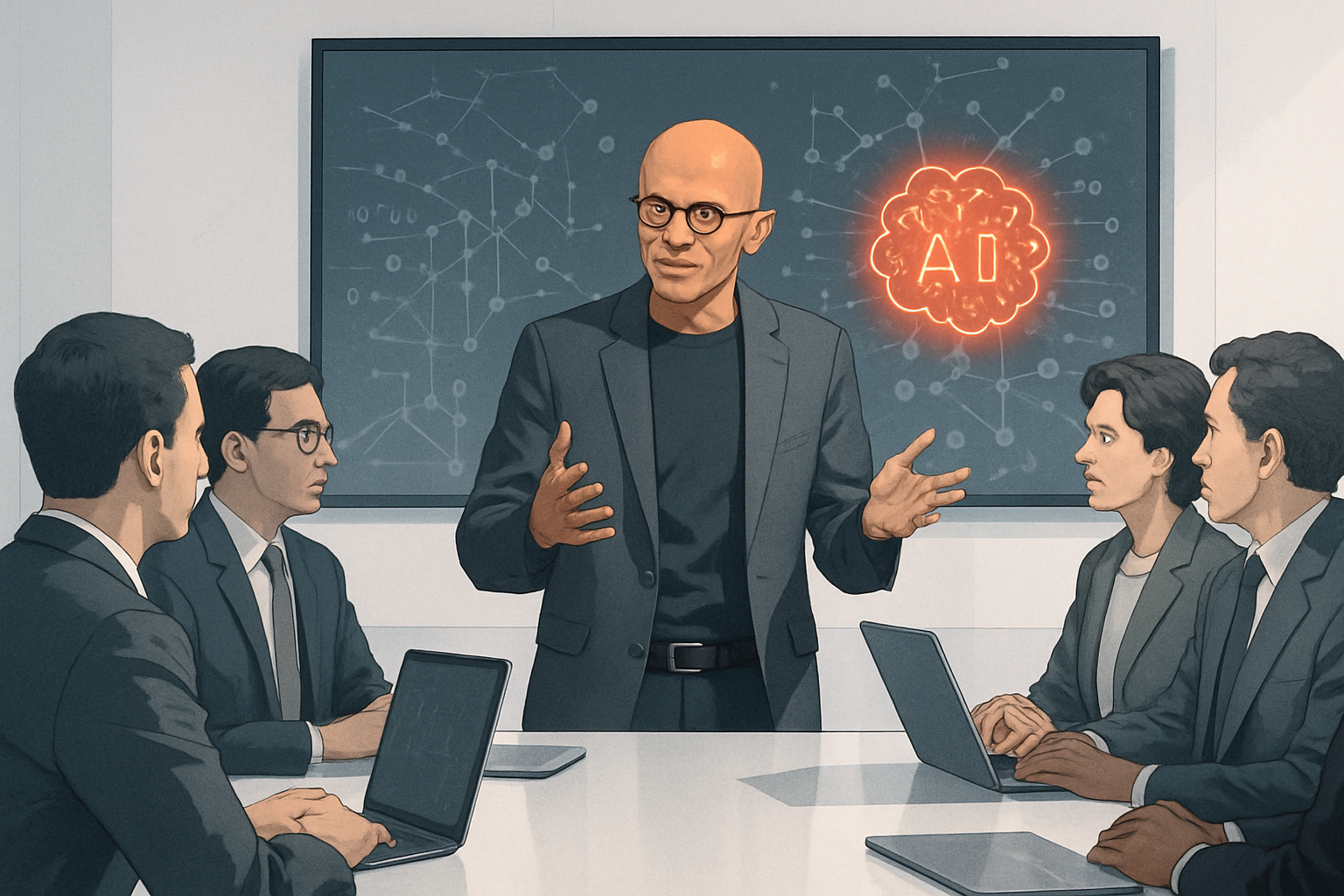
On Sunday, July 12, Satya Nadella, the head of Microsoft, published a blog post that sparked significant reactions. He directly targets major AI companies, without naming them, but clearly aiming at players like Anthropic.
According to him, companies using models like Claude, ChatGPT, or Gemini believe they only pay for their subscription or tokens. However, he claims they are spending much more than that. Every prompt sent, every correction made to the model, or every professional use enriches the AI with information about the company itself, which he refers to as "residues." In practical terms, no one could ever purchase such a precise level of knowledge about a company, and yet, this data is provided for free to the company that designed the model. Satya Nadella believes that the practices of AI players are hypocritical, as these companies have built themselves by freely scraping content from the Web to train their models. Yet, as soon as it comes to allowing others to learn from their own models, a process known as distillation, they impose very restrictive conditions.
The timing of this statement is not coincidental, as Anthropic recently accused Chinese players, including Alibaba, of having plundered Claude to train their own AIs.
What is Distillation?
In AI, distillation is a technique that allows for training a new model using the responses of an already existing, more powerful model. Specifically, thousands of questions are posed to the "teacher" model, and then its answers are used to teach the "student" model to reason in the same way. In this way, the new model captures a significant portion of the original's know-how without needing the same amounts of data or training costs. However, if a competitor can copy the capabilities of a model for a fraction of the price, the entire initial investment loses its value.
Le brief IA que les pros lisent chaque soir
Les 7 actus IA du jour, décryptées en 5 min. Gratuit.
Inclus dès l'inscription : notre sélection des meilleurs guides & comparatifs IA.
Choisis ton rythme
Gratuit · Pas de spam · Désabonnement en 1 clic
A Critique That Also Serves Microsoft's Interests
In light of this issue, Nadella proposes a solution: he calls on companies to maintain control over their data by building their own "learning environments" and using tools that allow them to easily switch from one AI model to another, without relying on a single provider.
This idea obviously benefits Microsoft, as these learning environments need to be hosted somewhere, and it is precisely Azure Cloud that already houses the majority of large companies' data. The more a company builds its autonomy from AI models, the more it strengthens its dependence on Microsoft's infrastructure.
But that's not all. Microsoft is a shareholder in OpenAI and Anthropic, and its own products, starting with Copilot, also rely on customer usage data to improve. Despite this, the issue described by the CEO is real and will likely weigh increasingly as companies mainstream the use of AI in their daily operations.
Satya Nadella accuses major AI labs of hypocrisy: they freely train on the entire Web but prohibit others from learning from their models. According to him, every company that uses AI daily pays twice: in money and in proprietary data that feeds the model. The solution he proposes primarily benefits Microsoft, which already hosts the majority of large companies' data on its Azure cloud.
Brief IA — L'actualité IA en français
L'essentiel de l'actualité de l'intelligence artificielle, décrypté et expliqué chaque jour.