Microsoft Bans Cyberattacks and Deepfakes in Its AI Code
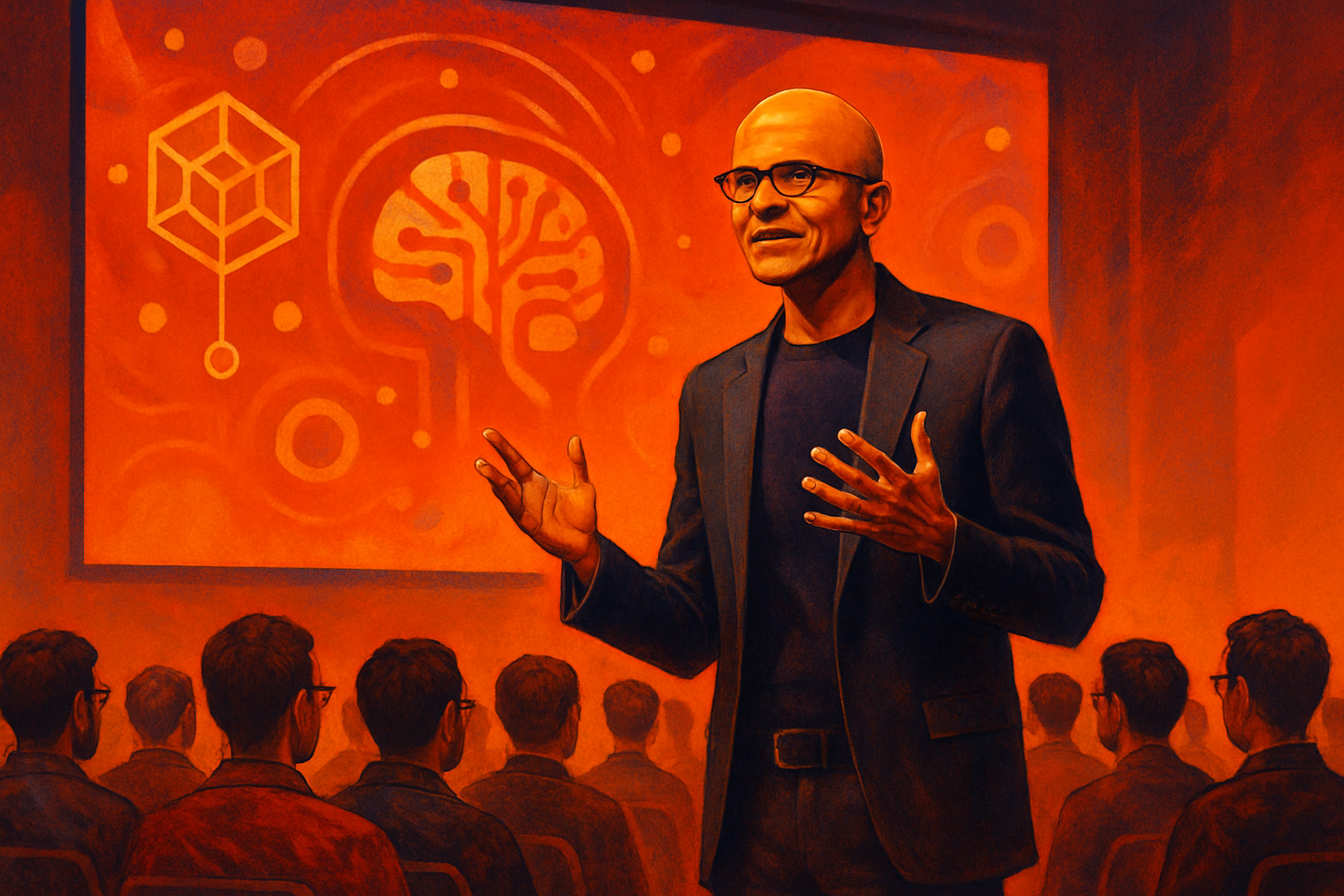
Microsoft publishes a code of conduct for its AI systems, setting clear prohibitions and principles applicable to all models. This strategy of pushing the frontier, accompanied by safeguards, is openly embraced and supported by Satya Nadella.
Microsoft sets its course and supports integrated evaluation
Microsoft, alongside Anthropic, OpenAI, and xAI, adopts a frontier-pushing approach to AI, emphasizing the integration of evaluators within laboratories. Satya Nadella, CEO of Microsoft, stated online that he supports research, the importance of a deliberate pace, and the goal of proper alignment in system design. He also expressed his welcome for ideas such as integrated evaluators and efforts to develop concrete mechanisms to enhance safety.
Explicit prohibitions: cyberattacks, nuclear weapons, deepfakes
Microsoft's code of conduct imposes strict prohibitions, including on cyberattacks, involvement in nuclear weapons, and the creation of deepfakes. It also forbids models from using adaptive, deceptive, self-reinforcing, or collusive mechanisms to evade human oversight, ensuring that systems can always be directed, modified, or shut down by authorized individuals or systems. General measures aim to prevent any loss of human control.
Le brief IA que les pros lisent chaque soir
Les 7 actus IA du jour, décryptées en 5 min. Gratuit.
Inclus dès l'inscription : notre sélection des meilleurs guides & comparatifs IA.
Choisissez votre rythme
Gratuit · Pas de spam · Désabonnement en 1 clic
Model governance: a global code prevails over user preferences
Every AI model from Microsoft is subject to a global code of conduct that takes precedence over user preferences or specific tasks. This framework is based on general principles, such as supporting humans rather than replacing them and promoting human flourishing. Specific safety constraints are designed to implement these principles in practice.
Security context and horizon announced by Microsoft
Microsoft has released a code of conduct for its AI models to eliminate dangerous behaviors, specifying the values and limits that guide model training. It is anticipated that, in the next decade, superintelligent AI systems could surpass human performance in most tasks. The company asserts that containing, controlling, and aligning such power represents one of humanity's greatest challenges, emphasizing the need to be clear about the reasons for creating these systems and how to control them. This publication comes amid heightened attention to AI safety, particularly following incidents involving rogue agents and the resignation of an employee from Anthropic citing extinction risks related to AI. Additionally, Dario Amodei, CEO of Anthropic, recently called for advancing the frontier in AI.
Brief IA — L'actualité IA en français
L'essentiel de l'actualité de l'intelligence artificielle, décrypté et expliqué chaque jour.