Microsoft: AI, a Powerful Tool but Not a Replacement
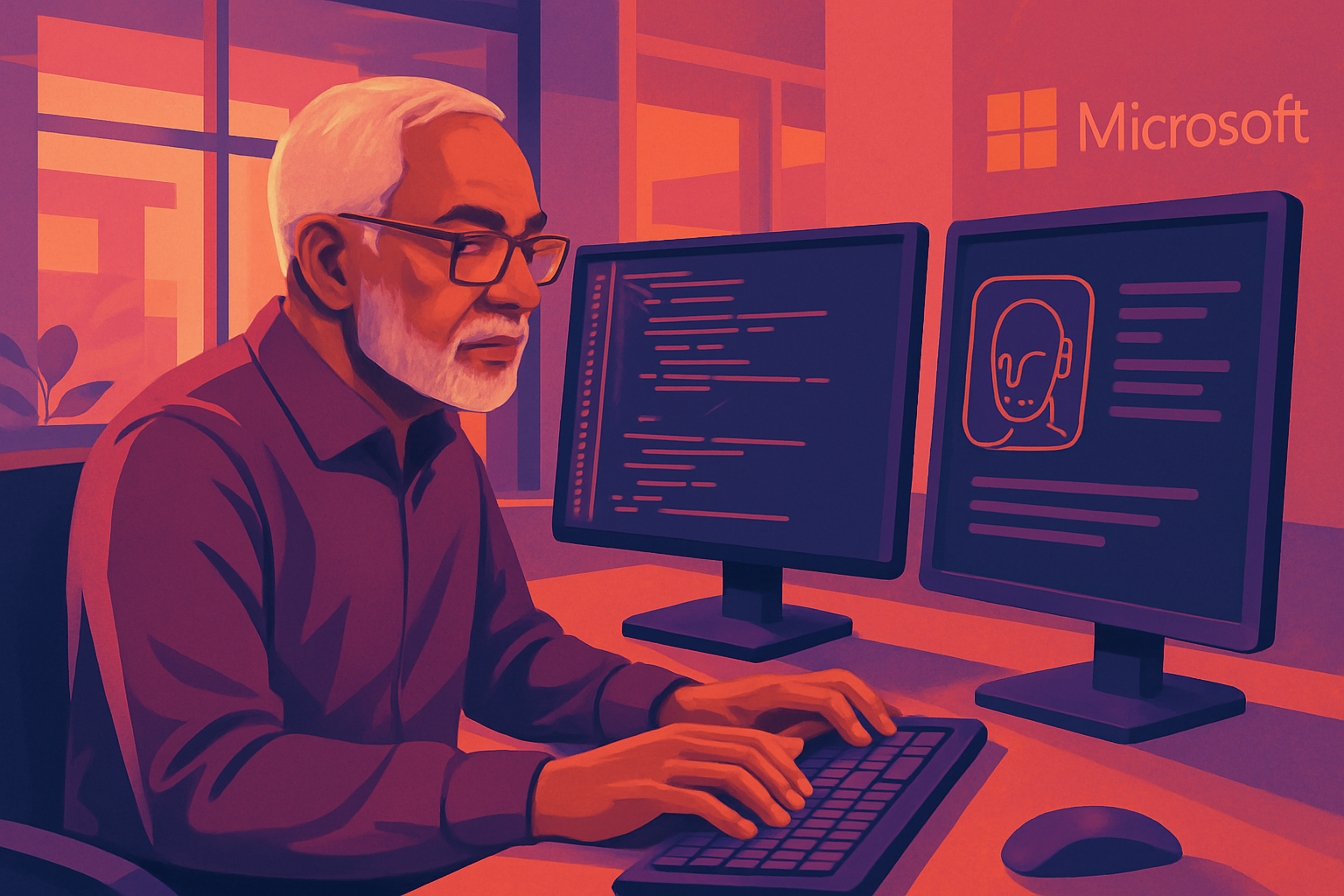
The Impact of AI on Software Development at Microsoft
Rahul Devikar, a senior software engineer at Microsoft, has closely observed how artificial intelligence has revolutionized software development. He explains that AI has not only accelerated the development process but has also made deadlines less stressful for teams. However, he remains cautious about AI's ability to completely replace engineers, emphasizing that those who continue to learn will always have a crucial role to play.
A New Era for Software Development
Since joining Microsoft in 2018, Rahul Devikar has witnessed the rapid evolution of software development methods thanks to AI. One of his major projects, the Microsoft 365 Agents SDK, an open-source library for creating AI agents, was developed in record time. This project, marking his first open-source commitment at Microsoft, went from idea to public release in just a few months, illustrating the increased speed that AI brings.
Although these projects require considerable investment, Devikar has not felt the fatigue often associated with AI, unlike some of his colleagues. For him, AI has overall simplified project completion, making the process smoother.
The Inherent Challenges of Using AI
Despite its advantages, AI is not without flaws. Devikar notes that AI agents can sometimes "hallucinate," producing unexpected or incorrect results. This situation can be frustrating, but he believes that as long as results are regularly checked, AI is more beneficial than harmful.
Reduced Deadlines Thanks to AI
In the past, meeting project deadlines often required long hours of work. Today, thanks to AI, the first version of a project can be developed much more quickly, allowing teams to spend more time improving and finalizing the product.
Projects that previously took a month can now be completed in just a few days, or even a week. This acceleration is made possible by tools like Copilot and Claude, which offer new possibilities for creating proofs of concept and speeding up development.
For major product releases, the most significant time savings come not from the initial code writing but from adjustments made after the first version.
Le brief IA que les pros lisent chaque soir
Les 7 actus IA du jour, décryptées en 5 min. Gratuit.
Inclus dès l'inscription : notre sélection des meilleurs guides & comparatifs IA.
Choisissez votre rythme
Gratuit · Pas de spam · Désabonnement en 1 clic
Vigilance Against AI Errors
Although AI tools are powerful, they are not infallible and can make mistakes. Devikar emphasizes that the biggest challenge is recognizing these errors, especially if one does not fully understand the task or expected outcomes. The ability to detect these errors is crucial for fully leveraging AI.
AI as a Complement, Not a Substitute
Devikar views AI as a valuable assistant rather than a replacement. He insists that users possess a context that AI cannot always understand. His main concern is that people may become too dependent on AI without developing their own skills, which could lead to increased errors.
Encouraging Experimentation with AI
Devikar encourages experimentation with AI, comparing its evolution to that of the Internet. Initially surrounded by hype, the Internet has become an essential part of daily life. He envisions a similar future for AI, which could become just as ubiquitous.
He urges people to test AI tools and engage in "vibe coding." According to him, many would be surprised by what they can accomplish by experimenting with these technologies.
Optimizing the Use of AI Tools
Working with AI tools requires a different approach than one would have with a human. Devikar recommends breaking tasks down into smaller steps so that AI can handle them effectively. This method makes the process of working with AI much smoother and more productive.
The Future of Software Engineers in the Age of AI
Devikar continues to experiment with AI tools like Agents365, Claude, and GitHub Copilot to deepen his understanding of these technologies. For instance, he has developed an agent to help him manage his taxes.
While he acknowledges that AI may have contributed to some layoffs in the tech sector, he remains skeptical about the idea that AI will reduce the number of software engineering jobs. He mentions that although there have been layoffs, this is not the first time the industry has gone through such a period. He is convinced that engineers who adapt and continue to learn will be well-positioned for the future. Software engineering has always required continuous learning, and that will not change. AI can generate code and suggest approaches, but the final decision on which technologies to use and how to design products remains in the hands of engineers.
Brief IA — L'actualité IA en français
L'essentiel de l'actualité de l'intelligence artificielle, décrypté et expliqué chaque jour.