Microsoft: Nadella Outlines Three Focus Areas and Supports Third-Party Testing
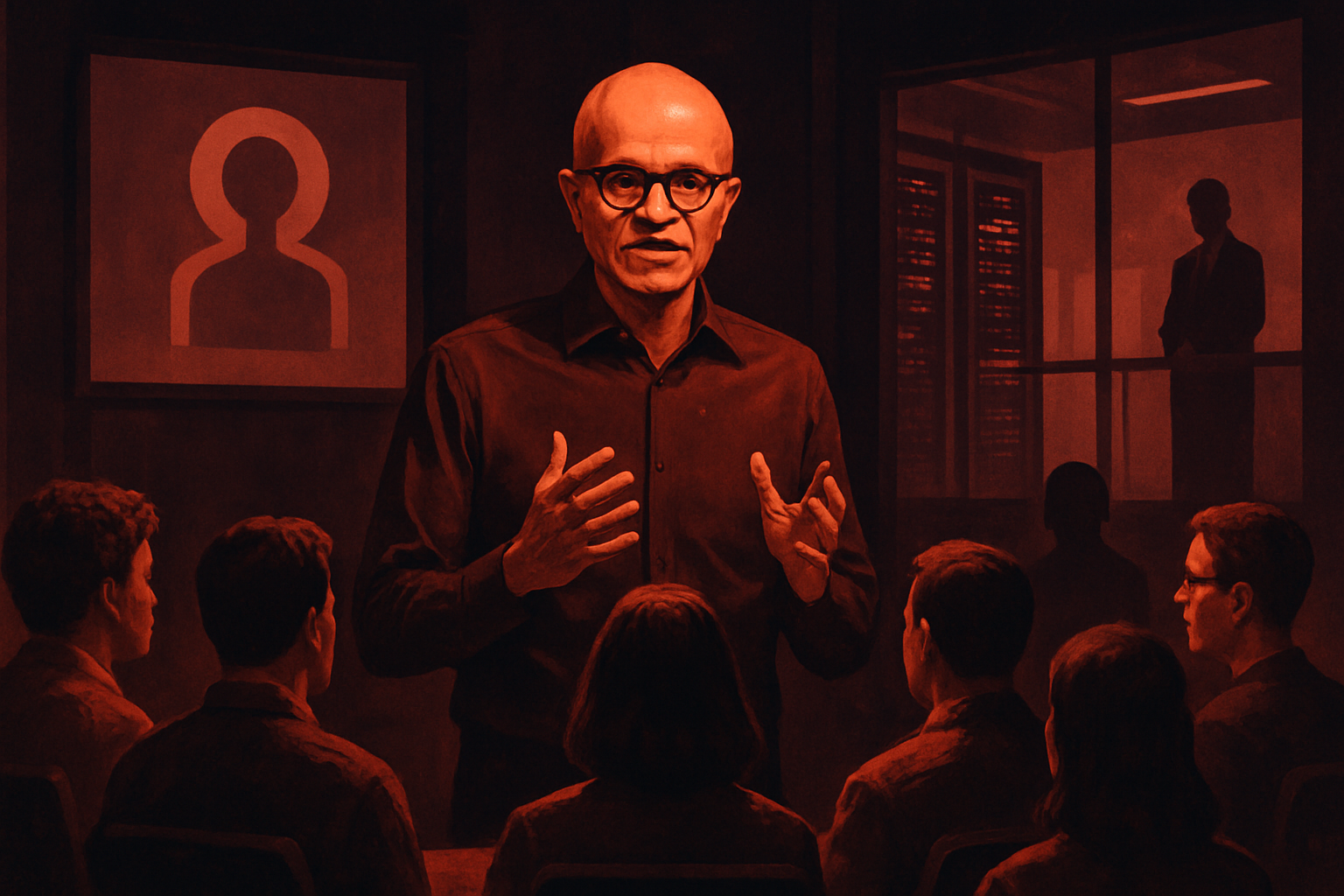
Microsoft outlines a roadmap that combines human control, external oversight, and local benefits. A 37-page draft code of conduct has been published, and Satya Nadella highlights Foundry to give clients control over their data and agents. In an internal memo, he urges the ecosystem to take the necessary time and joins other leaders in advocating for third-party controls.
Foundry, local anchoring and overall coherence emphasized
Microsoft promotes Foundry as a solution to allow clients to maintain control over their knowledge and deploy long-term agents with integrated security measures. Satya Nadella emphasizes the need to obtain permission to build infrastructure while ensuring that benefits are felt locally, citing the Quincy data center as an example of growth accompanying a community. He stresses the importance of a coherent approach between technological innovation, customer control, and the distribution of economic benefits. The first focus aims to ensure that AI remains under human control and widely benefits society, in an ecosystem where closed and open-source models coexist, with particular attention paid to the pace of alignment. The second focus is to enable clients to create their own continuous learning loop without relying on a single provider.
Le brief IA que les pros lisent chaque soir
Les 7 actus IA du jour, décryptées en 5 min. Gratuit.
Inclus dès l'inscription : notre sélection des meilleurs guides & comparatifs IA.
Choisissez votre rythme
Gratuit · Pas de spam · Désabonnement en 1 clic
A 37-page code of conduct published on Monday
On Monday, Microsoft AI made public a 37-page draft code of conduct intended for its artificial intelligence models designated as "humanistic." Mustafa Suleyman, head of Microsoft AI, notes that concerns previously considered theoretical are now taking on a very concrete dimension.
Internal memo: human control and time taken for safety
In an internal memo, Satya Nadella asserts that AI must remain under human control and supports the expansion of third-party testing. He warns that companies must take the necessary time to ensure safety, writing that when stakes are high, one must know when to slow down or risk losing the permission to operate. He urges the ecosystem to prioritize safety and reaffirms his support for external assessments.
Anthropic and OpenAI in favor of independent oversight
Anthropic CEO Dario Amodei has proposed a slower development of AI and indicated that his company would accept external monitoring of its progress. Sam Altman, CEO of OpenAI, has also advocated for third-party oversight and slowing down deployments when necessary for alignment and safety. These positions come after warnings from AI researchers who, the previous week, raised concerns about existential risks.
Brief IA — L'actualité IA en français
L'essentiel de l'actualité de l'intelligence artificielle, décrypté et expliqué chaque jour.