Midjourney Challenges Hollywood: AI at the Center of a Legal Battle
Le brief IA que les pros lisent chaque soir
Les 7 actus IA du jour, décryptées en 5 min. Gratuit.
Inclus dès l'inscription : notre sélection des meilleurs guides & comparatifs IA.
Choisis ton rythme
Gratuit · Pas de spam · Désabonnement en 1 clic
Midjourney and Hollywood Studios: A Legal Battle Over AI
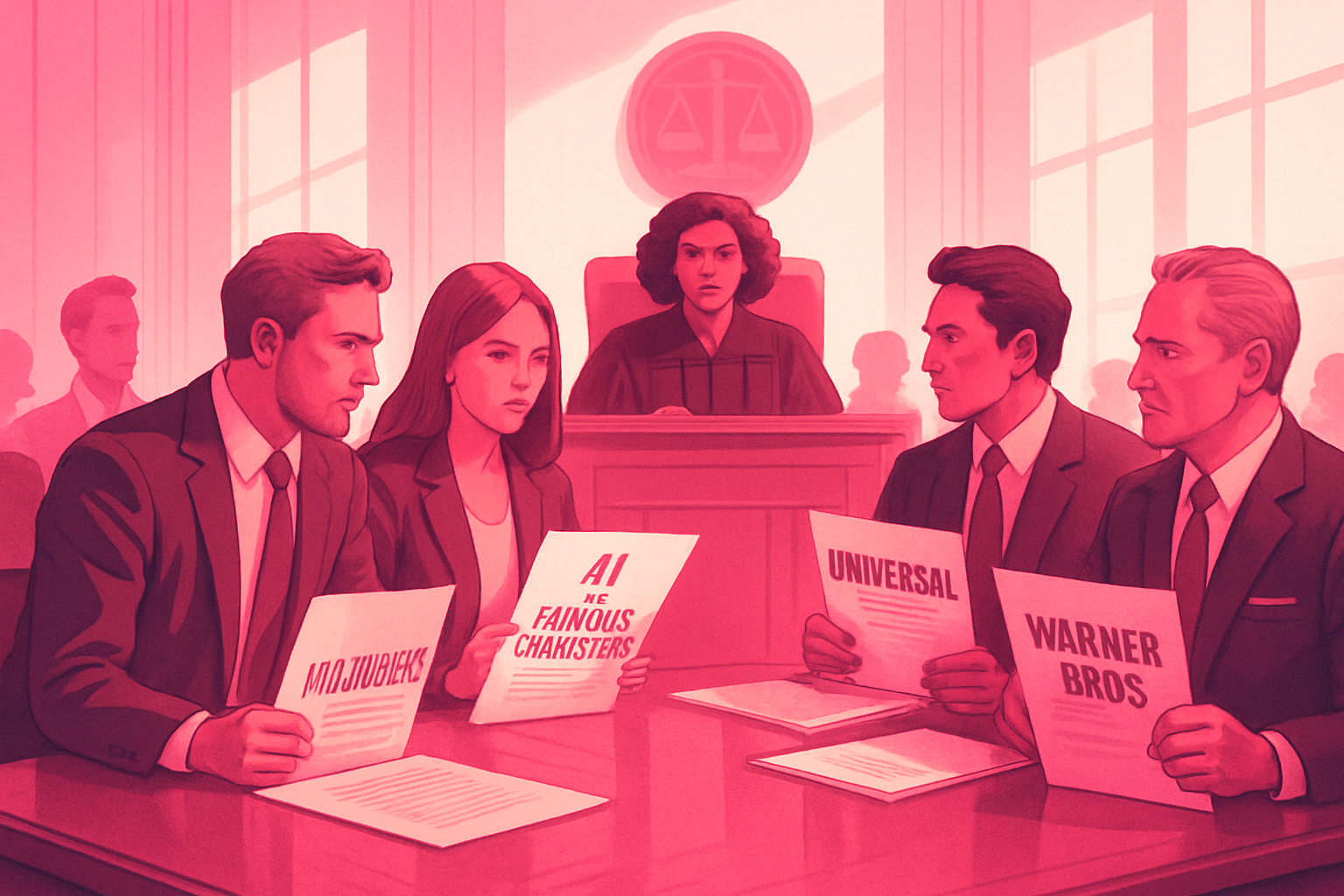
The artificial intelligence startup Midjourney is currently engaged in a legal battle with three Hollywood giants. It seeks detailed information on how these studios use AI, as part of a lawsuit that could have significant repercussions for the entertainment industry.
Copyright Infringement Allegations
Last year, Disney and Universal filed a lawsuit against Midjourney, accusing the startup of violating their copyright. They pointed out that Midjourney's image generation models were capable of creating images of iconic characters, such as Bart Simpson and Darth Vader, which are protected by copyright. Shortly thereafter, Warner Bros. joined the lawsuit, further increasing the pressure on the startup.
The Fair Use Argument
Midjourney defends itself by asserting that training its AI models on copyrighted images falls under the principle of fair use. This defense is crucial for the startup, which seeks to demonstrate that its use of the images does not constitute copyright infringement, but rather a legitimate practice in the development of its technologies.
The Documentation Question
A central aspect of the litigation concerns the documentation that the studios must provide. During the discovery process, a judge ruled that the studios must disclose information about their use of generative AI, but only in the context of creating videos and images intended for the general public.
Midjourney Challenges the Limitations
In a recent legal move, Midjourney challenged this restriction, arguing that it allows the studios to disclose only the documents that support their own claims of commercial harm. The startup believes that this limitation deprives Midjourney of the necessary evidence for its defense.
The Studios' Internal Practices Under Scrutiny
Midjourney contends that the documents withheld by the studios could reveal whether they themselves use generative AI models for internal purposes, such as storyboarding or content ideation. This could demonstrate that training AI on protected content is a common practice, even among the studios that are suing Midjourney.
Prompts and Results Under the Microscope
The startup is also requesting that the studios reveal all prompts used in Midjourney, as well as the results obtained, and not just those that led to allegedly infringing images. This request aims to gain a comprehensive view of the studios' use of AI.
The Studios' Response
David Singer, the lead attorney for the studios, characterized Midjourney's request as "fishing for information." He clarified that the studios are not seeking to ban AI technology or shut down Midjourney, but simply want the startup to stop copying their protected works and creating derivatives without permission.
Brief IA — L'actualité IA en français
L'essentiel de l'actualité de l'intelligence artificielle, décrypté et expliqué chaque jour.