Moonshot Accused: Washington Considers Sanctions
Washington's Threats of Sanctions Against Moonshot
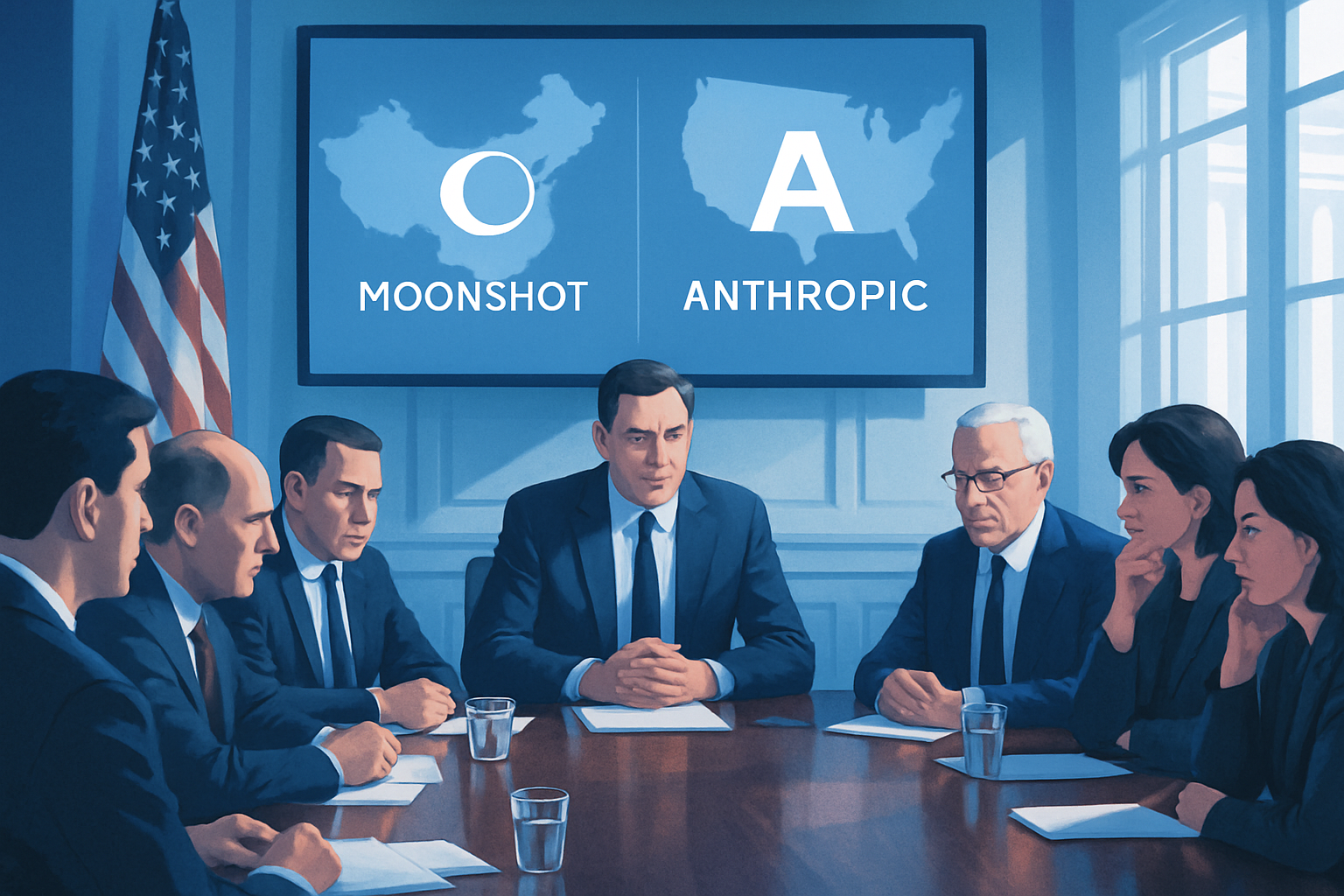
U.S. Treasury Secretary Scott Bessent recently reiterated severe warnings against Chinese companies specializing in artificial intelligence. On Wednesday, he emphasized that sanctions could be considered following accusations made by a White House official against Moonshot. This Chinese company is suspected of illegally distilling Anthropic's Fable model.
Model distillation is a commonly used method in the AI field. It involves training a more compact model based on the results of a larger model. While this technique is often used to optimize performance, it can also raise intellectual property rights issues.
White House Accusations
Scott Bessent expressed his concerns on the platform X, stating that open source should not be seen as an opportunity to appropriate American intellectual property. He warned that if Chinese companies engage in massive and secret distillations that cross the line into intellectual property theft, sanctions and listings on the entity list would be considered.
Earlier in the week, Bessent had already indicated that the U.S. government would closely scrutinize Chinese open source models for any potential intellectual property violations, with the possibility of imposing sanctions in the event of a breach.
Le brief IA que les pros lisent chaque soir
Les 7 actus IA du jour, décryptées en 5 min. Gratuit.
Inclus dès l'inscription : notre sélection des meilleurs guides & comparatifs IA.
Choisissez votre rythme
Gratuit · Pas de spam · Désabonnement en 1 clic
Allegations Against Moonshot
Bessent's statements closely followed those of Michael Kratsios, the White House's science and technology policy chief. Kratsios accused Moonshot, a China-based company, of conducting massive distillations against American models. He specifically claimed that Moonshot had acquired servers equipped with Nvidia's GB300 and had accessed these servers in Thailand, likely to train its AI models. This raises questions about a possible violation of U.S. export control regulations.
The GB300 servers are part of Nvidia's Blackwell generation, the sale of which is prohibited to Chinese companies.
Doubts Surrounding Kimi K3
Some experts question the notion that Moonshot's Kimi K3 model was primarily developed through distillation from Fable, which has only been publicly accessible since July 1. Moonshot launched K3 last week as an open-weight model, and its advanced capabilities raise questions about the business models of major American AI labs. This challenges their ability to justify the enormous investments needed to remain competitive in the cutting-edge AI race.
A Broader Debate in Washington
This incident has also reignited a broader debate in Washington regarding the massive influx of Chinese open source models. Dean Ball, former AI advisor to the White House and current head of Strategic Futures at OpenAI, has argued that the U.S. should restrict or ban the use of Chinese open-weight models. According to him, this is crucial for preserving American technological advantage and mitigating potential national security risks.
Brief IA — L'actualité IA en français
L'essentiel de l'actualité de l'intelligence artificielle, décrypté et expliqué chaque jour.