Moonshot AI and Kimi K3: China Challenges American AI Giants
A Complex Geopolitical Dynamic
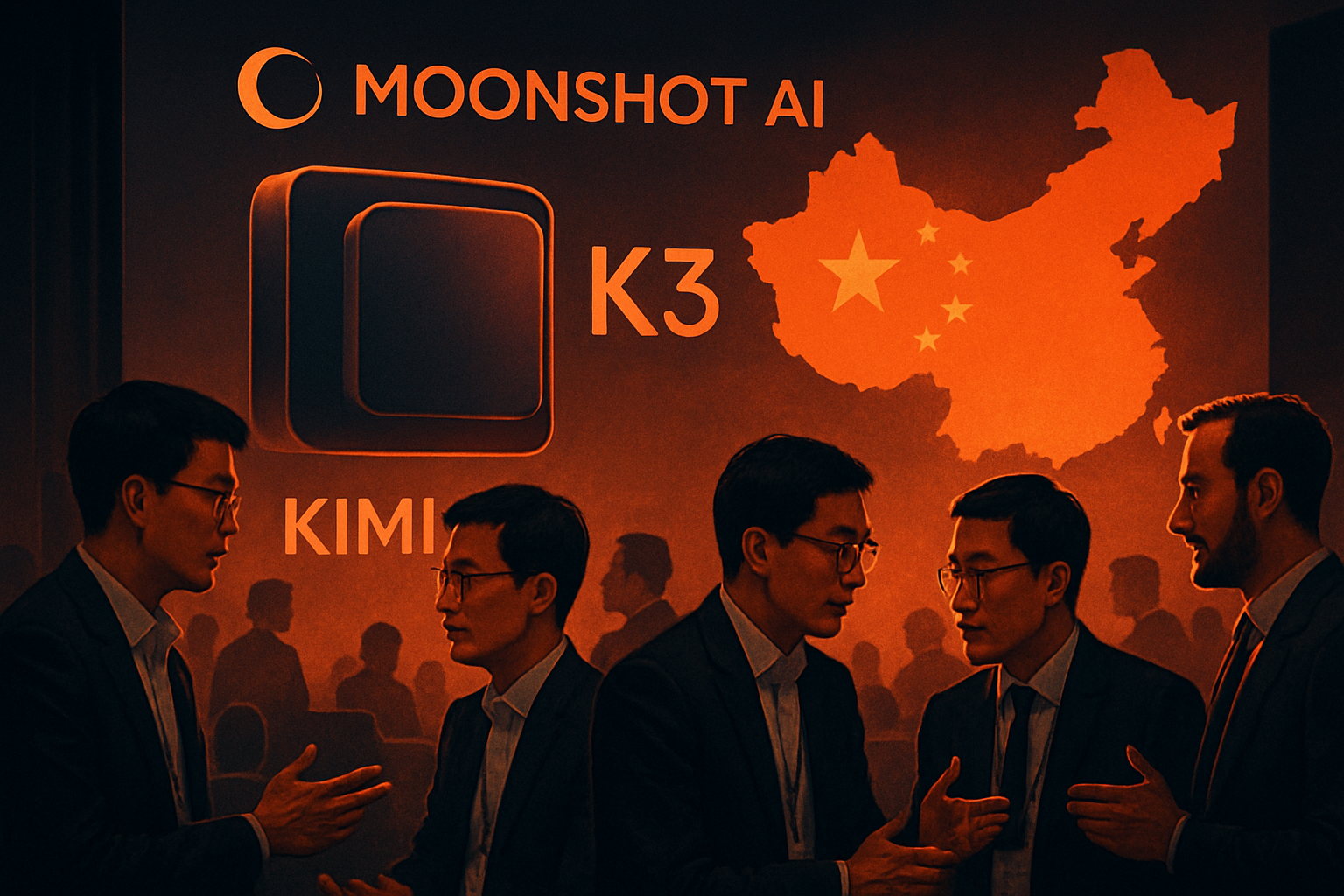
The Chinese company Moonshot AI recently unveiled a new version of its artificial intelligence model, named Kimi K3. This model, characterized by its open weights, encourages many companies to adopt it, potentially marking a major turning point in the field of AI for the year 2026. This development comes amid ongoing geopolitical tensions, particularly with the unresolved war in Iran in the Strait of Hormuz. At the same time, the NASDAQ 100, heavily influenced by the tech sector, is experiencing a significant drop, presenting a real geopolitical puzzle for the Trump administration.
Generative AI models continue to advance, but this evolution seems to be slowing revenue growth for giants like OpenAI and Anthropic. These American companies, having invested heavily in infrastructure and data centers, are facing declining free cash flows, raising questions about the viability of their efforts in the face of Chinese models that are gaining in size, efficiency, and cost. American hyperscalers, in particular, are approaching negative free cash flow, which intensifies the economic pressure on these major players.
A Potential Crisis in the Stock Market
The current situation could evolve into a genuine AI crisis in the stock market. The semiconductor sector, which had experienced a boom, now appears to be entering a bearish correction phase, particularly following the IPO of SK Hynix, the South Korean leader in HBM memory. With the imminent IPO of the Chinese DRAM manufacturer, CXMT, competition between China and the United States in the field of AI is intensifying, increasing economic tensions.
Impressive Fundraising
DeepSeek, a key player in the AI sector, successfully raised about $7.4 billion last June. At the same time, Databricks seems to have capitalized on the enthusiasm for enterprise AI, announcing a new fundraising round that values the company at $188 billion. However, the launch of Google's Gemini 3.5 Pro model has been delayed at a critical moment, while SpaceXAI's Grok 4.5 model has been overshadowed by the arrival of Kimi K3. The confusion surrounding Anthropic's Fable 5 model has allowed China to regain the momentum initiated by DeepSeek in January 2025. Additionally, the release of OpenAI's GPT 5.6 Sol has gone largely unnoticed.
Le brief IA que les pros lisent chaque soir
Les 7 actus IA du jour, décryptées en 5 min. Gratuit.
Inclus dès l'inscription : notre sélection des meilleurs guides & comparatifs IA.
Choisissez votre rythme
Gratuit · Pas de spam · Désabonnement en 1 clic
Regulatory Questions
The Trump administration, which quickly restricted Mythos-class models, faces a serious dilemma: what to do if Chinese models manage to achieve similar capabilities with open-weight models that were supposed to be far behind? There are indications that the administration may ban cutting-edge Chinese models and take drastic measures to curb China's rise in the field of AI.
The Era of Token Efficiency
Tech giants like Microsoft, Amazon, Meta, and even Google have lost credibility in this cycle. The mismanagement of Mythos-class models by the government and the rise of models like Kimi K3 create an ideal situation for many companies to adopt a more rational and cost-effective use of tokens. It seems that the less expensive open-weight models from China are gaining market share. The era of promise is giving way to the reality of token efficiency. Among the best open-weight models from the United States are Inkling from Thinking Machine and what Reflection might soon offer. Nvidia's Nemotron is often cited as an alternative to Meta's previous dominance.
A Lack of Leadership in Open Source AI
The real issue lies in the lack of leadership in open source AI in the United States. This could represent a potential disaster for America in its quest for leadership in models, tokens, and enterprise adoption.
Xi Jinping's Remarks
Intriguingly, the most significant remarks from Chinese President Xi Jinping on artificial intelligence were made during an opening speech at the World Artificial Intelligence Conference (WAIC) in Shanghai. He delivered a speech titled "Joining Hands to Build a Fair and Just System for Global AI Governance." This indicates that China appears to be more advanced than the United States in terms of governance and regulatory leadership in AI.
Conclusion: Competition Intensifies
The competition between the United States and China in the field of AI models, even at a time when there are few major application layer products, exacerbates the demand for computing at a moment when China has both lower token generation costs and more abundant energy. Meanwhile, companies like Anthropic and Moonshot AI are positioning themselves to maximize the excitement around their IPOs and sales momentum.
Model Rankings
Based on the Artificial Analysis Intelligence Index and ranking the models by intelligence, here is the ranking:
- Anthropic – Claude Fable 5
- OpenAI – GPT 5.6 Sol
- Moonshot AI – Kimi K3 (open weights*)
- SpaceXAI – Grok 4.5
- Zhipu (Z.ai) – GLM 5.2 (open weights)
These rankings and benchmarks on which the models are trained are quite artificial and subject to rapid change. The question arises: is comparing LLMs still the right way to measure AI progress?
A Growing Discrepancy
The "AI gap" seems to be widening.
Brief IA — L'actualité IA en français
L'essentiel de l'actualité de l'intelligence artificielle, décrypté et expliqué chaque jour.