Moonshot AI: Kimi K3 Challenges Silicon Valley
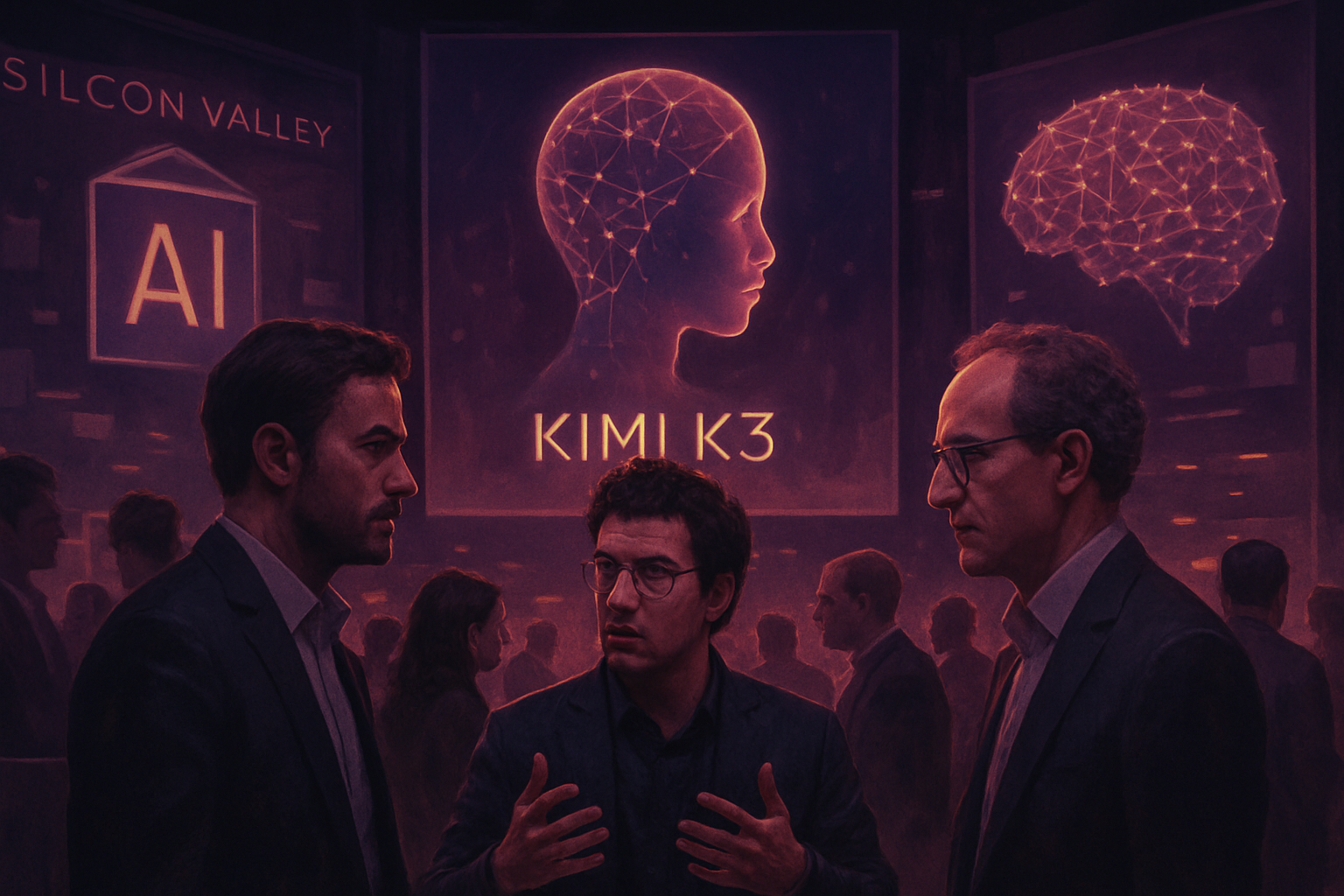
Moonshot AI and Kimi K3: A Shock in Silicon Valley
The recent introduction of the Kimi K3 model by Moonshot AI has reignited a heated debate between proponents of open-source models and those of closed models. This Chinese model has captured the attention of Silicon Valley, exacerbating tensions among American artificial intelligence giants. The central question is which strategy is more effective for dominating the AI sector. Some American leaders are beginning to draw inspiration from the Chinese approach, which favors open-weight AI models.
Whenever a Chinese company unveils a new AI model, it sends shockwaves across the United States. This was the case last week when Moonshot AI presented Kimi K3, a model that surpassed several benchmark tests. Many experts believe that Kimi K3 is on par with the most advanced American models, but at a significantly lower cost.
This development has sparked a new wave of concerns, suggesting that China could catch up to the United States in the race for AI supremacy. Accusations have emerged claiming that Chinese models rely on the work done by American companies like Anthropic, OpenAI, and Google. Ali Barr from Business Insider recently highlighted the irony of these accusations.
Strategic Divergence Between China and the United States
The growing tension between the United States and China regarding AI crystallizes around fundamentally different strategies. China has opted for open-source models, while the United States remains largely committed to closed systems.
A lively debate unfolded on X after an OpenAI executive reacted to the release of Kimi K3. Dean Ball, former AI advisor to Donald Trump and current strategist at OpenAI, expressed his surprise at China's decision to allow the open sourcing of such high-performing models, despite the potential risks involved.
Le brief IA que les pros lisent chaque soir
Les 7 actus IA du jour, décryptées en 5 min. Gratuit.
Inclus dès l'inscription : notre sélection des meilleurs guides & comparatifs IA.
Choisissez votre rythme
Gratuit · Pas de spam · Désabonnement en 1 clic
Ball stated that the open-source approach could lead to an "AI communism" and slow down AI investments. He also predicted that the Trump administration might one day create regulatory risks to deter the use of Chinese open-weight models, a strategy he referred to as "FUD" (Fear, Uncertainty, and Doubt).
Reactions and Critiques from Industry Leaders
The response to these statements was swift and intense. The idea of manipulating regulation to favor American AI labs has been likened to "regulatory capture," where government agencies create rules to support a specific industry.
Anthropic and OpenAI argue that their models are too powerful to be open, as this could allow for uncontrolled and potentially dangerous use. They have warned against Chinese open-weight models, which they view as a threat to national security and their business interests.
David Sacks, an influential venture capitalist, condemned the "weaponization of regulatory uncertainty" as unacceptable. He emphasized that leaders of closed labs, already in a duopoly position, are seeking to eliminate open-source competition through regulation.
Chamath Palihapitiya, co-host of the "All-In" podcast and investor, asserted that the future belongs to open-source and called for embracing this approach. Suhail Doshi, a recognized entrepreneur, criticized American AI labs for using public data without compensation and labeled any attempt at legislation against open-weight models as "totally absurd."
Future Perspectives and Challenges
An analyst from Citrini Research, known as Jukan on X, expressed disagreement with fears of Chinese dominance. He pointed out that open-source models do not automatically guarantee a dominant market position. He cited the example of DeepSeek, which maintains low costs through its proprietary operations, regardless of its open-source framework.
Jukan noted that Chinese companies may not have the computational capacity necessary to meet all inference demand, but they do not sell at a loss and recover their training costs. This observation adds nuance to the debate on the effectiveness of open-source models versus closed systems.
Brief IA — L'actualité IA en français
L'essentiel de l'actualité de l'intelligence artificielle, décrypté et expliqué chaque jour.