New York Bans AI in Elementary Schools and Launches Test in High Schools
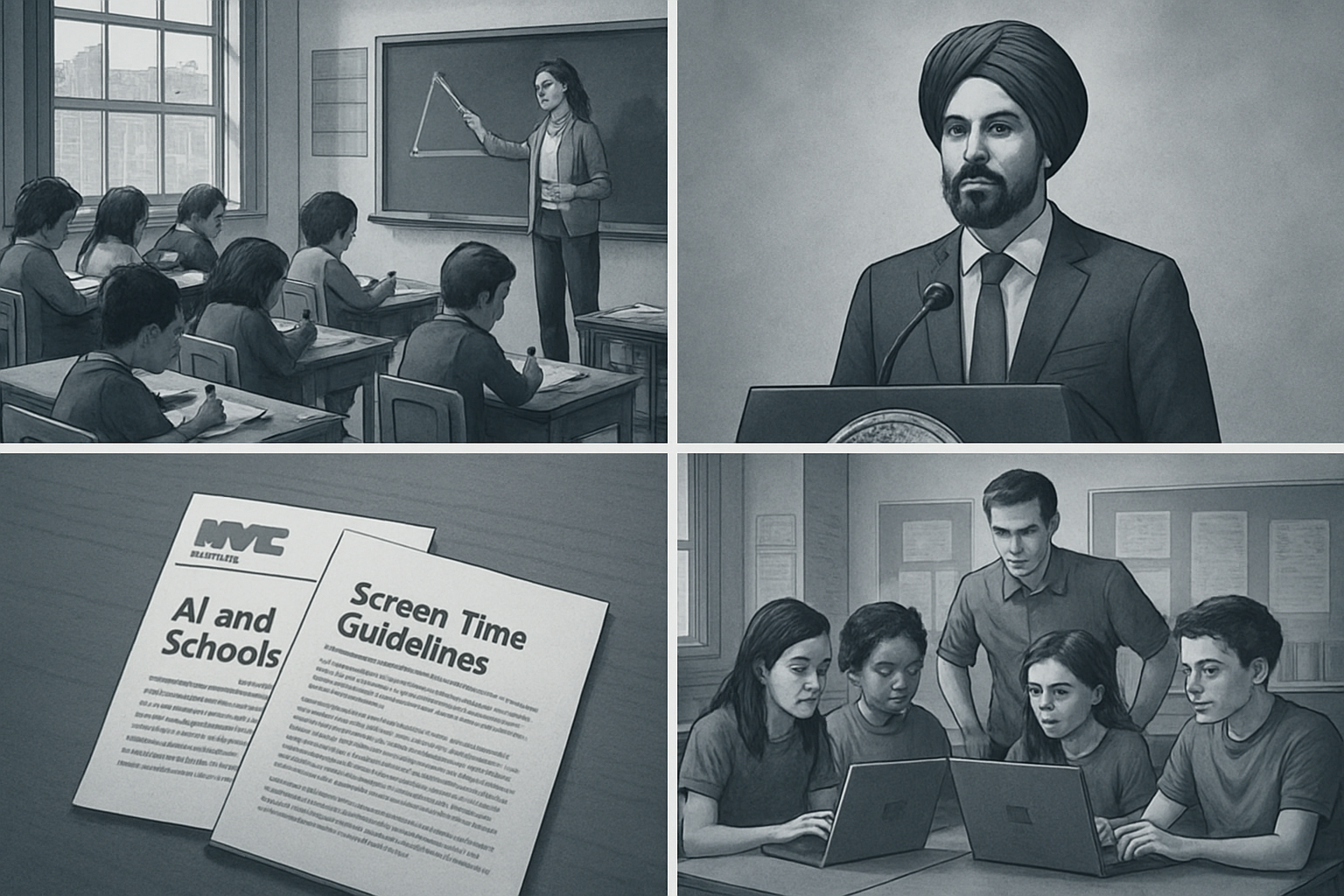
New York plans to ban the use of AI in classrooms from kindergarten through eighth grade starting in the 2026-2027 school year, while further limiting screen time. Exceptions may be made, and a restricted pilot program will be tested in high schools with verified tools. The city positions this policy as one of the strictest in the country.
The district claims one of the strictest policies
Officials from the New York district believe that the moratorium on AI in classrooms is among the most restrictive measures in the United States. This direction follows the introduction of a total ban on personal electronic devices connected to the Internet, including smartphones, announced for the 2025-2026 school year. Abroad, Norway, Sweden, and the Netherlands have already implemented national measures to address similar concerns regarding the impact of technology on developing minds.
Scope of the moratorium and announced timeline
Mayor Zohran Mamdani announced a one-year moratorium on AI in classrooms that will apply in 2026-2027 to approximately 600,000 students from kindergarten to eighth grade. The policy comes with additional limits on digital devices. The rules stipulate that teachers are prohibited from assessing homework with AI and that students are barred from using these tools until high school. The use of chatbots for companionship or psychological assistance will be banned in all classes. Individual screen use will not be allowed until fourth grade, and middle school students will be limited to 45 minutes of daily screen time.
Le brief IA que les pros lisent chaque soir
Les 7 actus IA du jour, décryptées en 5 min. Gratuit.
Inclus dès l'inscription : notre sélection des meilleurs guides & comparatifs IA.
Choisissez votre rythme
Gratuit · Pas de spam · Désabonnement en 1 clic
Authorized uses and regulated exemptions
In high school, AI will only be accessible in specific cases, with two annual AI literacy sessions to help students adopt a critical approach before relying on it. Teachers will be able to use AI for lesson planning. Exceptions to the ban may be granted for tools intended for students with disabilities or multilingual students, as well as for specific programs such as those in computer science.
A limited pilot with verified tools
A "limited" pilot program is planned in up to five classes in a small number of high school classrooms. The tools used must meet data security and privacy requirements, with time limits on usage and keeping students as the primary thinkers. Proposed solutions include Quill for English, Edia for mathematics, Brisk Teaching to guide study practice, as well as Playlab and Intel AI-Ready Schools for multi-subject support.
Reasons put forward by the mayor's office
Zohran Mamdani argues that children need teachers and human connections to learn and grow, and that they must develop their skills alongside their peers and face challenges on their own. He contests the idea, which he attributes to the tech industry, that an AI-driven early education is inevitable and necessary.
Brief IA — L'actualité IA en français
L'essentiel de l'actualité de l'intelligence artificielle, décrypté et expliqué chaque jour.