New York Bans AI in Classrooms for 600,000 Students
New York suspends generative AI in elementary and middle school classrooms for one year, while closely regulating its use in high school. The measure, which affects approximately 600,000 students, includes screen time limits and an evaluation after the 2026-2027 school year. Parents advocating for a longer freeze hail this as a "first step."
Conditional Support and Silent Industry Players
The AIM Coalition, which brings together parents, teachers, and activists in New York, is calling for a two-year moratorium on AI in public schools. Member Alexis Kaloyanides described the new policy as an important first step, while asserting that the fight is not over. Zohran Mamdani argues that the ban enacted is the most comprehensive of its kind in the country. Microsoft announced a partnership with New York public schools in 2023 to support the exploration of generative AI tools, but did not respond to a request for comment on Wednesday. OpenAI also did not respond to inquiries sent the same day.
A One-Year Freeze Targeting Elementary and Middle Schools, Affecting 600,000 Students
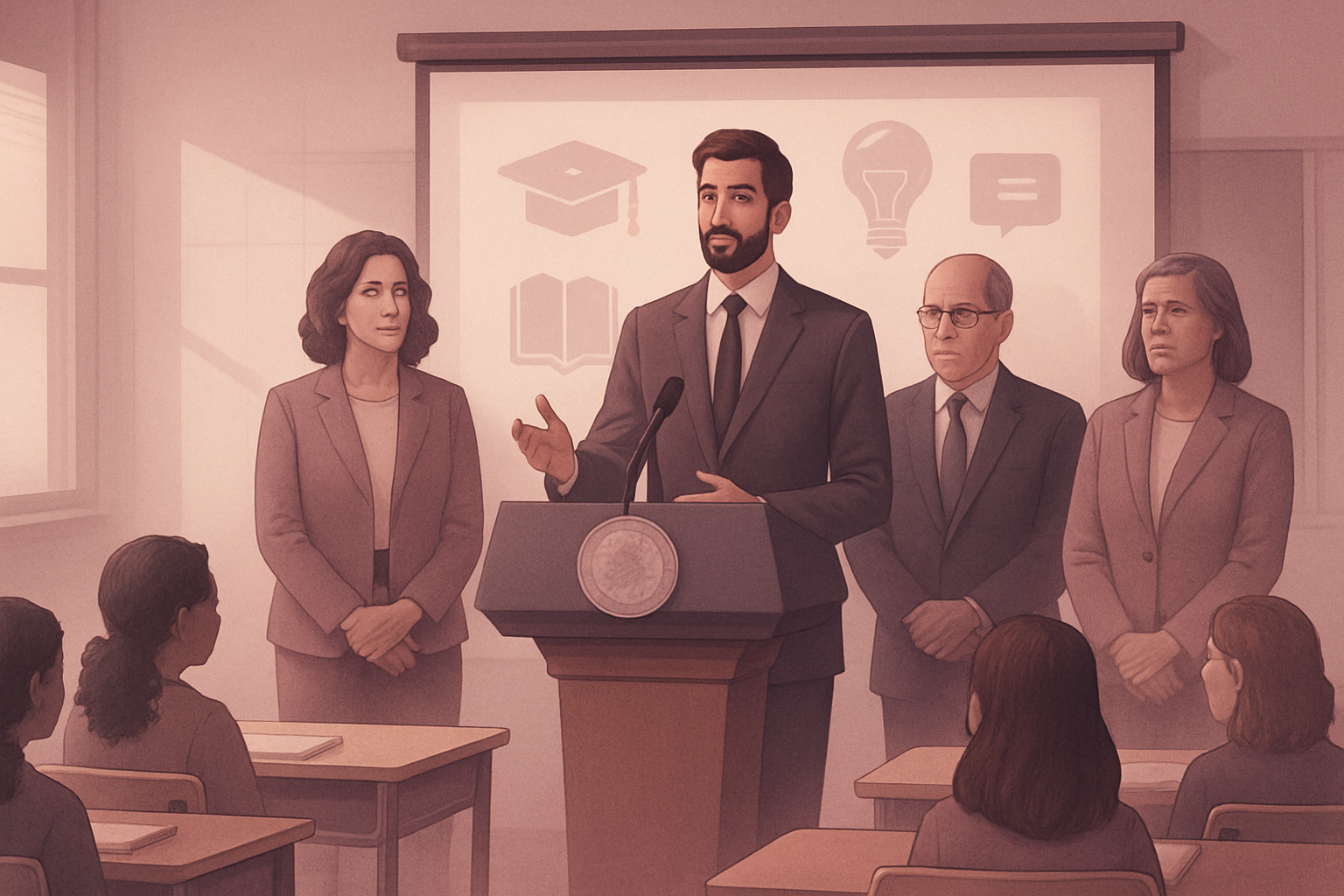
On Wednesday, during a press conference in Brooklyn, Mayor Zohran Mamdani and several education officials announced the implementation of a one-year moratorium on the use of generative AI in elementary and middle school classrooms. The use of AI by students in these schools has been suspended by the Department of Education, affecting nearly 600,000 students, representing about two-thirds of a system considered the largest in the country. The guidelines stipulate blocking or removing generative AI programs from school software and disabling AI features in 38 already approved programs, or ceasing to use those whose functions cannot be disabled. Officials indicated that an evaluation of effectiveness and outcomes will take place after the 2026-2027 school year.
Le brief IA que les pros lisent chaque soir
Les 7 actus IA du jour, décryptées en 5 min. Gratuit.
Inclus dès l'inscription : notre sélection des meilleurs guides & comparatifs IA.
Choisissez votre rythme
Gratuit · Pas de spam · Désabonnement en 1 clic
In High School, Regulated AI Modules Without Chatbots
AI literacy courses will be offered to high school students, who will also have restricted access to certain approved tools. According to the announcement, these courses aim to enable students to develop critical thinking about AI before using it regularly. Two 45-minute modules will introduce what AI is and what it is not, as well as biases, risks, ethical considerations, and effects on future careers and skills. Officials clarified that these modules do not include chatbots, that they are designed by subject, and come with strict time limits. For example, the tool Quill, intended for English classes for text analysis, is limited to 15 minutes of use per week per student.
Screen Time Limits and Teacher-Only Uses
The policy introduces daily screen time caps on personal devices: 30 minutes per day for students in grades three to five, and 45 minutes for middle schoolers. Teachers, on the other hand, are allowed to use AI for lesson planning and operational tasks.
Motivations, Feedback from the Field, and Previous Framework
Officials indicate that the moratorium is based on feedback from students and teachers, following guidelines published in March that allowed AI for research, exploration, and creative projects, with age-appropriate oversight by educators. Across the country, educators are complaining about students using AI to cheat, while parents are calling for more restrictions. Zohran Mamdani contests the idea, purportedly pushed by the tech industry, that early education AI is inevitable and necessary, while asserting that high school students must be prepared for a world permeated by AI. He stated that ignoring this reality would be irresponsible. The ChatGPT platform is also described as being widely used by students.
Brief IA — L'actualité IA en français
L'essentiel de l'actualité de l'intelligence artificielle, décrypté et expliqué chaque jour.