New York Suspends AI for a Year in Elementary and Middle Schools
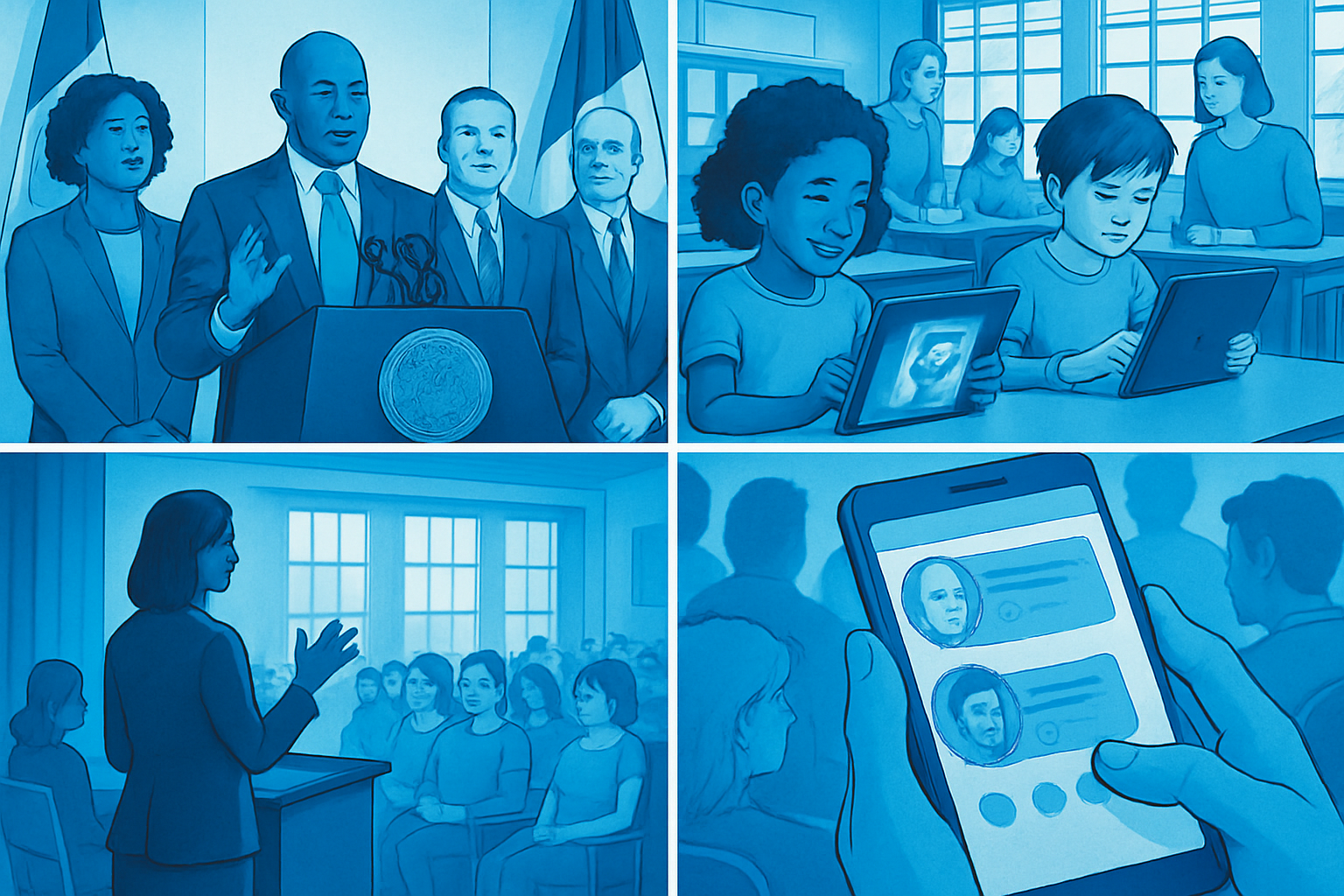
The administration of Zohran Mamdani has put a one-year pause on AI platforms intended for students in public elementary and middle schools. This measure, presented as temporary and the most comprehensive in the country, comes after months of pressure from parents with opposing views. However, the framework still allows for uses by teachers and high schools, while reactions from associations to software publishers remain mixed.
A so-called temporary pause, the most comprehensive, under criticism and support
Municipal officials emphasized on Wednesday the temporary nature of the measure, aimed at assessing the impact of AI on children's learning abilities. Zohran Mamdani described the moratorium as the most comprehensive of its kind in the country. Kaliris Salas-Ramirez, a neuroscientist and associate professor at Rutgers, supports the pause and suggests that research indicates early exposure to AI tools can hinder the development of problem-solving skills by preventing a complete consolidation of information during formative years. Conversely, Keri Rodrigues views the ban as a hysterical reaction that risks inadequately preparing students for a job market that values AI, while noting that she sees a place for these tools with strong human supervision and outside functions like grading, counseling, or discipline. She considers the policy to be more of a sledgehammer than a scalpel, calling for an evidence- and data-based approach in a national context of public examination of generative AI uses and complaints from educators about cheating.
What the moratorium entails and the uses still permitted
Announced on Wednesday, the one-year moratorium concerns AI platforms intended for students in New York public schools for elementary and middle school. In this context, the Amira program will have to disable its AI features. The new guidelines allow teachers to use generative AI tools to prepare lessons but prohibit their use for grading assignments. High school students will take AI literacy courses and will have limited access to five pilot programs, without chatbots. According to a spokesperson for New York public schools, the development of this policy involved educators, students, parents, advocates, union partners, experts, and other community members.
Le brief IA que les pros lisent chaque soir
Les 7 actus IA du jour, décryptées en 5 min. Gratuit.
Inclus dès l'inscription : notre sélection des meilleurs guides & comparatifs IA.
Choisissez votre rythme
Gratuit · Pas de spam · Désabonnement en 1 clic
Parental mobilizations with opposing positions, meetings, and demands
For months, two camps of parents with differing views have pressured Zohran Mamdani's administration, one deeming AI harmful to children's development, while the other considers it essential for future employability. The AIM coalition, opposed to AI, held two meetings with NYCPS Chancellor Kevin Samuels and also communicated with the mayor's office, claiming to have changed the conversation. Its members express surprise at the extent of classroom uses, concerns about data collection by AI companies, and a desire to prevent chatbots from replacing teachers; they welcome the moratorium while reminding that they requested two years. Liat Olenick mentions bewildered parents, some discovering that their 7-year-old child was using AI without their consent, and notes that the campaign for a moratorium began earlier this year. On the other side, Keri Rodrigues from the National Parents Union supports AI in schools and emphasizes that, over the past six months, references to AI skills in U.S. job postings have more than doubled, believing that parents want their children to know how to use it. The announced position currently aligns with the demands of the anti-AI camp.
In the classrooms: a father discovers his 5-year-old daughter is using a chatbot
Craig Garrett learned at a district meeting that his 5-year-old daughter was speaking daily to an AI chatbot in class, using a tablet with headphones and a microphone and an animated character. He says he was horrified, shocked, and disappointed; the May meeting, according to him, radicalized many parents. Garrett joined the AIM coalition and now feels relieved that the Amira application is being used less, believing that the tool does nothing that teachers cannot do.
Publishers react: Edia welcomes the pause, Amira defends its usefulness
Joe Philleo, CEO of Edia, one of the programs allowed in high school, praised the one-year pause on X, calling it balanced and reminding that young children should not spend their days in front of screens. Mark Angel, CEO of Amira, defends his software as a tool for teachers and appreciates that New York is ensuring access to features used to diagnose reading difficulties and improve literacy, while the AI functions for students must be disabled under the moratorium.
Brief IA — L'actualité IA en français
L'essentiel de l'actualité de l'intelligence artificielle, décrypté et expliqué chaque jour.