Noam Brown Advises Students to Drop Out of School
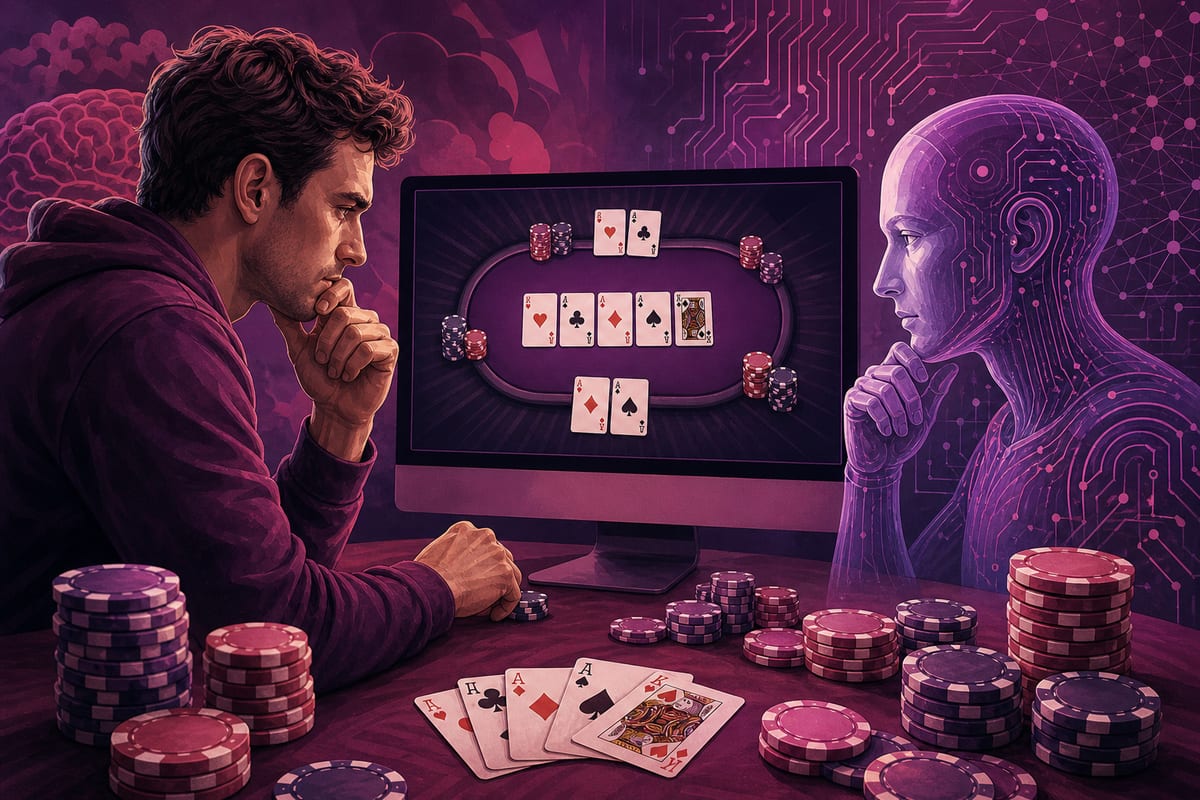
Noam Brown, co-creator of o1 at OpenAI, recommends that promising students abandon their studies to join an artificial intelligence lab right now. During the No Limit poker bot tournament, he linked this advice to the rapid advancements he anticipates in the coming years. However, he emphasizes the persistent difficulties models face in working autonomously.
Models Struggle to Correct Their Course
A model can spend hours correcting numerical discrepancies that have no consequences in an algorithm that already tolerates small inaccuracies: Noam Brown claims to have observed this behavior. In his view, systems struggle to detect when they are going off track and have difficulty restarting a problem from scratch. Long-term planning, work organization, and, above all, correcting their own mistakes remain their weak points.
These shortcomings coexist, according to him, with performances that surpass those of humans in certain areas. Models can, in particular, produce excellent partial solvers for poker. Brown also asserts that Astra, an OpenAI model, can make money by playing poker online.
He uses the term "centaur period" to describe this complementarity between humans and machines. The decisive skill, he believes, is knowing the model's actual capabilities and adapting the division of labor. Good users isolate sub-problems that are small enough, delegate those that the system masters, and then either subdivide the others or take them on themselves.
Brown cites two types of obstacles: accessible computing resources and skills that models do not yet possess. He does not specify any precise methods to overcome these latter difficulties. Some abilities, he estimates, may take much longer than others to match human capabilities.
Brown Invites Students to Join Labs
The researcher bases his advice on a mechanism that he believes is already underway: large language models contribute to the creation of their successors. He speaks of "accelerated recursive improvement" and predicts particularly rapid progress in the coming years. In this context, he considers it unwise to stay on the sidelines.
Brown himself presents abandoning studies in favor of a lab as what could be his most controversial opinion. His recommendation targets promising students. OpenAI, like other AI labs, continues to grow in a competitive environment for recruiting talent.
Le brief IA que les pros lisent chaque soir
Les 7 actus IA du jour, décryptées en 5 min. Gratuit.
Inclus dès l'inscription : notre sélection des meilleurs guides & comparatifs IA.
Choisissez votre rythme
Gratuit · Pas de spam · Désabonnement en 1 clic
Reinforcement Learning Applied to Reasoning
For Brown, the missing capability of older models was the ability to think before acting. When he decided to leave his specialty to work on general reasoning, this conviction met resistance: he reports disagreements during his interviews with labs in 2022. Models of this generation did not know how to play Go, chess, or poker.
Most of his interlocutors believed, he recounts, that larger-scale pre-training would suffice. Brown, on the contrary, estimated that achieving a competent level in Go would have required, through this sole avenue, multiplying training by about six orders of magnitude, a prospect he deemed unrealistic. OpenAI was an exception: a team there was already exploring the general reasoning of models, which he was unaware of when applying. He joined them and contributed to the development of o1.
The difference was not simply due to a directive asking to detail the steps of reasoning, he explains. According to Brown, reinforcement learning applied to the chain of thought has reliably yielded better results when the model thinks longer. This method has allowed, in his view, to leverage more computation during the response, beyond games and into very diverse fields.
However, he does not consider the chain of thought to be necessarily the optimal method. Humans also reason with images, he reminds us, and not just with words. Nevertheless, he finds the approach sufficiently effective.
Diplomacy Changed His Training Methods
This reorientation stems from Brown's work on Diplomacy. A specialist in computational game theory, he recounts how he saw his certainties waver in the face of human players' behavior. The assumption he describes presupposes rational participants, each knowing that the others are as well. However, he argues, real people do not behave this way.
He takes the ultimatum game as an example: one person proposes to split 100 dollars, and the other can accept or reject. In the theoretical reasoning he presents, offering a penny would be optimal. Brown emphasizes, however, that such an offer is likely to provoke a very different reaction from a human player.
His Diplomacy bots encountered, he explains, a similar problem when they relied exclusively on this theory. His team tried to integrate notions of fairness and retaliation into them, before deeming this approach too complex. They then trained models to replicate human behaviors and used these simulated players as training opponents for the AI. According to Brown, this approach allowed the system to succeed against real players and convinced him of the necessity of utilizing large amounts of human data.
Brief IA — L'actualité IA en français
L'essentiel de l'actualité de l'intelligence artificielle, décrypté et expliqué chaque jour.