Nvidia: $107.6 Billion for Data Centers
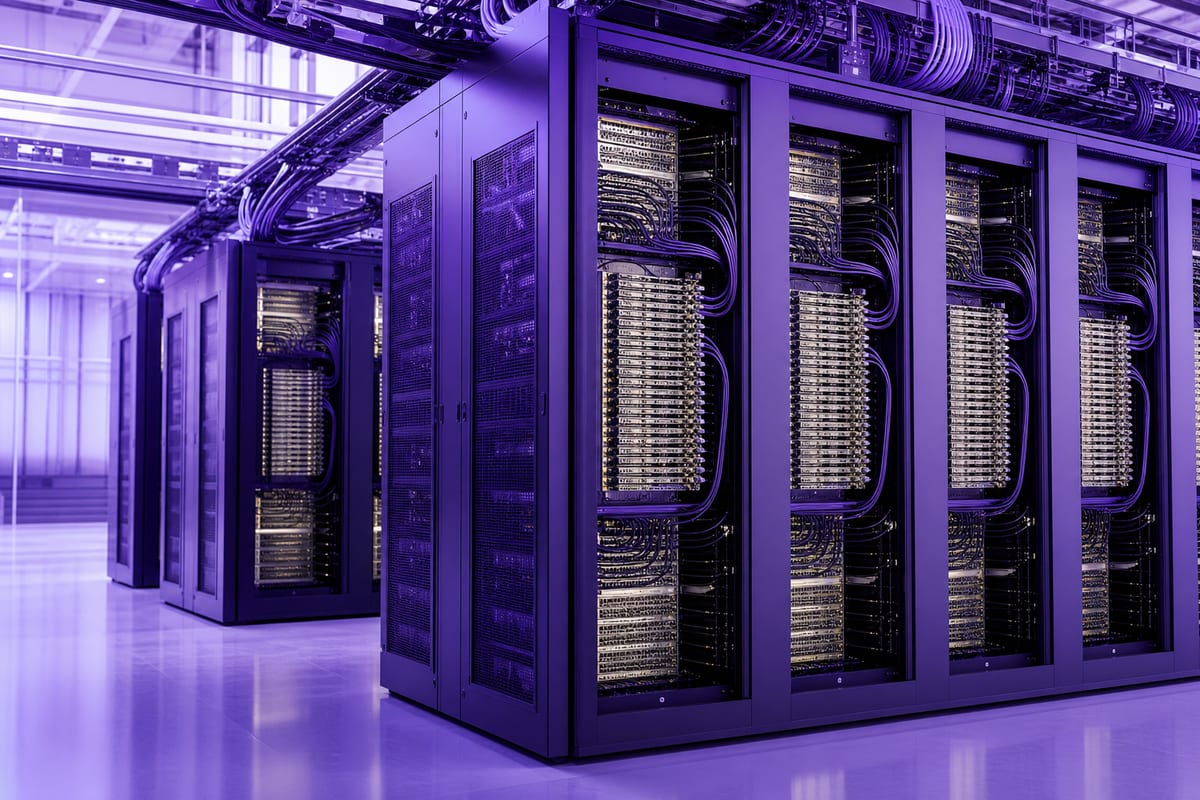
Nvidia announced on Tuesday $107.6 billion in quarterly revenue for its data centers, marking an annual increase of 110%. AMD also recorded a record quarter, despite training interruptions at OpenAI. Demand for inference is rising, but AI companies are also increasingly turning to custom processors.
Custom Chips Attract Labs
Counterpoint Research forecasts that shipments of custom processors for AI servers will surpass those of data center GPUs by 2028. To run their models for millions of users, AI companies are increasingly relying on these components, which are less expensive than general-purpose GPUs. Broadcom is notably assisting large companies in the sector to design their own chips.
Neil Shah, vice president of research at Counterpoint Research, believes that a slowdown in the most advanced training would redistribute spending rather than reduce the AI chip market. During Nvidia's earnings presentation, Timothy Arcuri, an analyst at UBS, asked whether the group would be willing to trim its high margins in light of this quest for efficiency and investments in custom components. Colette Kress, interim CEO of Nvidia, defended the pricing of its systems and confirmed its gross margin forecasts.
Demand for Inference Increases
Inference, which involves executing already trained models, is experiencing growing demand. Neil Shah estimates that these processes may require fewer high-end GPUs but would collectively mobilize more infrastructure than training. He anticipates a net increase in needs for all types of accelerators. Both Nvidia and AMD are directing their most powerful components toward both uses, particularly for the demanding tasks of AI agents.
Data from the business spending platform Ramp indicates that at the beginning of November, the most advanced model families accounted for about 60% of the tokens consumed by its client companies. This record proportion is approximately three times that of the beginning of the year. It includes Astra and Sol at OpenAI, as well as Opus and Fable at Anthropic.
However, corporate spending is only increasing moderately. Ara Kharazian, chief economist at Ramp, states that usage is rising and that the issue does not truly lie with demand. He believes that competition is driving token prices down quickly enough to undermine revenue forecasts for OpenAI and Anthropic.
Le brief IA que les pros lisent chaque soir
Les 7 actus IA du jour, décryptées en 5 min. Gratuit.
Inclus dès l'inscription : notre sélection des meilleurs guides & comparatifs IA.
Choisissez votre rythme
Gratuit · Pas de spam · Désabonnement en 1 clic
According to Colette Kress, these prices have dropped by nearly 60% since May, encouraging consumption. Rental prices for Nvidia GPUs, on the other hand, have increased across different generations.
Manufacturers Report Rising Sales
The period reported by Nvidia covers the three months ending October 25. The group raised its revenue growth forecast for the next fiscal year from 70% to 75%. According to Colette Kress, the major labs developing the most advanced models are expected to contribute about 15% of data center revenues during the current fiscal year. She claims that OpenAI's and Anthropic's proprietary models continue to enhance these capabilities.
Deliveries of the Vera Rubin NVL72 began in October, at a pace that Nvidia describes as the fastest in its history. The Rubin platform generated nearly $20 billion in its first quarter of production. Its racks are operational at CoreWeave, Google, Microsoft, and Oracle. Meta plans to expand its deployment to train and run models and AI agents.
Anthropic has increased its access to Vera Rubin through remote computing providers and continues its collaboration with Nvidia on future chips tailored to its processes. OpenAI, for its part, is adopting the new Vera central processors. Both labs were also among the first users of AMD's Helios systems, equipped with MI450 GPUs.
Earlier this month, AMD announced a record quarter: its revenues reached $13.4 billion, a 45% increase. Its data center sales drove this growth, amounting to $8.5 billion, nearly doubling. The latest commercial figures from TSMC also remain strong. Broadcom has yet to report its results.
Pauses and Their Financial Effects
However, any potential slowdown may not be immediately visible in manufacturers' accounts. In September, Neil Shah estimated that the lag in financial results would be about six months, given the supply agreements already in place for computing and memory. Orders placed with manufacturers like TSMC could reflect this sooner.
During the summer, OpenAI had paused its largest training program planned after the accidental hacking of Hugging Face by its agents. Preliminary indications suggested that its next model could autonomously identify and exploit cybersecurity vulnerabilities. In September, Dario Amodei, CEO of Anthropic, called for a slowdown in the progress of the most powerful models, citing their potential use in cyberattacks and the possible difficulties their creators might face in controlling them. Investor concerns about future chip purchases had particularly weighed on U.S. stocks in the sector.
The pause announced by OpenAI was supposed to last two weeks, but the program resumed after 10 days at the end of August. Some smaller experimental trainings, however, remained temporarily suspended. Anthropic released new versions of Fable and Mythos in November, claiming advancements in programming, reasoning, and vision.
Brief IA — L'actualité IA en français
L'essentiel de l'actualité de l'intelligence artificielle, décrypté et expliqué chaque jour.