Nvidia Halts AI Chip Shipments to Southeast Asia
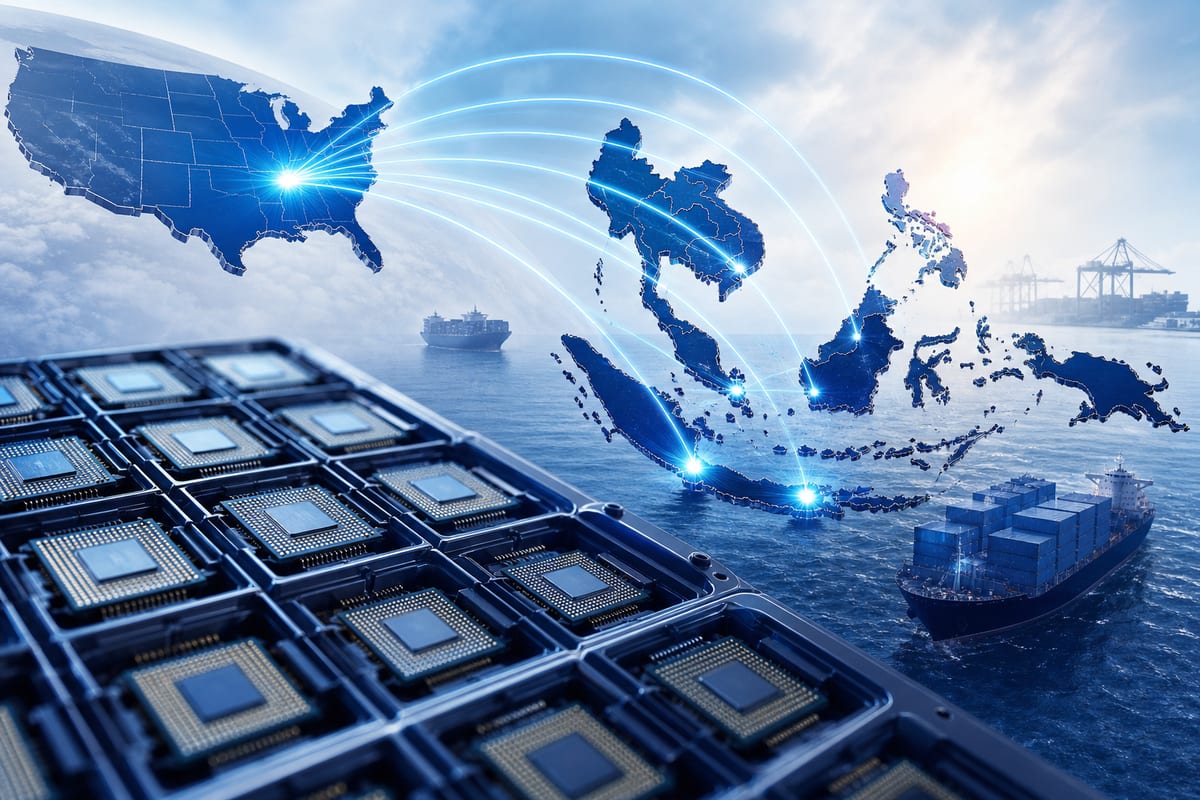
Nvidia has suspended its shipments of artificial intelligence chips to Southeast Asia. Singapore, Malaysia, and Indonesia are among the countries likely to be affected, in a region where demand for AI chips has grown by 30% over the past two years.
Local companies risk competitive delays
Companies in the region use these components to design their artificial intelligence applications. They could fall behind in the global competition if their access to these technologies is restricted. For the affected countries, such limitations could also weigh on innovation and the attraction of foreign capital.
Another possible consequence would be an increased dependence on alternative suppliers, particularly Chinese ones. This reliance could, in turn, heighten geopolitical tensions.
The AI brief the pros read every evening
The 7 best AI stories, the essentials in 5 min. Free.
Included when you join: our pick of the best AI guides & comparisons.
Choose your rhythm
Free · No spam · Unsubscribe in 1 click
Nvidia supplies several AI user sectors
The components from the American tech group equip data center infrastructures and autonomous vehicles, among others. The potentially affected countries rely on these technologies to support their innovation and competitiveness.
In 2022, Nvidia's revenue exceeded $26 billion, with sales of AI-targeted graphics processors making up a significant portion.
Analysts mention increased American control
The decision comes amid rising rivalry between the United States and China. Industry analysts believe that this measure could be seen as Washington's intent to tighten its control over critical technologies. Some experts warn that in the long term, this strategy could push recipient countries to diversify their sources of technological supply.
Calls for increased international cooperation are simultaneously aimed at preventing a fragmentation of the advanced technology market.
Brief AI — AI news in French
The essentials of artificial intelligence news, decoded and explained every day.